

Hyderabad: The Telangana Cabinet approved smart ration cards for beneficiaries and an electric vehicle scheme for auto-rickshaw drivers on Friday. It also cleared decisions covering agriculture, skills, education, industries and irrigation.
As part of the decision, the Cabinet will organise a grand Independence Day event to distribute smart cards to ration cardholders across the State. Officials will make arrangements in all districts for the programme.
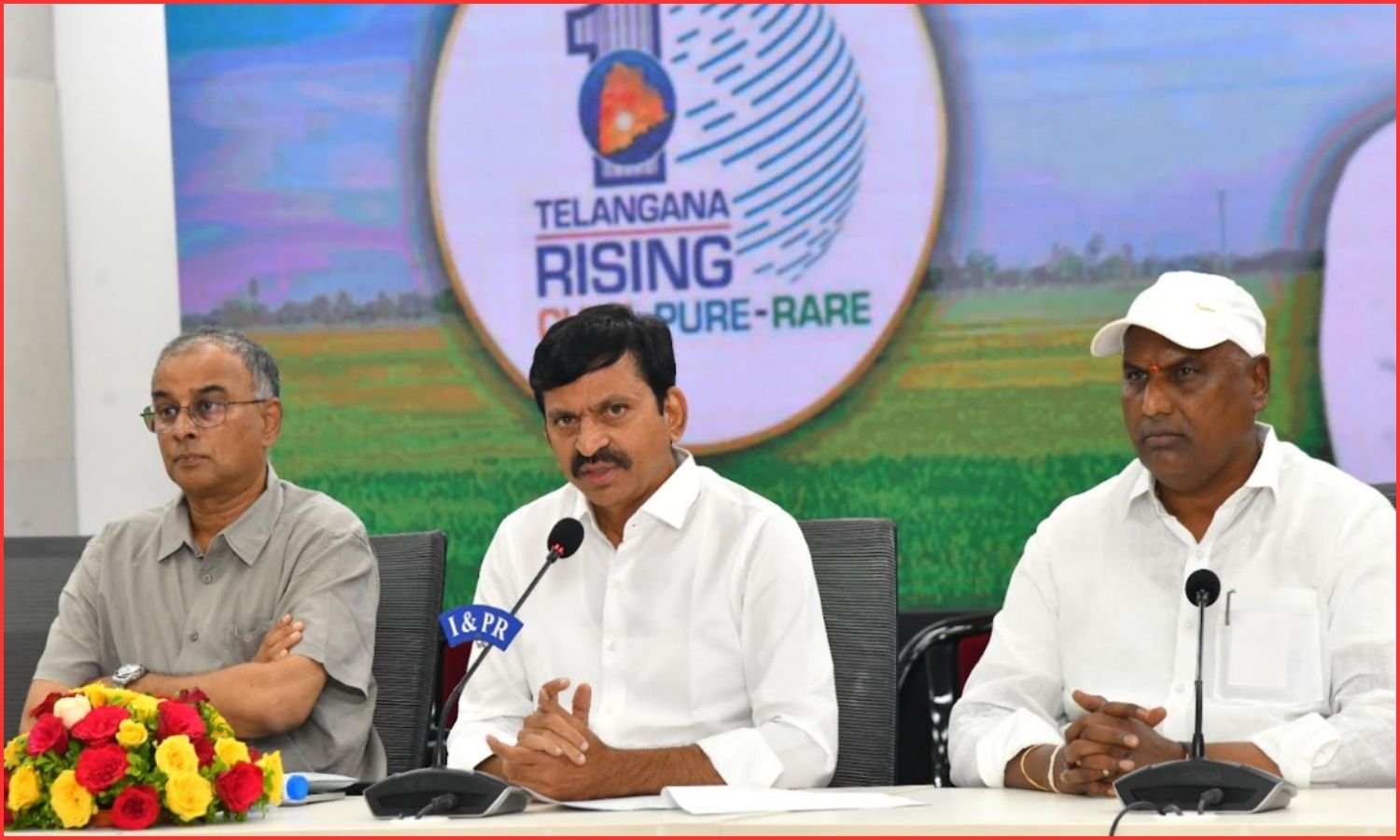
Revenue, Information and Public Relations Minister Ponguleti Srinivasa Reddy, Social Welfare Minister Adluri Lakshman Kumar and Khammam MP Ramasahayam Raghuram Reddy announced the decisions after the Cabinet meeting at the Secretariat.
Ponguleti said ration card beneficiaries had increased from 2.81 crore to 3.42 crore. Consequently, the Congress government had extended benefits to an additional 62 lakh people, he said.
The Cabinet also decided to organise the Telangana Rising Global Summit 2.0 this year. Tentatively, the summit will take place on December 7, 8 and 9.
Deputy Chief Minister Bhatti Vikramarka will head a sub-committee overseeing the summit. Ministers Duddilla Sridhar Babu, Uttam Kumar Reddy and Vivek Venkataswamy will serve on the panel along with other committees.
Ponguleti said the summit would follow the theme “Invest Telangana”. The theme followed the unveiling of the Telangana Rising 2047 vision last year.
Meanwhile, the Cabinet approved promotion of seven specified fine-grain paddy varieties. It also cleared a bonus of ₹500 per quintal for these varieties from this year.
The Cabinet further approved the auction of the remaining 17.54 lakh metric tonnes of paddy.
Smart ration cards lead Cabinet’s welfare and agriculture decisions
In another decision, the Cabinet approved bringing Industrial Training Institutes, Advanced Technology Centres and polytechnic colleges under Young India Skills University. These institutions currently function under the Technical Education department.
It also approved removing the institutions from the Telangana Education Act’s purview. They will subsequently come under Young India Skills University.
At the same time, institutions currently under the Industries Department will move to the Shakti department, Ponguleti said. The Cabinet approved the change as part of the restructuring process.
The Cabinet also approved seven more Young India Integrated Residential Schools. These schools will come up in Adilabad, Nirmal, Mudhol, Boath, Sirpur, Gajwel and Dubbak constituencies.
In the first phase, the State plans to establish Young India Integrated Residential School complexes in 113 constituencies. With approval for seven additional schools, the government has now cleared 86 complexes.
Accordingly, officials will speed up land acquisition and begin construction in the remaining constituencies at the earliest. The Cabinet directed officials to complete the process without delay.
To reduce pollution in Hyderabad’s core urban region, the Cabinet approved the Telangana Auto-rickshaw Electric Conversion Scheme. The scheme will cover petrol and diesel auto-rickshaws.
Currently, Hyderabad has 18,766 petrol and diesel auto-rickshaws. The scheme carries an outlay of ₹200 crore.
Under the scheme, eligible auto-rickshaw drivers will receive a subsidy of up to ₹1.5 lakh per vehicle. They can either retrofit existing vehicles with electric kits or scrap them and purchase new electric auto-rickshaws.
EV auto scheme, HILT extension and irrigation projects cleared
Separately, the Cabinet extended the HILT policy application deadline by three months. The policy seeks to relocate polluting industries from Hyderabad city limits to the outskirts.
Following requests from applicants, the government extended the deadline to October 31. The extension gives applicants additional time under the policy.
The Cabinet also approved an estimated ₹2,100 crore for Phase-II works of the Makthal-Narayanpet-Kodangal Lift Irrigation Scheme. The project is expected to provide irrigation water to around one lakh acres.
Besides irrigation, the scheme will meet drinking water and industrial requirements in the region. The Cabinet approved the expenditure for the second phase.
Further, the Cabinet approved increasing the capacity of the Gudem Doddi Pumped Storage Project from 1.19 TMC to 15 TMC.
It also sanctioned the appointment of a consultant to conduct a study on solar power generation, Ponguleti Srinivasa Reddy said.
Thus, the Cabinet’s decisions covered smart ration cards, crop incentives, skill institutions, residential schools, electric vehicles, industrial relocation and irrigation projects. Officials will now take up arrangements and implementation of the approved measures.