

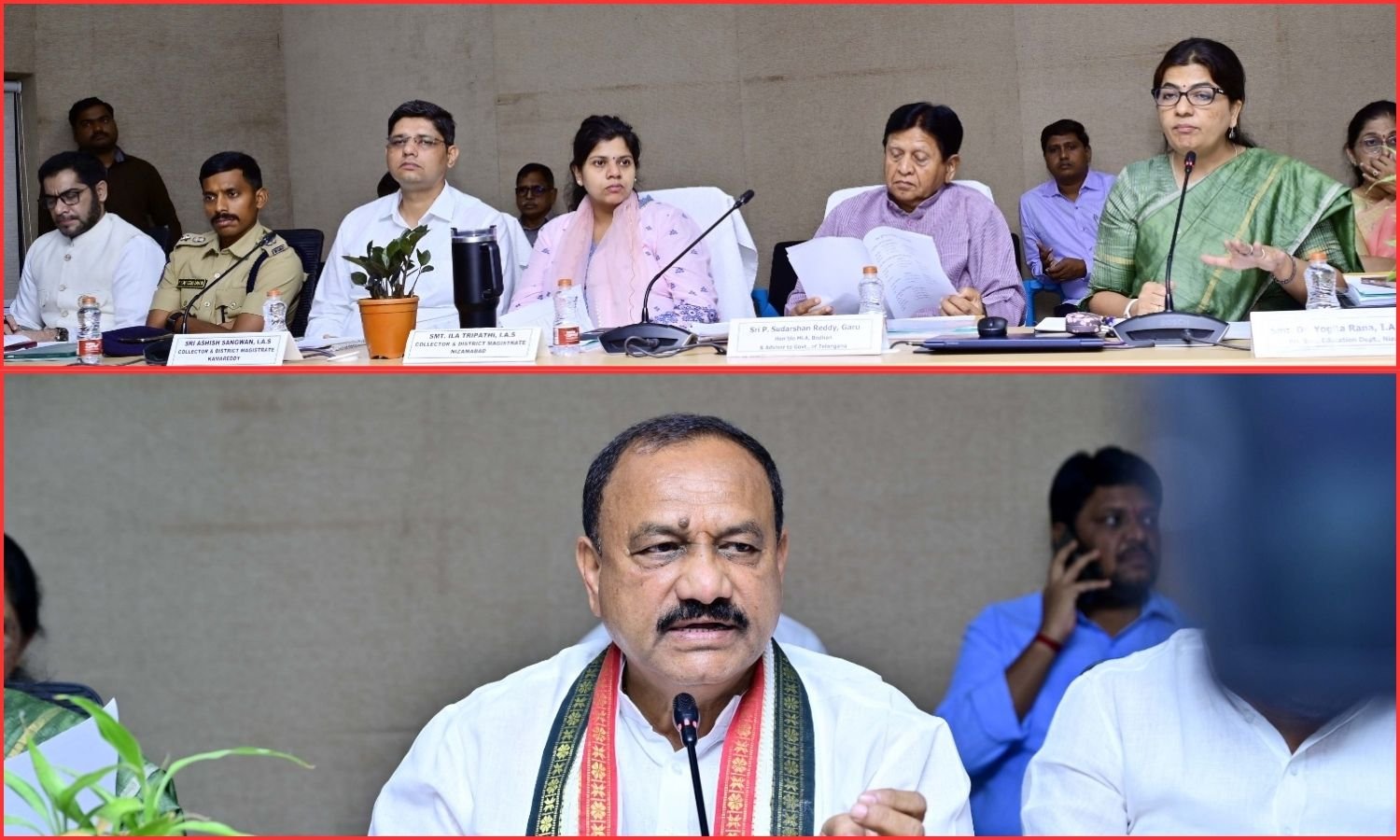
Hyderabad: Government Advisor P. Sudarshan Reddy urged farmers to adopt Alternative crop cultivation to minimise the impact of Super El Niño. He asked officials to conduct village-level awareness campaigns on crops that require less water.
Sudarshan Reddy chaired a review meeting on the government’s contingency action plan at the Integrated District Offices Complex in Nizamabad on Monday. The meeting examined drought preparedness across the undivided Nizamabad district.
MLC B. Mahesh Kumar Goud, MLAs Bhupathi Reddy, Dhanpal Suryanarayana Gupta, Paidi Rakesh Reddy and Thota Lakshmikanth Rao attended the meeting. Minority Commission Chairman Tariq Ansari, Mayor K. Uma Rani, Special Officer and Education Secretary Dr Yogita Rana, Collectors Ila Tripathi and Ashish Sangwan, senior police officers, agricultural scientists, officials from various departments and progressive farmers also participated.
Officials reviewed water storage in the Sriramsagar, Nizamsagar, Kaulas Nala, Pocharam, Singitham, Kalyani, Ramadugu, Alisagar, Manchippa and Masani reservoirs. They also assessed groundwater availability, drinking water supply, electricity demand and irrigation requirements. Meanwhile, agricultural scientists explained suitable low-water crops, while progressive farmers shared practical experiences from their fields. The district collectors outlined the contingency measures prepared to address El Niño conditions.
Sudarshan Reddy said the government was working to minimise hardship for farmers and the public if rainfall declined. According to him, officials across Telangana were coordinating efforts to implement the contingency plan and provide timely support to farmers.
Alternative crop cultivation to reduce drought impact
The advisor directed officials to conserve available water resources. He said drinking water should receive the highest priority. Farmers should cultivate oil palm, pigeon pea, sesame, groundnut, pulses, millets, vegetables and horticultural crops that require less water, he added.
In addition, the government would pursue subsidies for vine vegetables, dairy farming and solar fencing. The fencing would help protect crops from monkeys and wild boars. Furthermore, officials should plant more fruit-bearing trees in forest areas to reduce the movement of wild animals into nearby villages.
Expressing concern over declining groundwater and low reservoir storage, Sudarshan Reddy said every farmer should receive clear information on groundwater levels, irrigation availability, reservoir storage and rainfall conditions. At the same time, he instructed officials to prevent drinking water shortages and encourage water conservation.
MLC B. Mahesh Kumar Goud said public representatives and officials should work together to minimise the impact of El Niño. Referring to the 45 per cent rainfall deficit, he urged farmers to diversify cropping patterns. He recommended oil palm, vegetables and dryland crops as alternatives to paddy. Additionally, he said efforts would continue to revive NCSF and other sugar factories to support sugarcane cultivation.
Special Officer and Education Secretary Dr Yogita Rana said advance planning could reduce losses caused by natural disasters. She advised farmers to adopt Alternative crop cultivation wherever possible. Crops had already been sown in 72 per cent of the cultivated area, she noted. Therefore, officials should encourage dryland crops in the remaining area. She also directed departments to expand soak pits and water harvesting structures to improve groundwater recharge.
District action plan for water conservation
Nizamabad Collector Ila Tripathi said departments had already begun awareness programmes through Rythu Vedikas. She said officials were encouraging farmers to replace paddy with crops that required less water and offered better returns under prevailing conditions. She also said contingency plans were ready to prevent drinking water shortages.
Meanwhile, Kamareddy Collector Ashish Sangwan encouraged farmers to cultivate horticultural crops, vegetables, pulses and oil palm. He said oil palm required comparatively less water, supported intercropping and offered long-term income with government assistance. The government was also extending subsidies for its cultivation, he added.
The MLAs urged the government to extend crop insurance, provide subsidised seeds and expand drip irrigation facilities. They also sought advance measures to prevent drinking water shortages. During the meeting, participants unveiled a wall poster titled *Telangana Jalasiri* to promote groundwater conservation.
State Urdu Academy Chairman Taher Bin Handan, State Agriculture Commission member Gadugu Gangadhar, Indian Institute of Health and Family Welfare Governing Council Chairperson Dr Kavitha Reddy, NUDA Chairman Kesha Venu, additional collectors, trainee collectors and officials from various departments of the undivided Nizamabad district also attended the review meeting.