

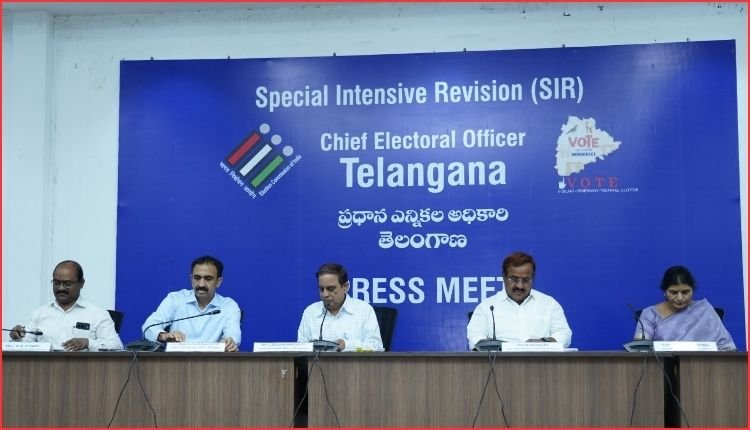
Hyderabad: The Telangana election authority released the draft Telangana SIR electoral rolls after completing the first phase of the Special Intensive Revision. About 92 lakh electors were set to receive notices over anomalies or unmapped records.
Chief Electoral Officer Sudarshan Reddy announced the details while addressing the media on Monday. He said the initial phase of the statewide revision exercise had concluded. Moreover, authorities received enumeration forms from more than 78% of electors during the exercise.
Verification identified more than 2% of voters as deceased, the CEO said. Meanwhile, nearly 60 lakh voter records contained anomalies. Authorities also found that approximately 32 lakh electors remained unmapped during the revision process. Consequently, the election authority planned to issue notices to about 92 lakh people across Telangana.
Telangana SIR electoral rolls enter notice verification stage
Sudarshan Reddy advised electors who received notices to respond as early as possible. Voters needed to submit the required supporting documents so officials could verify their records. Furthermore, the election authority would clearly specify the reason for issuing each notice.
The CEO said voters could raise objections if they had concerns about the deletion of their names from the rolls. “Electors who have concerns or objections regarding the deletion of their names from the voter rolls are entitled to submit their representations,” Sudarshan Reddy said. The provision allowed affected electors to present their case during the scrutiny process.
Telangana SIR electoral rolls scrutiny to continue through October
Officials planned to examine claims, objections and related applications through October. The election authority deployed more than 2,000 personnel across Telangana to handle the scrutiny. Therefore, the revision process would continue beyond the publication of the draft rolls.
The Telangana SIR electoral rolls would reach the final publication stage only after officials completed the review process. The first phase had recorded more than 78% reception of enumeration forms. However, verification also detected deceased voters, anomalous records and a large number of unmapped electors.
Authorities would now seek responses and documents from affected voters through notices. In addition, voters facing possible deletion could submit representations during the prescribed review process. Officials would examine those submissions along with other claims and objections before publishing the final electoral rolls.