

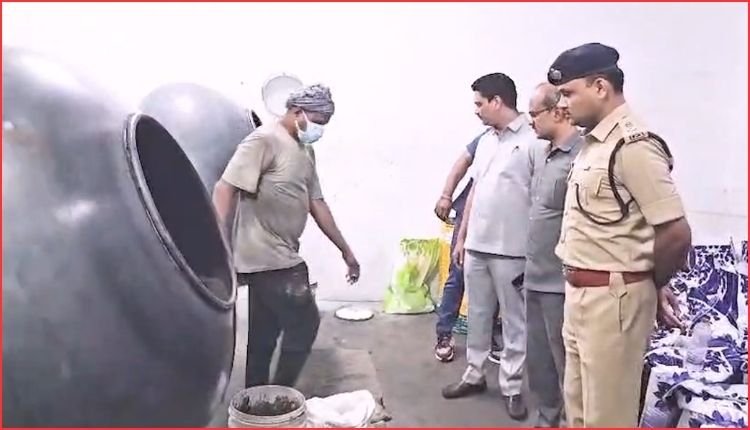
Hyderabad: Police arrested three people and seized 25.3 tonnes of allegedly adulterated spices during a Hyderabad spice adulteration crackdown across 13 trading and processing premises.
The Hyderabad Food Adulteration Surveillance Team, or H-FAST, conducted the drive with the GHMC Food Safety Department. The teams acted on information received from members of the public.
Officials inspected establishments involved in procuring, processing and selling spices through wholesale and retail channels. Police alleged that some businesses used harmful chemicals and hazardous substances to alter the appearance, weight and volume of spices.
The enforcement teams registered three criminal cases. Mailardevpally Police registered two cases, while Balapur Police registered one case. Police identified the arrested men as Rahul Bhati of Katedan, Vishal Panwar of Begum Bazar and Dulichand Kachhawar of Begum Bazar.
Officials collected suspicious spice samples and chemical additives from the inspected premises. They sent the material for laboratory analysis and began legal action under the Food Safety and Standards Act, 2006, and other relevant provisions.
Hyderabad spice adulteration crackdown uncovers chemical use
Police said the inspections uncovered violations involving food safety standards, improper labels and deceptive processing methods. According to the press note, operators allegedly used synthetic colours and non-food substances to make inferior spices appear brighter, heavier and more valuable.
Officials found Bush Synthetic Orange Red and Green food colours during the raids. They also reported finding cloth dyes, industrial-grade permanent colours, talcum-based shining powder and rice bran oil.
At one manufacturing facility, workers allegedly mixed rejected and low-quality mustard stocks with fabric dye, talcum powder and oil. Police said the mixture increased the product’s shine, weight and volume.
Other units allegedly coated cloves and shahjeera with synthetic colours. Officials said the traders used the coating to give the spices a brighter and more premium appearance. Police also alleged that some establishments mixed permanent industrial dyes with shahjeera, ajwain and other commonly used spices.
The Hyderabad spice adulteration crackdown also targeted misbranding and breaches of food labelling rules. Officials said the drive aimed to ensure compliance with food safety standards and protect consumers.
Police seize ajwain, jeera, mustard and other spices
The seized adulterated material included 7,920 kg of ajwain, also known locally as wamu. Officials also seized 6,700 kg of jeera and 2,350 kg of jeera dust. The enforcement teams confiscated 550 kg of cloves and 2,280 kg of shahjeera. In addition, they seized 540 kg of saunf and 4,960 kg of mustard.
The adulterated spice stock totalled 25,300 kg, according to the seizure statement. Officials also seized raw materials from the inspected premises. These included 100 kg of jeera and 500 kg of shahjeera.
The teams reported finding 65,000 kg of mustard raw material. They also seized 13,460 kg of fenugreek seeds and 10,000 kg of white sesame seeds. The raw material seizure totalled 89,150 kg, according to police.
In addition, officials confiscated about 90 kg of shining powder, nearly 12 litres of rice bran oil and around 1.5 kg of synthetic and fabric dyes. Police also seized three rolling machines allegedly used during the processing of spices.
The department said laboratory tests would determine the precise nature and extent of contamination. Authorities would proceed against the business owners after examining the reports and other evidence.
Hyderabad spice adulteration crackdown raises health concerns
Police warned that industrial dyes, synthetic colours and non-edible materials such as talcum powder could pose serious health risks. The press note said prolonged exposure could cause toxicity and damage the liver and kidneys. It also warned of cancer risks linked to carcinogenic chemicals.
Officials said contaminated food could cause gastrointestinal disorders, including stomach pain and ulcers. They also cited allergic reactions and skin disorders among the possible effects.
According to the advisory, long-term consumption could affect the nervous system and weaken overall immunity. Police said such practices deceived consumers and threatened public health on a large scale.
The H-FAST team said it would continue joint inspections across Hyderabad. The agency aimed to identify adulteration networks and prevent unsafe food products from reaching consumers.
H-FAST reports 246-tonne seizure in 140 days
H-FAST said it had seized nearly 246 tonnes of adulterated or contaminated food within 140 days of its formation. The team conducted 659 raids during that period and registered 202 First Information Reports. It also referred 232 cases to GHMC Food Safety officials for further proceedings.
Officials inspected 46 paneer outlets and 83 ghee outlets. The team also acted on complaints received from the public. The department said previous raids exposed the use of titanium oxide and acetic acid in ginger-garlic paste. Police described titanium oxide as a chemical used in paints.
According to officials, some operators added the chemicals to make the paste look white and thick. They also allegedly used unpeeled and rotten ginger and garlic. H-FAST raided 32 centres linked to the production of adulterated ginger-garlic paste. The teams seized more than 27 tonnes, or 27,024 kg, of the product.
Officials also confiscated more than 12 tonnes of rotten chicken and mutton. In a separate action, they seized about 60 tonnes of foul-smelling chicken waste. Police alleged that operators stored the chicken waste in unhygienic conditions for supply to hotels.
The teams also found food preparation areas close to dirty toilets. Officials reported the presence of flies and cockroaches at some premises.
Raids cover fruits, pickles, tea and dairy products
H-FAST also inspected 16 centres accused of ripening fruits with hazardous chemicals. The teams seized 25.8 tonnes of fruits during those raids. They also confiscated 9.2 tonnes of adulterated pickles and 3.8 tonnes of adulterated tea powder.
Officials said another operation uncovered synthetic paneer made without milk. They alleged that manufacturers used urea, detergents, palm oil and harmful chemicals. The enforcement team seized 1.5 tonnes of synthetic paneer. It also confiscated 2.5 tonnes of adulterated curd.
Further seizures included 3.2 tonnes of cream, ghee and oil. H-FAST also acted against substandard reverse osmosis water plants. The press note linked 23.7 tonnes of material to those enforcement actions.
The department inspected manufacturing units producing ice cream, samosas and biscuits. Officials said the inspections formed part of a wider campaign against unsafe food production. The Hyderabad spice adulteration crackdown added to that enforcement record and focused specifically on spice manufacturers, processors and traders.
Police issue advisory to Hyderabad consumers
Hyderabad Police and H-FAST urged residents to purchase spices and food products only from reputed and licensed sellers. Consumers should check product packaging, labels and valid Food Safety and Standards Authority of India licence details, the advisory said.
Police asked people to avoid spices with unusually bright colours. They said excessive colouring could indicate chemical adulteration. The department also advised consumers against buying loose spices and unbranded food from unknown roadside vendors, particularly when prices appeared unusually low.
Officials urged residents to avoid food outlets that failed to maintain basic quality and hygiene standards. They also advised people to reduce their consumption of outside food wherever possible.
The public can report suspected food adulteration or unhygienic food preparation through Dial 100. Citizens can also call or send information through WhatsApp to the H-FAST helpline at 8712661212.
Police assured informants that authorities would keep their identities confidential. They urged citizens to report suspicious manufacturing, storage or processing activities without hesitation. The department said public cooperation remained essential to preventing food adulteration and protecting public health.
Hyderabad spice adulteration crackdown led by Task Force officers
Deputy Commissioner of Police, Task Force, Gaikwad Vaibhav Raghunath supervised the special drive. Inspectors Ranjith and Anjaiah participated in the operation. Sub-Inspectors Shanker, Krishna and Akhil also joined the enforcement teams.
Hyderabad Police Commissioner V.C. Sajjanar said authorities would continue taking strict action against people involved in food adulteration. The police said the Hyderabad spice adulteration crackdown sought to ensure that consumers received safe and unadulterated products.
Officials also appealed to businesses to follow food safety, processing and labelling regulations. They warned that future violations would attract regulatory and criminal proceedings.