

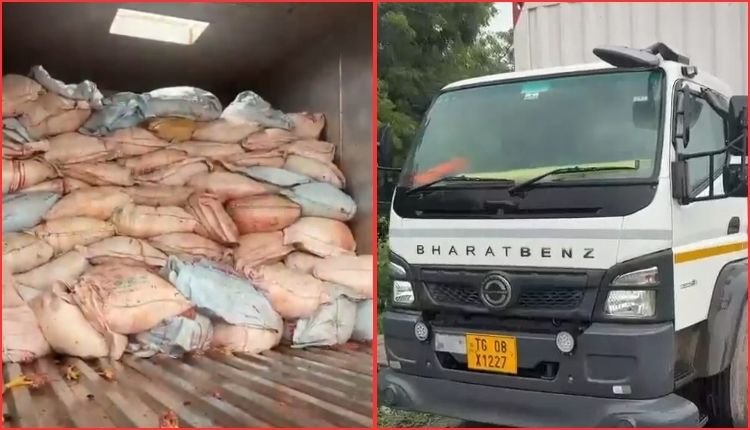
Hyderabad: Cyberabad Police and veterinary officials seized nearly 100 tonnes of poultry refuse allegedly destined for use as fish feed in Andhra Pradesh.
The chicken waste seizure followed a crackdown on vehicles transporting the material from Hyderabad. The operation exposed a suspected illegal trade operating across the Telangana-Andhra Pradesh border.
Officials found that waste collected from chicken shops and other establishments across Hyderabad was allegedly being loaded into trucks. The vehicles then transported the material at night for sale to fish-pond operators in Andhra Pradesh.
Authorities suspected that cheaper feed costs had created demand for poultry waste among some aquaculture operators. Consequently, those involved in transporting the material were suspected of earning substantial profits from the trade.
Chicken waste seizure follows raids across Hyderabad
Officials intercepted and inspected vehicles carrying poultry waste at several locations across Hyderabad. The operation covered Attapur, Miyapur, Ameenpur, Kukatpally, Jeedimetla and Chintal.
According to officials, operators collected the waste from multiple chicken shops before loading it into trucks. They then transported the consignments outside Hyderabad.
Investigators suspected that some fish-pond operators bought the waste as a low-cost alternative to regular fish feed. Therefore, demand for cheaper feed allegedly sustained the movement of chicken waste from Hyderabad to aquaculture farms in Andhra Pradesh.
The chicken waste seizure also raised concerns about the disposal of poultry refuse generated by shops and other establishments in the city.
Chicken waste seizure raises food safety concerns
Officials raised public health and food safety concerns over the alleged use of poultry waste in aquaculture. They warned that fish raised on such waste could pose health risks to consumers.
The authorities also stressed the need for proper regulation of feed used at aquaculture farms. In particular, enforcement agencies sought to prevent improperly handled poultry waste from entering the fish farming supply chain.
The latest crackdown came only weeks after authorities had confiscated a large quantity of chicken waste in a similar operation.
However, the suspected trade resurfaced despite that earlier seizure. Its recurrence raised concerns about the continued collection, disposal and interstate transportation of poultry waste.
Authorities consequently faced calls for stricter enforcement to stop such material from reaching aquaculture farms. The repeated movement of the waste also highlighted the need for closer monitoring of its collection and transportation.
Cyberabad Police and veterinary officials seized nearly 100 tonnes of poultry refuse allegedly destined for use as fish feed in Andhra Pradesh.
The chicken waste seizure followed a crackdown on vehicles transporting the material from Hyderabad. The operation exposed a suspected illegal trade operating across the Telangana-Andhra Pradesh border.
Officials found that waste collected from chicken shops and other establishments across Hyderabad was allegedly being loaded into trucks. The vehicles then transported the material at night for sale to fish-pond operators in Andhra Pradesh.
Authorities suspected that cheaper feed costs had created demand for poultry waste among some aquaculture operators. Consequently, those involved in transporting the material were suspected of earning substantial profits from the trade.
Chicken waste seizure follows raids across Hyderabad
Officials intercepted and inspected vehicles carrying poultry waste at several locations across Hyderabad. The operation covered Attapur, Miyapur, Ameenpur, Kukatpally, Jeedimetla and Chintal.
According to officials, operators collected the waste from multiple chicken shops before loading it into trucks. They then transported the consignments outside Hyderabad.
Investigators suspected that some fish-pond operators bought the waste as a low-cost alternative to regular fish feed. Therefore, demand for cheaper feed allegedly sustained the movement of chicken waste from Hyderabad to aquaculture farms in Andhra Pradesh.
The chicken waste seizure also raised concerns about the disposal of poultry refuse generated by shops and other establishments in the city.
Chicken waste seizure raises food safety concerns
Officials raised public health and food safety concerns over the alleged use of poultry waste in aquaculture. They warned that fish raised on such waste could pose health risks to consumers.
The authorities also stressed the need for proper regulation of feed used at aquaculture farms. In particular, enforcement agencies sought to prevent improperly handled poultry waste from entering the fish farming supply chain.
The latest crackdown came only weeks after authorities had confiscated a large quantity of chicken waste in a similar operation.
However, the suspected trade resurfaced despite that earlier seizure. Its recurrence raised concerns about the continued collection, disposal and interstate transportation of poultry waste.
Authorities consequently faced calls for stricter enforcement to stop such material from reaching aquaculture farms. The repeated movement of the waste also highlighted the need for closer monitoring of its collection and transportation.