

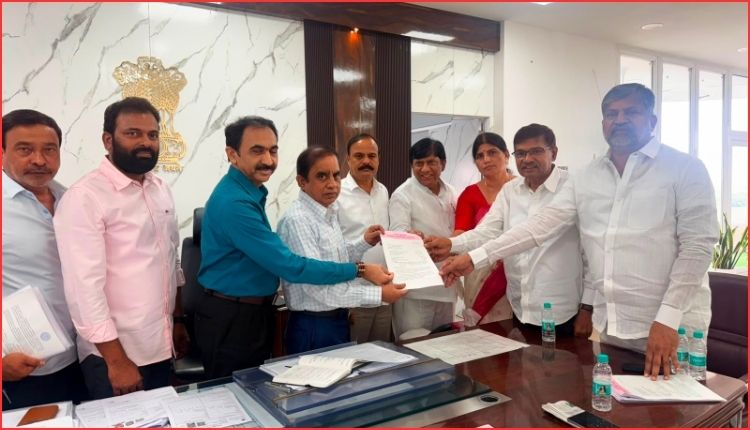
Hyderabad: A Bharat Rashtra Samithi delegation on Monday urged Telangana Chief Electoral Officer C. Sudharshan Reddy to extend the ongoing voter roll revision by one month, citing procedural shortcomings and insufficient time for verification.
The delegation, led by former MP B. Vinod Kumar and MLC L. Ramana, submitted a memorandum seeking an extension of the Election Commission of India’s Special Intensive Revision (SIR) of electoral rolls.
Voter roll revision extension sought
Later, Vinod Kumar told reporters that the BRS had formed a special committee to work with Booth Level Agents and Booth Level Officers throughout the revision exercise. Moreover, he claimed party workers across Telangana had reported that several Booth Level Officers were not functioning consistently. He also alleged that many eligible voters had not received enumeration forms even though only 20 days remained for the exercise.
According to the BRS, nearly 2.96 crore of Telangana’s 3.38 crore electors had received enumeration forms. However, the party said authorities had digitised only 19 lakh forms as of July 5.
Furthermore, the party argued that a one-month extension would help officials complete a more transparent and error-free voter roll revision while preventing the exclusion of eligible voters.
Voter roll revision concerns highlighted
Vinod Kumar also claimed that the 2002 electoral rolls used for reference were not readily available with EPIC numbers, making verification difficult.
Additionally, he alleged that the Election Commission portal frequently remained inaccessible. He said the existing electoral rolls, largely available in Telugu, did not contain EPIC details for more than half the voters. The BRS also raised concerns over inadequate training and the absence of clear guidelines for Booth Level Officers.
Moreover, the party cited the removal of voters because of minor spelling differences, inconsistencies in the order of surnames and first names, the absence of voter mapping information, limited transparency in identifying duplicate and deceased voters, and the lack of acknowledgements for submitted enumeration forms.