

Hyderabad: Deputy Chief Minister Bhatti Vikramarka on Thursday credited the Rajiv Gandhi IT revolution with laying the foundation for India’s technological transformation and today’s Digital India.
Bhatti said the former Prime Minister’s modern outlook helped steer India towards the 21st century. He particularly highlighted Rajiv Gandhi’s contribution to technology, telecommunications and democratic reforms.
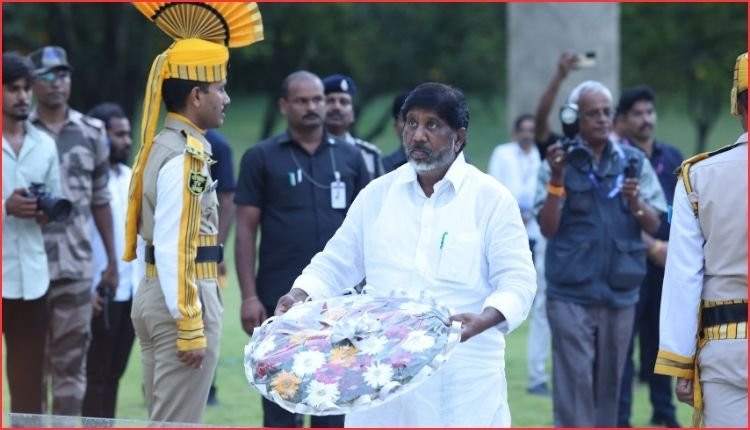
The Deputy Chief Minister made the remarks while paying tributes to Rajiv Gandhi on his birth anniversary. Bhatti, along with Karnataka Chief Minister D.K. Shivakumar, paid tributes at the Rajiv Gandhi Memorial in Sriperumbudur, Tamil Nadu.
He recalled Rajiv Gandhi’s contribution to nation-building and described his approach as visionary and modern. Bhatti said Rajiv Gandhi laid the foundation for major changes in technology and telecommunications.
His decisions to promote computers and the information technology sector created a strong base for the country’s subsequent digital development, he said. According to Bhatti, the Rajiv Gandhi IT revolution also sought to take modern technology beyond major urban centres.
He said Rajiv Gandhi worked to expand telecommunications and modern technology services to the grassroots. His initiatives also aimed to extend access to rural areas. The Deputy Chief Minister said these measures helped prepare India for technological changes that followed in later years.
Bhatti also recalled Rajiv Gandhi’s initiatives to increase the role of young people in India’s democratic system.
Rajiv Gandhi IT revolution accompanied democratic reforms
The former Prime Minister played a key role in reducing the voting age from 21 to 18, Bhatti said. He noted that the decision expanded opportunities for young citizens to participate in the country’s democratic process.
Bhatti also highlighted Rajiv Gandhi’s efforts to strengthen local self-government. He said Rajiv Gandhi initiated crucial reforms aimed at providing constitutional status to the Panchayati Raj system. The measures sought to strengthen democratic governance at the local level.
In addition, Bhatti recalled Rajiv Gandhi’s proposal for 33 per cent reservation for women in local bodies. He said the initiative paved the way for greater participation and empowerment of women in grassroots governance.
Bhatti said Rajiv Gandhi’s contributions extended beyond the Rajiv Gandhi IT revolution to youth participation, decentralised governance and women’s representation. He paid tribute to the former Prime Minister for pursuing technological modernisation alongside reforms intended to broaden participation in India’s democratic institutions.