

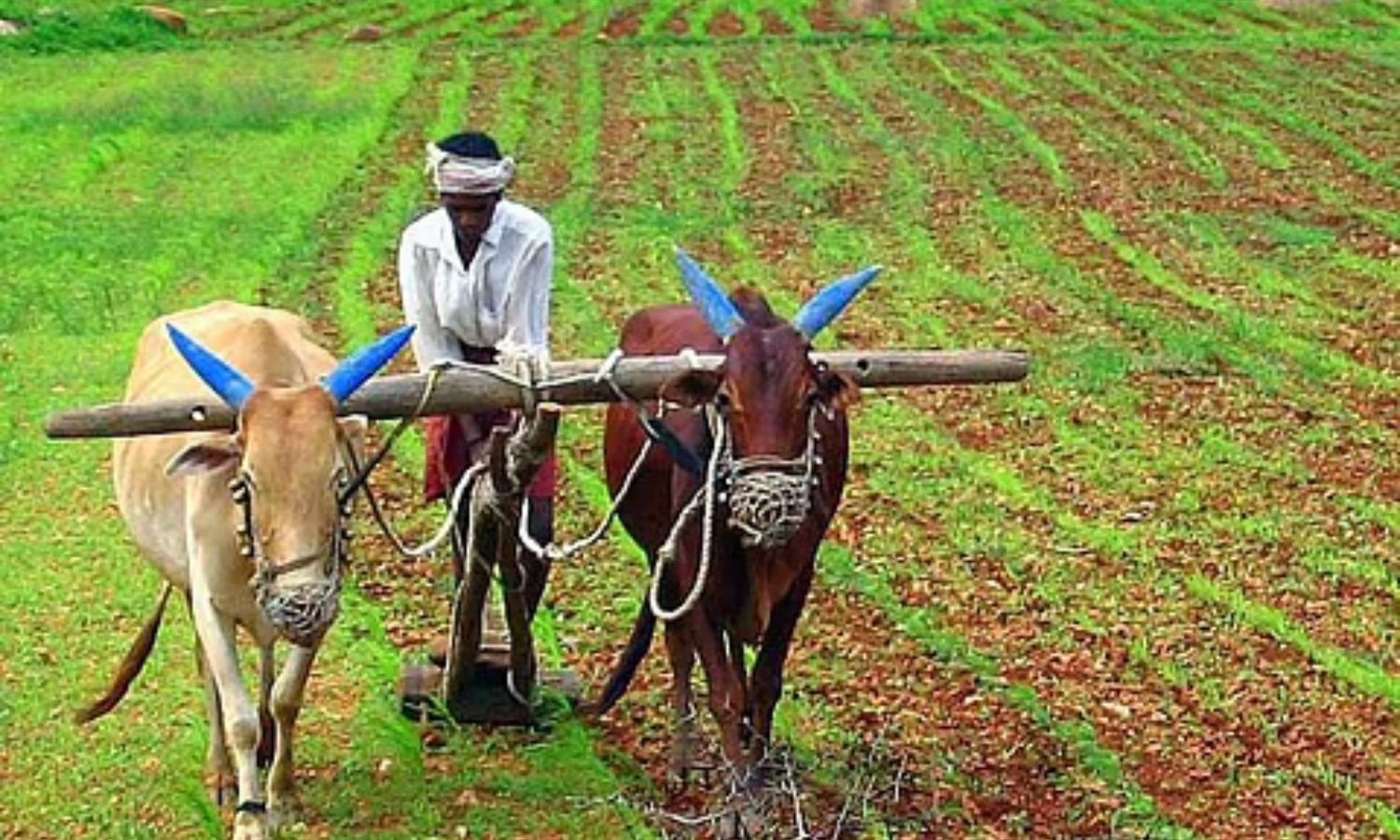
Hyderabad: Telangana farmers faced a worsening water crisis as rainfall remained below normal and irrigation support became a major concern. Government data showed 560.3 mm of rainfall between June 1 and September 22, against the normal 704.1 mm.
The state recorded a 20.4% rainfall deficit during the period, with rainfall 143.8 mm below normal. The source also reported that August had recorded a 38% deficit, raising concerns about water availability for standing crops.
Meanwhile, the government has faced criticism over the absence of a clear crop-water plan. Critics have questioned whether officials prepared project-wise and mandal-wise plans covering the acreage and duration of irrigation.
Farmers’ associations have demanded that canal gates be opened to provide water to crops. They have warned that delays could damage paddy and other standing crops during critical growth stages.
The source said 17 districts had entered the deficient rainfall category by the beginning of September. It also raised concerns over storage in the state’s tanks, with nearly 40% of the 44,034 tanks reportedly holding less than one-quarter of their capacity.
The rainfall figures have added pressure to irrigation planning across Telangana. The state Irrigation and CAD Department lists water-resource management for agriculture among its responsibilities.
Farmers have also reduced the overall cultivated area amid concerns about water availability. According to the source, monsoon cultivation covered 123 lakh acres this year, compared with 139 lakh acres last year.
That represented a decline of more than 16 lakh acres, according to the figures cited in the source. Paddy acreage fell by 18% to 49.26 lakh acres, while cotton covered 48.24 lakh acres.
Maize accounted for 5.93 lakh acres, with the remaining cultivated area under other crops. The source said paddy had reached the tillering stage, while cotton had entered the boll stage.
At these stages, farmers in several districts have raised concerns about irrigation availability. Nalgonda, Suryapet, Jagtial, Siddipet and Mahabubnagar were among the districts identified as facing water shortages.
The source described cases in which farmers reportedly left paddy fields for sheep and goat grazing after spending money on cultivation. Such accounts have added to concerns over possible crop losses.
Telangana farmers water crisis puts irrigation and power under pressure
With canal water reportedly unavailable in several areas, farmers have increasingly depended on groundwater and agricultural borewells. The source said nearly 30 lakh agricultural borewells were operating, placing additional pressure on electricity demand.
According to the figures cited in the source, Telangana recorded an all-time peak electricity demand of 19,543 MW on September 9. It said demand was 23% higher than during the corresponding period last year.
Power companies have maintained that they met the demand and continued supply. However, farmers have reported problems involving low voltage and technical interruptions affecting agricultural motors.
The source said falling groundwater levels were adding another difficulty for farmers. In some areas, power interruptions reportedly occurred before borewell water could reach the fields.
Water availability in major river basins has also emerged as a concern. The source said reservoirs in the Krishna and Godavari basins were holding substantially less water than their combined capacity.
It cited a total reservoir capacity of 808 TMC and available storage of 465 TMC. The figures attributed to the government showed Srisailam holding 61.65 TMC, compared with 153.56 TMC during the same period last year.
Nagarjunasagar was cited at 44.89 TMC, against 174.25 TMC during the corresponding period last year. These figures were presented in the source as evidence of the pressure on irrigation resources.
The source also cited Jurala’s inflows between June 1 and September 21. It said the project received 243 TMC of floodwater, while 223 TMC subsequently moved downstream.
Farmers have raised concerns about how available water is being released from irrigation projects. According to the source, farmers alleged that canal gates were closed despite an inflow of 80,000 cusecs at Jurala.
On September 20, farmers on the Jurala left canal reportedly lifted the canal gates themselves to release water. The source said authorities later closed the gates again, intensifying the dispute over irrigation releases.
The account also referred to water movements in neighbouring states. It alleged that Karnataka was using water from the Almatti and Narayanpur projects for agriculture, while Andhra Pradesh was moving Krishna water toward Kuppam.
These claims were presented by the source in the context of Telangana’s irrigation concerns. They were not independently established in the supplied material.
The irrigation department’s plans also became a point of contention. According to the source, planned irrigation covered 95,108 acres under projects including Musi, Dindi, Pakala and Vaira in the Krishna basin.
In the Godavari basin, the cited plans covered 6,05,955 acres under projects including Kadem, Nizamsagar and Devadula. Together, the source put the planned coverage at 7,01,063 acres.
BRS leaders KTR and Harish Rao protested at Jurala over the issue.
They alleged that the government had effectively created an unofficial crop holiday by restricting irrigation when standing crops needed water.
The source also linked the farmers’ concerns to a wider political dispute in Telangana. BRS leaders have criticised the government’s handling of irrigation, while the BJP has raised separate objections over restrictions surrounding Ganesh immersion at Hussain Sagar.
BJP workers and members of the Bhagyanagar Ganesh Utsav Samiti reportedly protested at the Tank Bund. The source said some protesters attempted to remove the barricades installed there, leading to tension.
The BJP has argued that the Congress government is restricting Hindu festivals in the name of environmental regulations. It has also demanded that Ganesh immersion be allowed in Hussain Sagar without the reported obstacles.
Political observers cited in the source interpreted the Tank Bund dispute as part of the BJP’s wider political strategy in Hyderabad. Those assessments are political interpretations rather than independently established facts.
The source also alleged that the Congress government was attempting to shift public attention toward issues involving former rulers and farmhouses. Congress representatives have been conducting land inspections and raising allegations concerning properties associated with former BRS leaders.
The source specifically mentioned the Erravalli farmhouse and properties linked to KCR, Harish Rao and KTR. Congress leaders have also highlighted alleged irregularities during the previous BRS government.
Ministers have referred to investigations by the Hyderabad Disaster Management Agency, Hydra. The source said Congress leaders have used these investigations while responding to allegations surrounding governance and land issues.
Critics cited in the source alleged that farmhouse-related political activity was intended to divert attention from farmers’ concerns. They also referred to issues involving the implementation of the farm loan waiver, tenant farmers and drought conditions.
The source further alleged that the BJP’s campaign over Ganesh immersion had similarly shifted attention away from agricultural issues. These claims represent political criticism contained in the supplied material and are not established as fact.
The immediate concern for farmers remains access to irrigation water for standing crops. With rainfall below normal and reservoir levels under pressure, farmers’ associations have continued demanding timely canal releases.
Government data confirms the state’s cumulative rainfall deficit through September 22. The Directorate of Economics and Statistics recorded 560.3 mm against a normal 704.1 mm during the period.
The Telangana farmers water crisis has therefore combined rainfall shortages, irrigation disputes and higher dependence on groundwater. Farmers are seeking timely water releases to protect crops already in the field.