

Hyderabad: SLBC tunnel works have moved beyond a difficult geological zone, paving the way for faster excavation, Minister N. Uttam Kumar Reddy said.
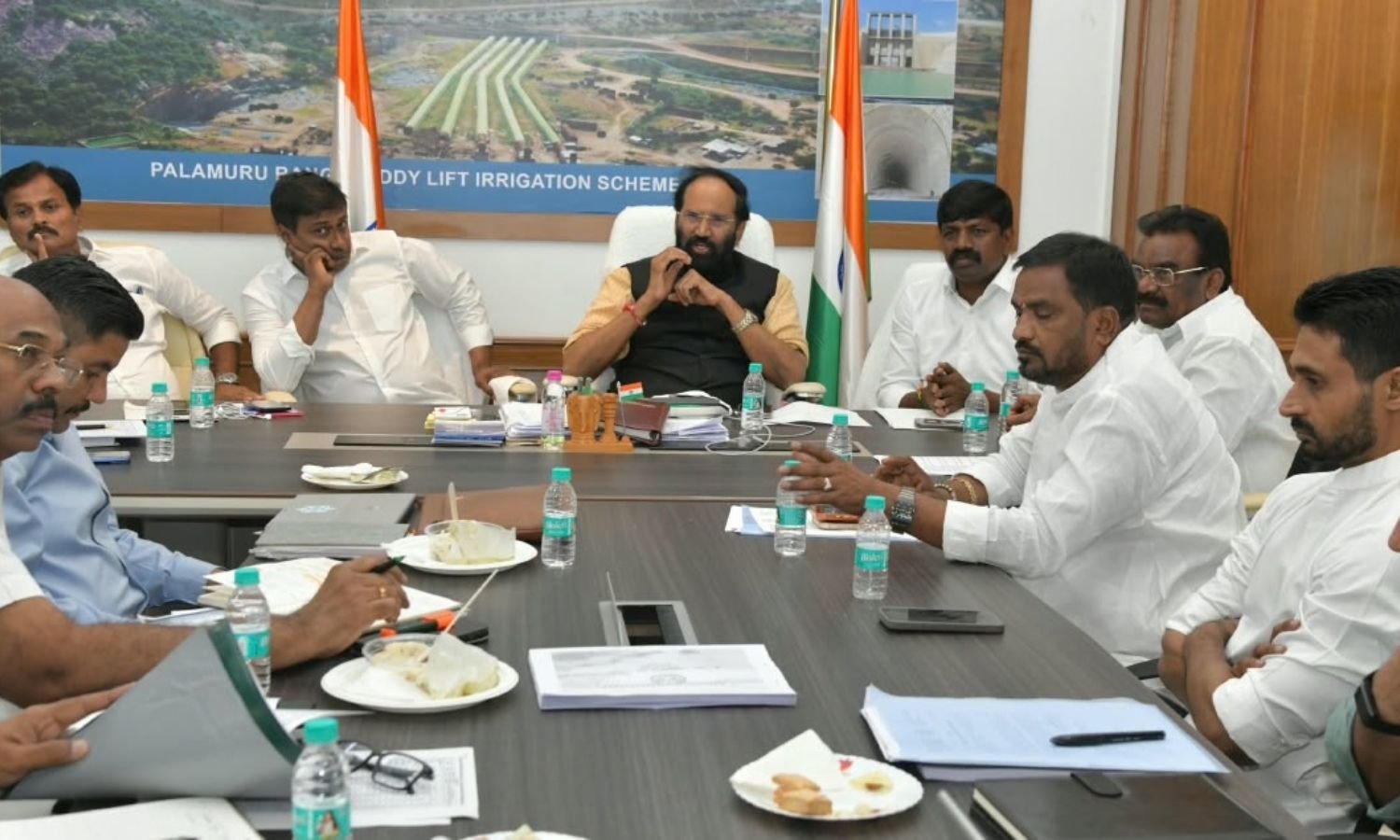
Uttam reviewed the Srisailam Left Bank Canal tunnel project with elected representatives and senior officials on Sunday. The review covered key irrigation projects across the three districts of erstwhile Nalgonda.
The SLBC project is expected to deliver more than 30 TMC of water to upland areas facing persistent water scarcity. The minister said the latest progress marked an important stage in the tunnel’s construction.
MPs K. Raghuveer Reddy and Chamala Kiran Kumar Reddy attended the review. MLAs Mandula Samel, K. Jaiveer Reddy, Vemula Veeresham and Anil Kumar Reddy also participated.
MLC Shankar Naik, Irrigation Secretary E. Sridhar and Engineer-in-Chief O. V. Ramesh Babu were present. Collectors of Suryapet, Nalgonda, Yadadri-Bhongir and Mahabubabad also took part in the meeting.
Uttam commended officials and workers involved in the difficult excavation work. He said safely crossing the precarious shear zone represented a significant advance for the project.
The minister called for additional equipment, better excavation cycles and continuous safety monitoring. He also sought a closely monitored programme to meet the June 2028 water-delivery target.
More than 700 metres of excavation progressed during the previous five to six months. About 450 metres came from the outlet and another 250 metres from the inlet.
The 43.968-km main tunnel is approximately 79 per cent complete, according to the project team. Around 9.1 km of excavation remains, while workers continue operating deep inside the tunnel.
SLBC tunnel works to benefit from new equipment
Col. Parikshit Mehra, an Indian Army tunnel expert leading operations, explained the difficulties at the inlet. Excavation there initially slowed because of weak ground, rock bursts and the need to prevent another accident.
The team had to divert the working face around the location where the tunnel-boring machine became stuck. That diversion passed through particularly poor geological conditions and required additional safety measures.
Workers installed 140-mm seamless pipes to create an umbrella canopy ahead of excavation. Reinforced ribs, staged excavation, probe drilling and other support measures helped control risks.
Rock conditions have since improved, allowing the team to move towards more normal working conditions. Uttam directed officials to build on the progress while protecting crews working more than 20 km inside the tunnel.
The project team reported a combined advance of about eight metres a day. Its sustained daily rate stood between seven and seven-and-a-half metres, while progress reached 10 metres on one or two days.
A three-arm drilling boomer was already operating at the outlet. Progress there was reported to be close to the required pace, while another three-arm boomer was expected at the inlet in October.
Electric loaders and advanced excavators were also supporting the construction activity. A locomotive ordered from Germany is expected to arrive by the end of October.
The locomotive is expected to improve the removal of excavated material and reduce the construction cycle. Hauling material across distances of up to 21 km remains a major constraint on excavation.
When material removal falls behind, excavated material accumulates inside the tunnel. This eventually forces work at the excavation face to stop until workers clear the backlog.
The construction cycle previously took about 48 hours but has now fallen to 20–24 hours. The team expects improved equipment and faster material removal to reduce the cycle to about 10 hours.
The project team expects excavation to accelerate from late October or early November. Uttam also expressed hope that Tunnel 1 could achieve breakthrough by May–June 2028.
Sprayed lining is continuing alongside excavation. This approach allows a substantial portion of the lining work to progress before the tunnel reaches breakthrough.
The minister directed officials to complete Tunnel 2, the balancing reservoir and related components on schedule. He stressed that unfinished infrastructure should not delay the eventual delivery of water.
Tunnel 2 is approximately 7.1 km long and lining work has resumed after a prolonged interruption. Uttam emphasised that safety must remain central as excavation gathers pace.