

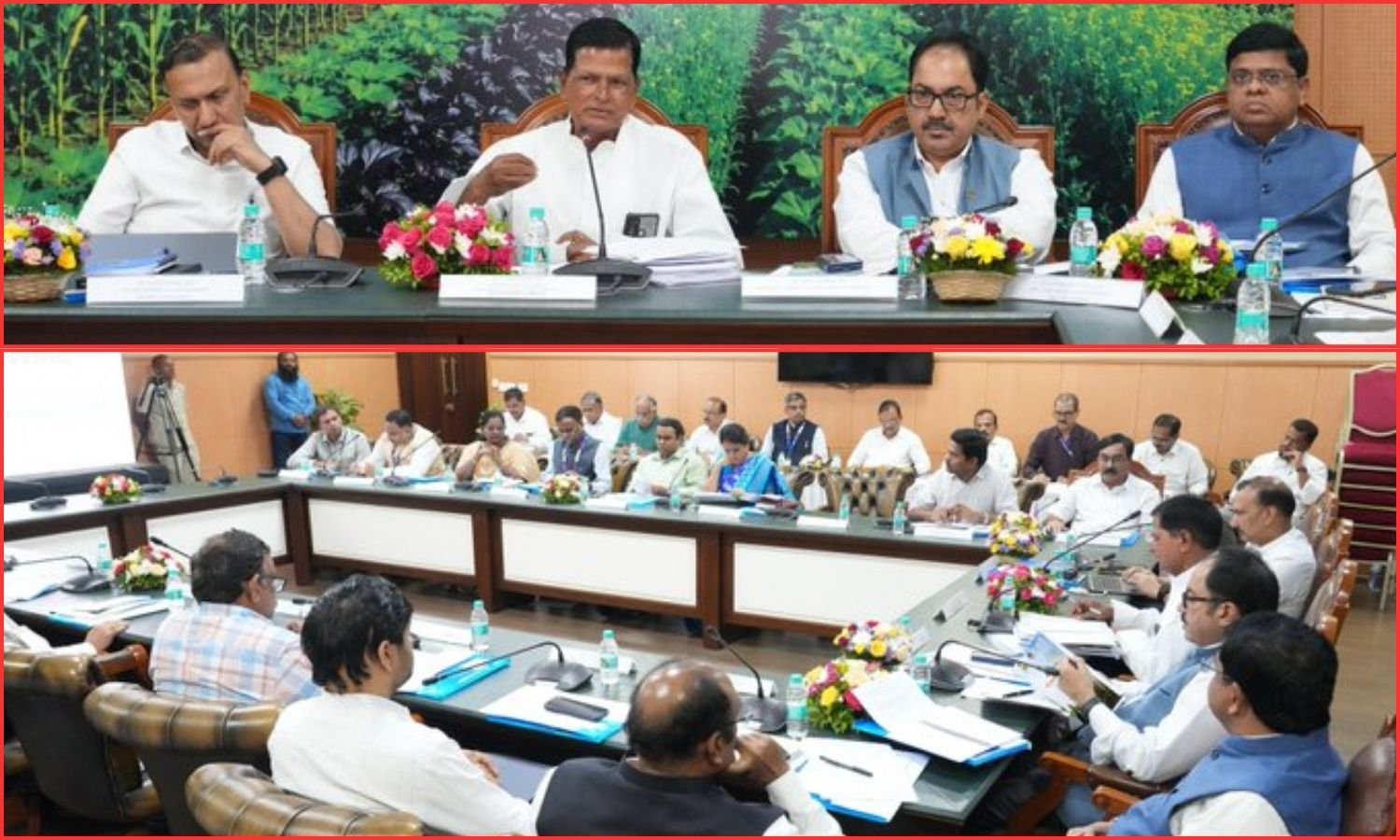
Hyderabad: The Telangana El Niño committee held its first meeting on Wednesday. It began preparing a State-level contingency action plan for agriculture and allied sectors. Dr. G. Chinna Reddy, Vice Chairman of the Telangana State Planning Board, chaired the meeting at Praja Bhavan.
The 27-member committee includes experts from research institutions, universities, government departments and specialised organisations. Representatives from the IMD, ICRISAT, ICAR-CRIDA, NABARD and several agricultural institutions attended the meeting.
Telangana El Niño committee reviews rainfall deficit
Dr. Chinna Reddy said Telangana had recorded an overall rainfall deficit of about 30 per cent since June 1. He said 10 districts received normal rainfall. Another 23 districts reported deficient rainfall.
He said earlier forecasts pointed to below-normal rainfall because of El Niño. However, many had expected the southwest monsoon to remain normal.
Dr. Chinna Reddy explained that El Niño develops when sea surface temperatures in the central and eastern Pacific Ocean remain at least 0.5 degrees Celsius above normal for several months. He said the El Niño-Southern Oscillation influences weather systems worldwide. He added that weakened trade winds reduce southwest monsoon rainfall, while La Niña generally strengthens monsoon conditions over India.
The committee reviewed district-wise and mandal-wise weather data, rainfall figures and crop area details from rainfall-deficit districts. Dr. Chinna Reddy said the information would support scientific assessment and evidence-based decisions. He also recalled that the State Cabinet directed the formation of the committee on July 17.
Dr. Chinna Reddy called for responsible use of natural resources. He stressed the need to conserve water and electricity. He said public awareness and community participation would strengthen the government’s response. The committee also reviewed scientific assessments on El Niño, La Niña, ocean temperature anomalies, the Oceanic Niño Index, the Indian Ocean Dipole, global atmospheric circulation and rainfall patterns.