

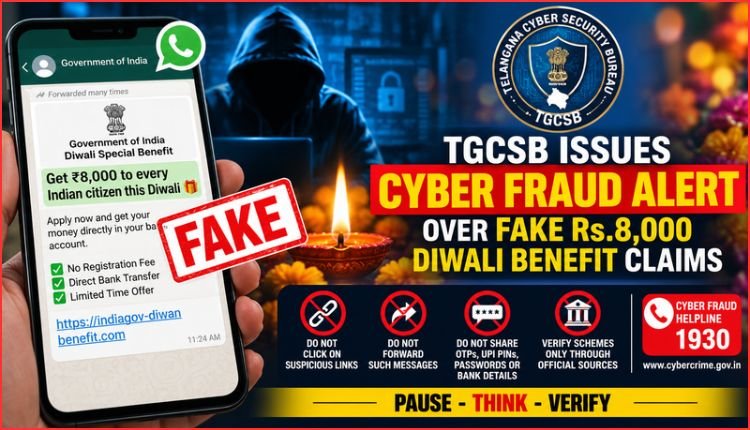
Hyderabad: The Telangana Cyber Security Bureau (TGCSB) warned citizens on Thursday, October 29, against fake Diwali benefit messages circulating on WhatsApp. The messages falsely claimed that the Central government was offering Rs 8,000 to every Indian citizen.
The Bureau cautioned that the messages contained suspicious links designed to steal sensitive banking information and facilitate financial fraud. Officials warned that clicking these links could expose users to unauthorised Unified Payments Interface (UPI) transactions or malicious software.
TGCSB advised citizens to avoid opening or forwarding the messages and verify government welfare announcements through official sources.
Fake Diwali benefit messages pose banking security risks
According to TGCSB, fraudsters circulated fake Diwali benefit messages to attract people with claims of financial assistance from the Central government. The messages promised Rs 8,000 to every Indian citizen as a festive benefit. However, the Bureau identified the claims as fraudulent.
The suspicious links accompanying the messages could compromise personal financial information and expose users to cybercrime. Additionally, the links could facilitate unauthorised UPI transactions or install malicious software on devices.
The Bureau therefore urged WhatsApp users to exercise caution before responding to messages promising government payments. It also advised people against forwarding unverified claims to friends, relatives or other contacts.
TGCSB warns against sharing OTPs and UPI PINs
The Telangana Cyber Security Bureau specifically cautioned citizens against disclosing One-Time Passwords (OTPs), UPI PINs, passwords and banking details. It advised users not to enter sensitive information on unverified websites linked through suspicious messages.
Furthermore, the Bureau stressed that people should confirm the authenticity of government schemes through official sources. The advisory highlighted the financial risks associated with responding to fraudulent payment offers and sharing confidential banking credentials.
Cyber fraud victims advised to call 1930
TGCSB instructed citizens who lost money through cyber fraud to contact their banks immediately. The Bureau also advised victims to report financial cybercrime through the national cyber fraud helpline, 1930.
Alternatively, victims could register complaints through the official National Cyber Crime Reporting Portal at [www.cybercrime.gov.in]. The advisory emphasised immediate reporting following any financial loss linked to suspicious messages or online transactions.
Meanwhile, TGCSB Director Shikha Goel urged citizens to remain alert while handling unsolicited messages containing financial offers. She advised the public to follow the cyber-safety mantra, “PAUSE – THINK – VERIFY”.
The warning specifically addressed fraudulent WhatsApp claims about an Rs 8,000 Diwali payment and the risks associated with their embedded links.