

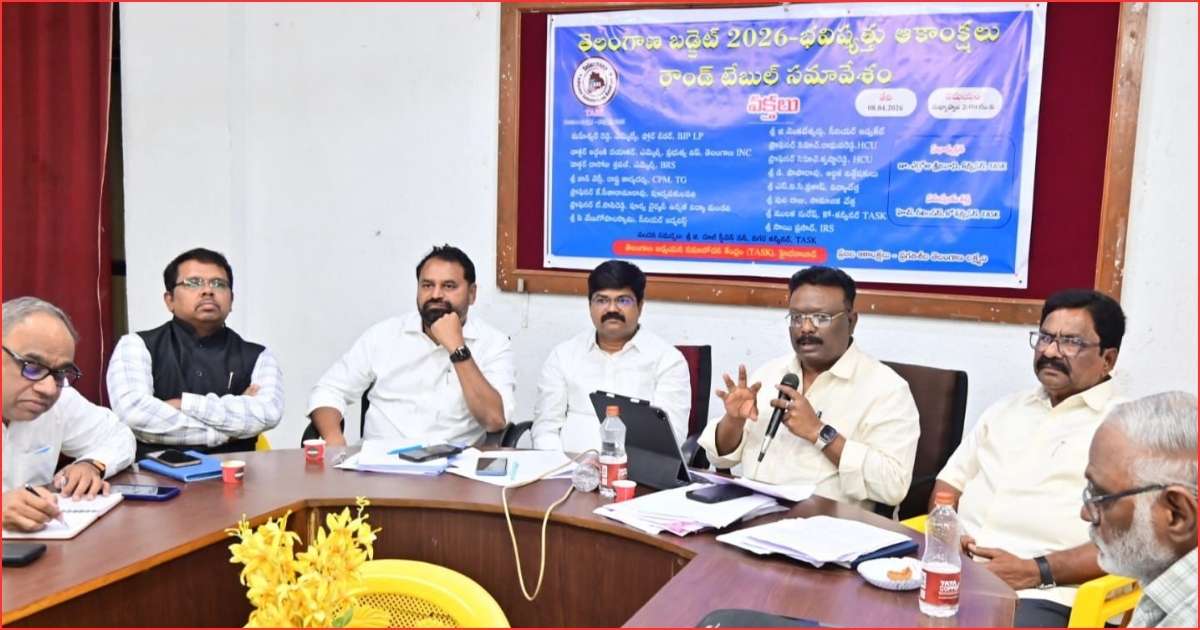
Hyderabad: Telangana budget criticism was raised by BRS MLC Dasoju Sravan Kumar, who presented a detailed analysis of the 2025–26 budget at a round table organised by the Telangana Adhyayana Samacharana Kendram (TASK).
He said budget evaluation must go beyond allocations and include actual expenditure, CAG reports and socio-economic data. According to him, such an approach reveals gaps between projections and implementation.
The BRS leader stated that the state moved from a revenue surplus of ₹779 crore to a deficit of ₹9,420 crore within two years. He described this shift as a sign of weakening fiscal management and limited revenue generation.
Telangana budget criticism highlights fiscal and policy concerns
Referring to borrowings, Sravan said the government relied heavily on debt. Citing CAG findings, he noted that authorities approached the RBI for borrowing on most days in 2024–25. He added that total borrowings reached ₹3.47 lakh crore, while repayments under FRBM norms remained significantly lower.
He also flagged discrepancies in repayment reporting. According to him, including corporate repayments in government accounts distorted financial data.
Telangana budget criticism points to spending gaps
Further, Sravan highlighted gaps between allocations and actual spending across sectors. He said housing, welfare and agriculture recorded utilisation levels below expectations. In several departments, he noted, spending remained under 60% of allocated funds.
On central grants, he said the state received less than ₹7,000 crore against a ₹21,000 crore target. This shortfall, he added, reflected weaker-than-expected financial inflows.
Turning to agriculture, the MLC said schemes such as Rythu Bharosa and insurance coverage did not reach beneficiaries effectively. He also pointed to reported farmer distress and delays in compensation.
Telangana budget criticism raises welfare and development concerns
He questioned employment claims and said part of the reported job creation originated from earlier recruitment processes. He also raised concerns over pending welfare commitments to pensioners, women and minority groups.
On social sectors, he said education allocations remained below recommended levels. Spending on health and rural development, he added, continued to trail national averages. He also pointed to variations in revenue figures and raised concerns over data consistency.
Sravan criticised what he described as Hyderabad-centric development. He called for balanced investment across districts and warned that regional disparities could widen without corrective measures.
He outlined demands including adherence to FRBM limits, improved fiscal discipline, full utilisation of welfare funds and a plan to address the revenue deficit. He also stressed the need for transparency and accountability in budget implementation.
The meeting, chaired by Prof. Erroju Srinivas, was attended by public representatives, academics and policy participants.