

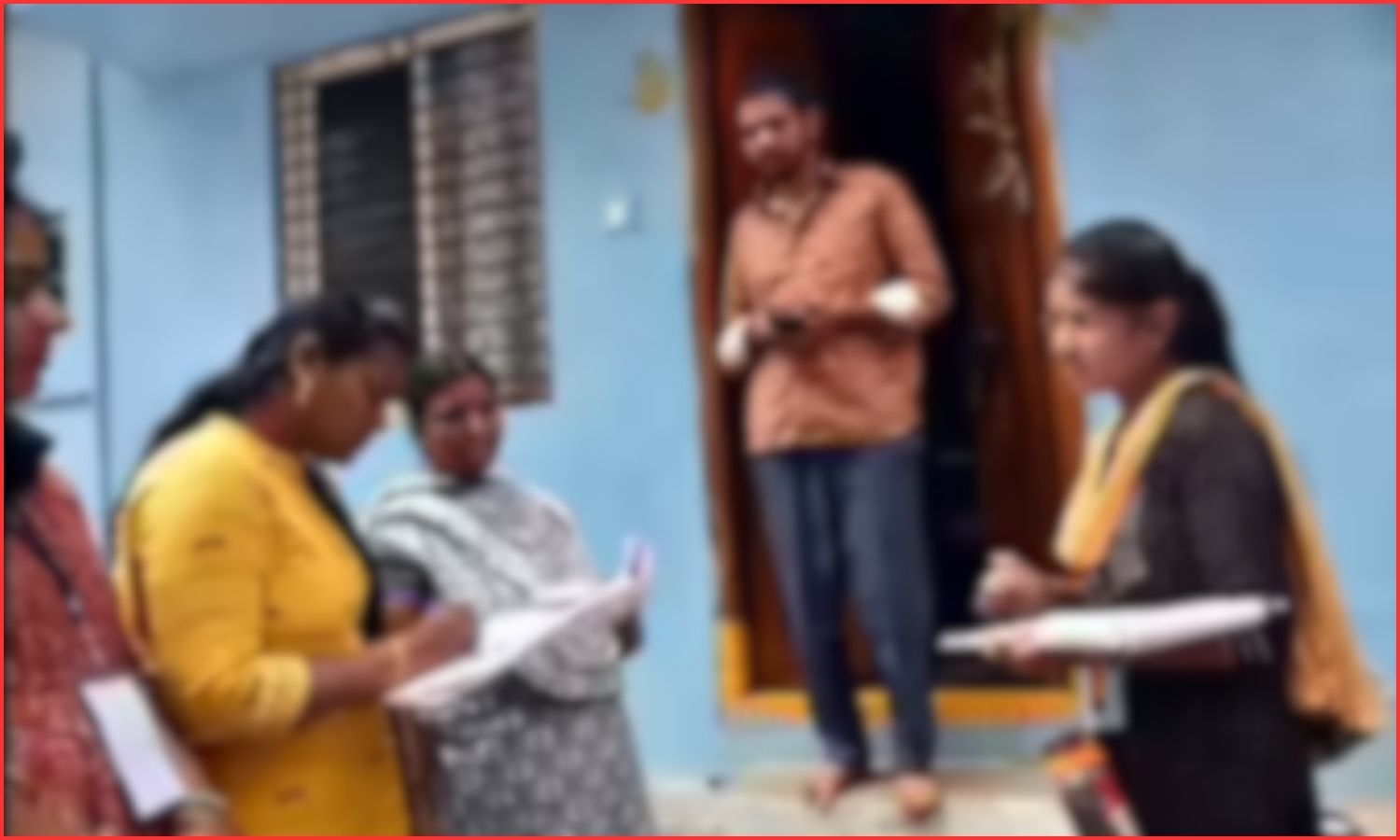
Hyderabad: The Telangana household survey collected detailed socio-economic data from over 1.12 crore households, covering nearly 97 per cent of the state’s population.
Authorities conducted the Telangana household survey between February 4 and February 16, 2024, under the supervision of the State Planning Department. An Independent Expert Working Group (IEWG) provided technical support for design and validation.
Officials gathered information on about 3.55 crore individuals. Moreover, around 1.03 lakh enumerators and 76,000 supervisors carried out the exercise across the state.
The survey captured data on caste, occupation, income, education, health and housing. In addition, it covered 57 sections with 75 data fields to support welfare planning.
Telangana household survey highlights caste distribution and inequalities
The findings showed that Backward Classes account for 56.36 per cent of the population. Scheduled Castes constitute 17.42 per cent, while Scheduled Tribes account for 10.43 per cent. Other Castes make up 15.79 per cent.
Around 14 lakh people did not report any caste category. Many among them were identified primarily through religion or other social identities.
Authorities also developed a Community-Based Index using 42 indicators to assess backwardness. The analysis showed higher socio-economic disadvantage among SC and ST groups. Among Backward Classes, 86 communities fall under significant backwardness, while 31 show relatively better indicators.
The Telangana household survey also revealed disparities in education, income and employment. Many families depend on low-income occupations such as agriculture and daily wage labour.
Lower educational attainment remains a concern among SC, ST and some BC communities. At the same time, access to stable and well-paying jobs remains limited for several groups.
Based on the findings, the government plans targeted welfare measures by 2025. These include improving education, employment opportunities and social security.
Authorities are also considering around 42 per cent reservation for Backward Classes in education and employment. In addition, a framework titled “Samajika Nyayam 2.0” aims to ensure equitable distribution of benefits using the survey data.
Officials said the survey will serve as a key tool for evidence-based governance and inclusive development in the state.