

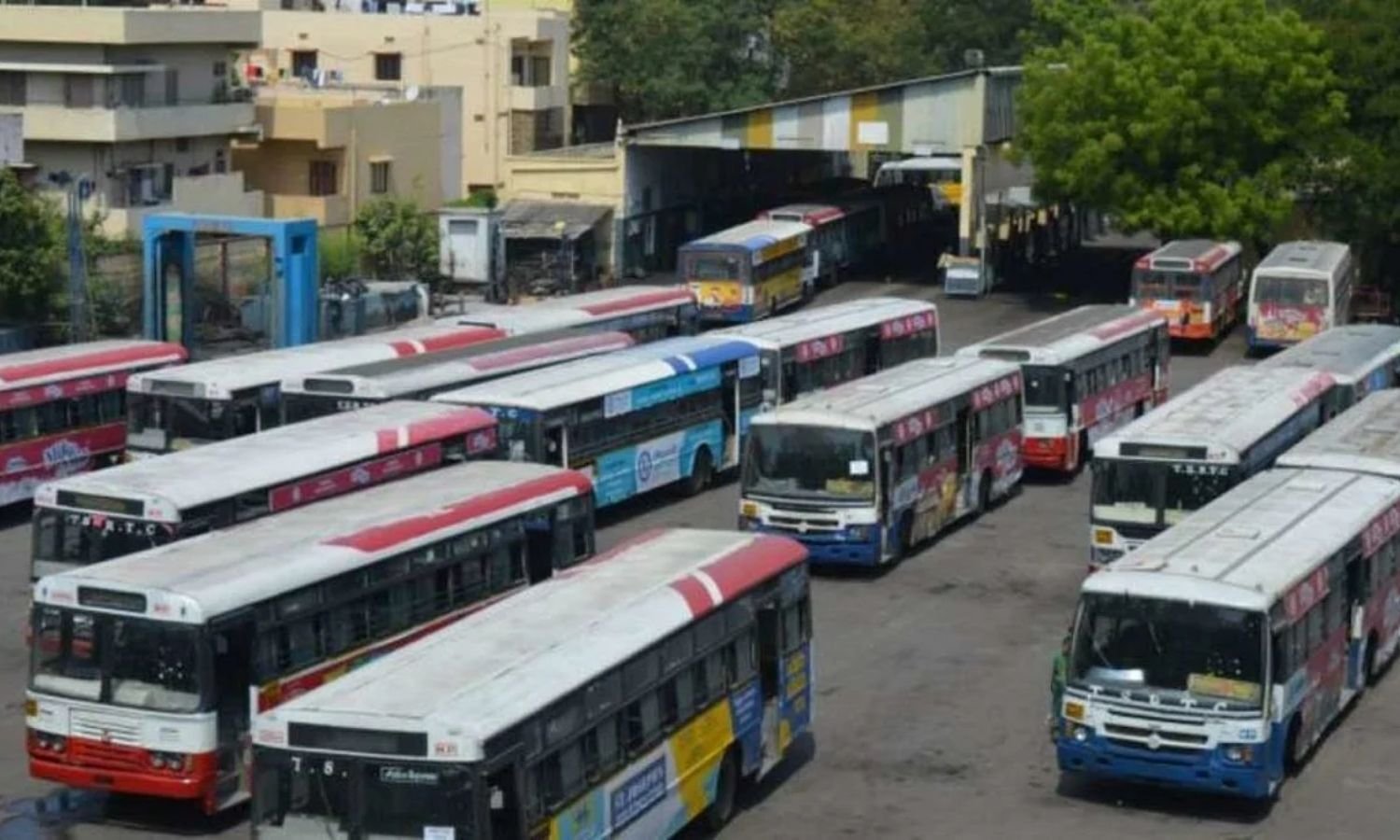
Hyderabad: RTC land acquisition in Greater Hyderabad has triggered concern among employees and trade unions over the future of valuable corporation assets. Around 6 acres in Jamistanpur and 13 acres near Kacheguda have been identified for different government projects.
The state government has taken about 6 acres at Jamistanpur in Musheerabad constituency for the Indiramma Houses programme. Meanwhile, the Centre is reportedly acquiring 13 acres near the Kacheguda RTC depot for railway works.
RTC employees have questioned the corporation’s handling of its land assets. They said the lands could be important for the organisation’s future requirements.
Media representatives reportedly sought clarification from senior RTC officials about the land transfers. However, the officials did not respond to calls seeking their version on the issue.
The developments have also raised questions among employees about the decisions taken regarding RTC properties. Workers want the corporation to publicly clarify the extent and purpose of the land being transferred.
Housing Minister Ponguleti Srinivasa Reddy’s remarks have also drawn attention in this context. Speaking at a programme in Tumgathurthi, he said Hyderabad land could cost between Rs. 150 crore and Rs. 200 crore per acre.
Ponguleti said opposition leaders were unable to accept the use of R&B, RTC and Housing Board lands for houses for poor families. His remarks indicated that RTC land was being used for the Indiramma housing programme.
The government has officially identified the RTC quarters site at Jamistanpur as one of four new locations for Indiramma Towers. The other locations include Amangal in LB Nagar, Nampally in Goshamahal and Bandlaguda in Chandrayangutta.
The government plans to construct 1,920 houses across these four locations. Each location has been allocated 480 houses under the programme.
The Telangana Housing Board has also included Musheerabad constituency in the Indiramma housing programme. This decision has intensified concerns among RTC trade unions about the use of the Jamistanpur quarters site.
Union leaders have questioned how the government could acquire the land before completing the division of properties from the former united Andhra Pradesh assets. They have sought clarity on the ownership and transfer process.
RTC land acquisition draws opposition from unions
The Railways’ proposal to take 13 acres opposite Kacheguda railway station has reportedly already been implemented. The land is intended for works connected with the modernisation of the railway station.
RTC unions have expressed concern over both developments involving corporation land. However, opposition to the projects does not mean opposition to providing houses for poor families, union leaders said.
Their objection centres on using land previously reserved for RTC’s future requirements. They argued that transferring such valuable property could create difficulties for the corporation later.
The SWF and TMU, led by Thomas Reddy, have warned that they could mobilise other unions if necessary. Their stated aim is to protect RTC lands from further transfers.
RTC employees have also demanded an official account of the affected properties. They want the RTC board to disclose what decisions it has taken regarding the lands.
Workers are seeking details on the total acreage going towards Indiramma Towers. They also want officials to disclose how much land is being given to the Railways.
In addition, employees have sought information on the estimated value of the properties involved. They said RTC officials should provide an official response to these questions.
The employees’ concerns extend beyond the current projects. They fear that continued RTC land acquisition could weaken the corporation’s ability to meet its future infrastructure requirements.
Some union leaders also said the issue could influence the upcoming recognition committee elections. They expect employees to consider how different unions respond to the protection of RTC assets.
The unions maintain that RTC properties should be protected for the organisation’s long-term needs. They have therefore called for greater transparency over decisions involving the corporation’s valuable land assets.