

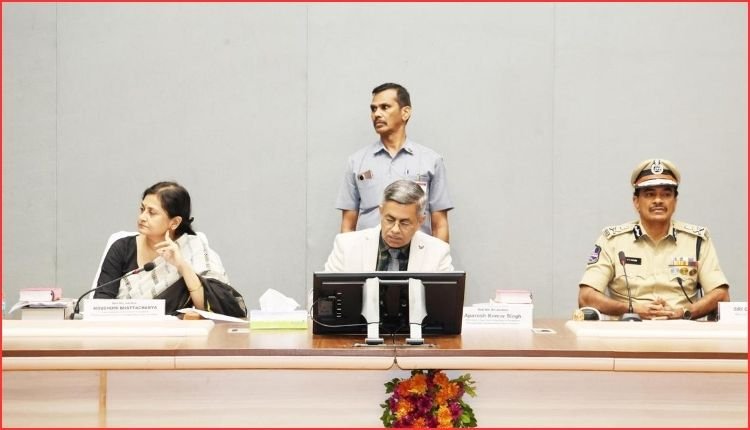
Hyderabad: Telangana brought key criminal justice institutions onto a common platform to strengthen the digital implementation of the new criminal laws across the State.
The Telangana State Judicial Academy organised the conference in collaboration with Telangana Police. It focused on strengthening the criminal justice system through digital platforms.
Telangana High Court Chief Justice Aparesh Kumar Singh inaugurated the conference. Around 1,200 judicial officers and officials from across Telangana participated through a hybrid format.
The conference brought together the judiciary, police, prosecution, prisons, forensic agencies and other stakeholders. It focused on institutional coordination and technology integration under the new criminal laws.
Justice Singh stressed that effective justice depended on institutions working together. He called for seamless coordination across investigation, forensics, prosecution and adjudication.
New criminal laws require institutional coordination
Justice Singh said implementation of the Bharatiya Nyaya Sanhita, Bharatiya Nagarik Suraksha Sanhita and Bharatiya Sakshya Adhiniyam required close cooperation.
He emphasised technological integration across different stages of the criminal justice process. Better coordination between institutions was essential for effective implementation, he said.
Telangana State Judicial Academy president Justice Moushumi Bhattacharya also called for stronger coordination among stakeholders.
She stressed the importance of digital literacy while implementing the new criminal laws. Moreover, she said the conference would benefit judicial officers, police personnel and other stakeholders across the country.
Justice Bhattacharya identified duplicate data entry as one cause of avoidable delays. She also flagged incomplete information and incorrect coding as problems affecting the digital system. Therefore, she stressed the need for capacity building among personnel using the platforms.
New criminal laws shift focus towards digital evidence
Director General of Police C.V. Anand said the new legal framework marked a shift towards citizen-centric justice and scientific investigation. He highlighted the growing importance of digital evidence and electronic records. The laws also placed greater emphasis on time-bound procedures, he said.
Anand stressed the need for accurate digital data and timely investigations. In addition, he called for effective use of technology throughout the criminal justice process.
Technical sessions at the conference covered the Inter-operable Criminal Justice System, or ICJS, and e-Sakshya. Participants also discussed online FIRs and charge sheets, e-Summons and prescribed investigation timelines.
Other sessions covered recording evidence through video conference and the Nyaya Shruthi platform. The conference also examined forensic and medical interfaces and digital coordination involving prison administration.
Coordination between investigating agencies and prosecutors formed another major part of the deliberations. Anand proposed establishing a regular monthly review mechanism to monitor implementation across Telangana.
He suggested that a Telangana High Court judge chair the proposed review process. The mechanism would track implementation of the new criminal laws and coordination among participating institutions.
The conference also drew senior members of the judiciary and officials from different parts of the criminal justice system. Justice Vijaysen Reddy and Justice Madhavi Devi attended the programme. Senior police and prison officials also participated.
Prosecution authorities, representatives of the National Crime Records Bureau and other stakeholders joined the deliberations.
The conference sought to improve coordination between institutions while expanding the use of digital platforms. It also focused on reducing procedural delays caused by inaccurate or incomplete digital information.
Through the initiative, judicial, police, prosecution, forensic and prison authorities discussed ways to integrate their functions under the new criminal laws.