

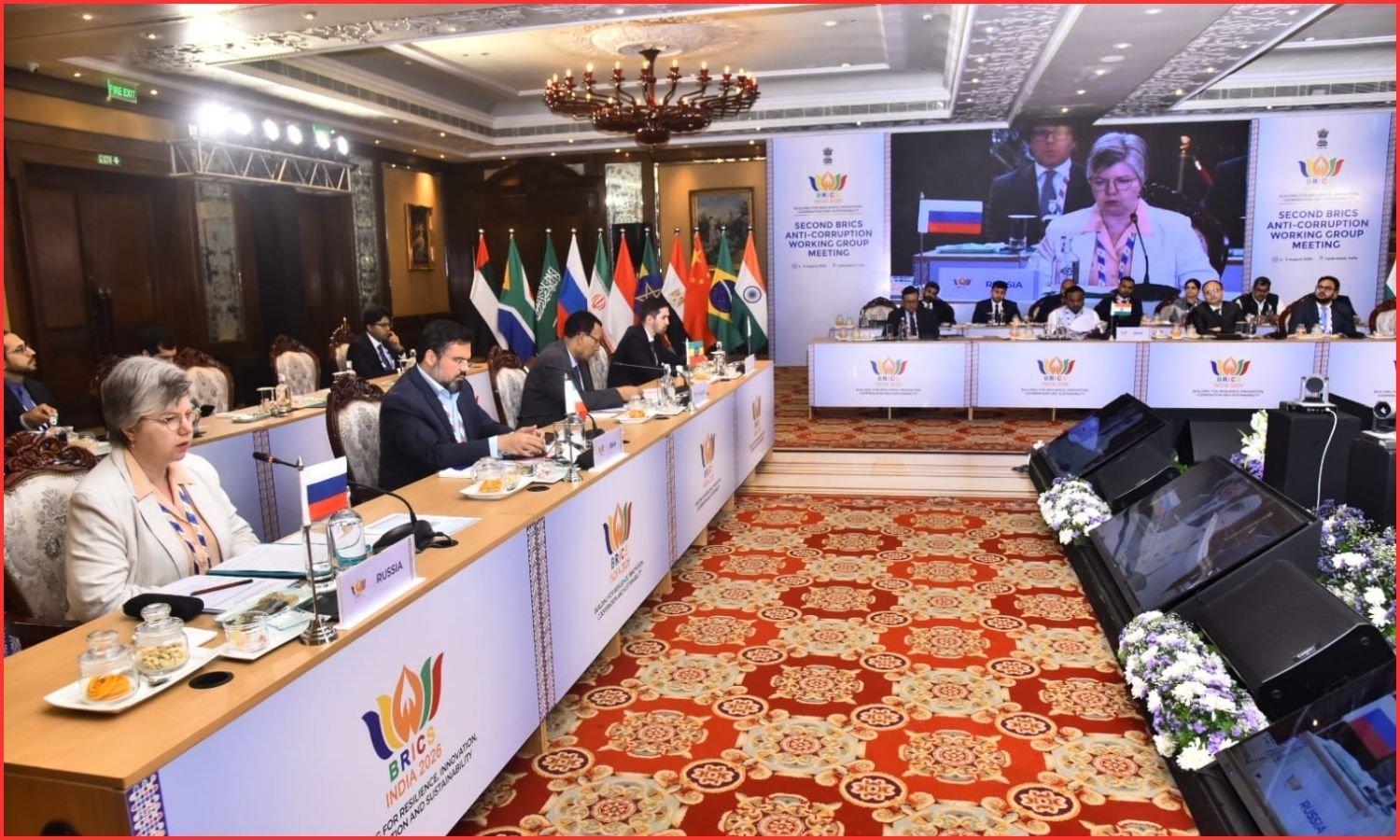
Hyderabad: The BRICS Anti-Corruption meeting made significant progress in strengthening international cooperation against corruption during its second session in Hyderabad. Member countries advanced proposals on fugitive offenders, asset recovery and technology-driven governance.
The Department of Personnel and Training (DoPT), Government of India, hosted the Second Meeting of the BRICS Anti-Corruption Working Group and the Second Meeting of the BRICS Expert Network on Asset Recovery on August 4 and 5. The meetings were held under India’s BRICS Presidency 2026.
The discussions followed the Presidency theme, “Building for Resilience, Innovation, Cooperation and Sustainability.” Moreover, senior policymakers, experts, law-enforcement officials and financial intelligence representatives from all BRICS member countries participated.
DoPT Secretary Rachna Shah inaugurated the meeting. She reiterated India’s zero-tolerance policy towards corruption. She said integrity remains central to good governance, sustainable development and public trust.
BRICS Anti-Corruption advances practical cooperation
Rachna Shah said the BRICS Anti-Corruption forum was evolving from a platform for discussion into one focused on practical cooperation. Accordingly, she stressed the need for timely information sharing, early engagement among competent authorities and trusted practitioner-level communication.
Member countries also made progress on India’s proposal to establish a BRICS Network of Law-Enforcement Practitioners. Further, they reached an in-principle agreement to continue discussions on the proposed platform. The initiative aims to strengthen cooperation in tracing fugitive offenders and supporting extradition.
The delegates welcomed a BRICS Repository on Informal Cooperation for Tracing Fugitive Offenders. They also approved standardised formats for exchanging information during the early stages of investigations.
The BRICS Expert Network on Asset Recovery endorsed a Directory of Focal Points and Experts. Meanwhile, member countries exchanged national experiences and practical case studies on international asset recovery.
A side event on ethical governance highlighted digital procurement systems, artificial intelligence, machine learning and big-data analytics. Participants said these technologies could improve transparency and strengthen preventive vigilance. They also highlighted the importance of open data, social audits and grievance-redressal platforms.
The meeting also examined risks linked to financial technology and virtual digital assets. Finally, members called for risk-based regulatory frameworks, stronger anti-money-laundering safeguards and closer cross-border cooperation to tackle illicit financial flows.
The BRICS Anti-Corruption meeting concluded with member countries reaffirming their commitment to strengthening cooperation in asset recovery, combating cross-border corruption, tracing fugitive offenders and promoting transparent, accountable and technology-driven governance.