

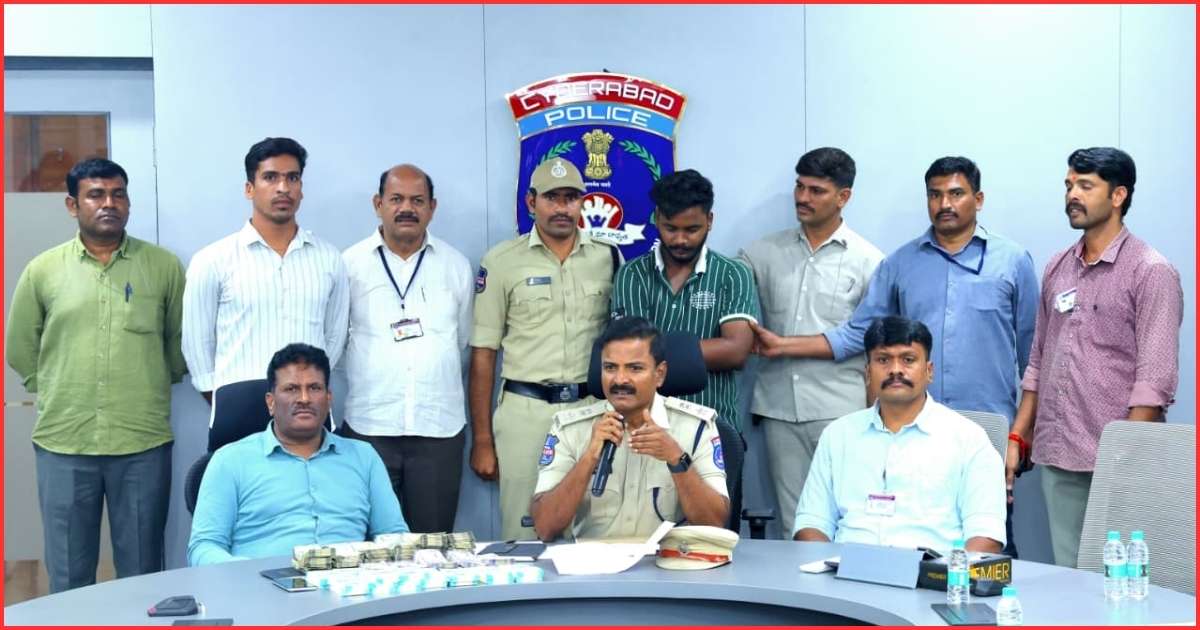
Hyderabad: Cyberabad digital arrest scam investigators arrested a 26-year-old accused for his role in a ₹24 lakh international cyber fraud that targeted Indian citizens through impersonation calls.
Cyber Crime Police of Cyberabad identified the accused as Gajarla Avinash, a native of Katlakunta village in Medipally mandal of Jagtial district. The arrest followed a case registered as Crime No. 341/2026 under relevant provisions of the BNS and the IT Act.
According to officials, the accused had travelled to Cambodia on the pretext of a data entry job. However, after reaching there, he was forced into organised cybercrime operations involving “digital arrest scam” calls.
He later continued in the network and actively participated in fraudulent activities. In the Cyberabad digital arrest scam, he allegedly impersonated law enforcement officials and made threatening calls to victims. He falsely claimed their involvement in criminal cases and pressured them to transfer money.
Cyberabad digital arrest scam involved ₹24 lakh fraud
Police said the defrauded money was routed through mule bank accounts arranged in India. During January and February 2026, around ₹24 lakh was fraudulently transacted and later withdrawn.
The accused and other conspirators allegedly shared the proceeds as commission. Following his apprehension, police seized one mobile phone, an Indian passport, and ₹12 lakh in cash under panchanama.
During questioning, the accused confessed to his role in the offence. Meanwhile, investigators continued efforts to identify more victims, trace the financial trail, and apprehend other members of the international cyber fraud network.
Officials warned that cybercriminals were constantly evolving their methods. They urged the public to avoid installing unknown APK files or clicking suspicious links received through messaging platforms.
They also advised against installing screen-sharing applications at the request of unknown callers. Further, citizens were asked not to trust calls or messages related to KYC updates, SIM blocking, or bank account freezing.
Police cautioned against part-time job offers seeking advance payments and online investment schemes promising guaranteed returns. They also stressed that sharing sensitive banking details such as OTP, CVV, UPI PIN, or net banking credentials could lead to fraud.
Authorities highlighted that QR code scams could result in money being debited rather than received. They further warned against fake customer care numbers, social media account hacking attempts, and advance payment frauds on online marketplaces.