

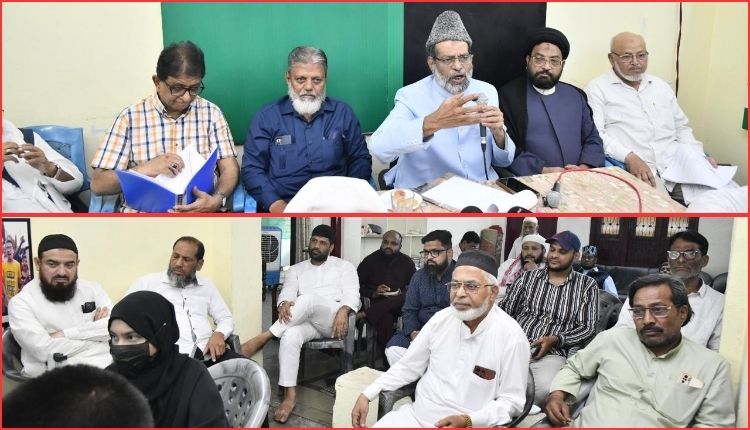
Hyderabad: Several Muslim religious, social and community organisations have demanded the immediate reopening of the Telangana Waqf Board record room, alleging that its continued closure has affected access to important property records and legal documents.
The demand emerged during a meeting held in Hyderabad under the chairmanship of Mohammed Mushtaq Malik, president of Tehreek Muslim Shabban and Sharia Faisla Board.
Ulema, muftis, lawyers, mosque committee members and representatives of various organisations attended the meeting.
Participants questioned the legal basis for keeping the record room closed for nearly nine years.
Telangana Waqf Board record room closure raises concerns
Speakers said the closure had created difficulties in legal and administrative matters involving Waqf properties.
They argued that access to records remained essential for handling disputes related to ownership, possession and encroachments.
The meeting also expressed concern over the alleged delay in conducting regular Telangana Waqf Board meetings.
Participants said several issues involving mosques, graveyards, dargahs, mutawallis and management committees remained pending.
Therefore, they urged the board to convene meetings regularly and resolve administrative matters without delay.
The gathering unanimously approved five resolutions presented by Mohammed Mushtaq Malik.
The first resolution called for the immediate reopening of the Telangana Waqf Board record room.
The second sought public disclosure of all Waqf properties under the board’s jurisdiction.
Participants asked the board to clarify how many properties remained under its control, how many faced encroachment and how many were involved in litigation.
Telangana Waqf Board record room among key demands
The third demand called for digitisation and publication of the board’s annual income and expenditure details.
Speakers said the Waqf Board acted as a custodian of charitable and religious assets and therefore must maintain transparency.
The fourth demand sought a white paper on Waqf properties.
Participants said the document should explain how properties were lost, encroached upon or damaged over the years.
They also requested a detailed account of the assets that remained under board control.
The fifth demand called for fixing responsibility on officials and board members who allegedly failed to protect Waqf properties.
The meeting said both current and former members should remain accountable for the condition of Waqf assets.
Telangana Waqf Board record room issue sparks calls for accountability
Addressing the gathering, Allama Taqi Raza Abidi, president of Tanzeem-e-Mazahib, said Waqf properties existed for religious, charitable and welfare purposes.
He said any misuse of such assets represented a serious breach of trust.
Former MP Syed Aziz Pasha demanded immediate reopening of the record room and sought greater transparency regarding Waqf properties.
He also called for a CBI inquiry into alleged irregularities involving Waqf assets.
High Court advocate Mirza Masood Ali Khan said Waqf properties enjoyed strong legal protection when records and laws were properly presented before courts.
He said authorities should identify responsibility for cases in which Waqf properties were allegedly lost.
Congress leader and advocate Mujeebullah Shareef criticised the failure to hold mandatory Waqf Board meetings and called for greater transparency in administration.
Mufti Abdul Fattah Saheli demanded immediate reopening of the Telangana Waqf Board record room and sought stricter action against encroachers.
He also urged authorities to strengthen legal safeguards for Waqf lands.
Several speakers called for public awareness campaigns to educate Muslims about Waqf properties, legal protections and available remedies.
The meeting also discussed issuing a joint open letter on behalf of participating organisations to highlight concerns regarding Waqf administration and accountability.