

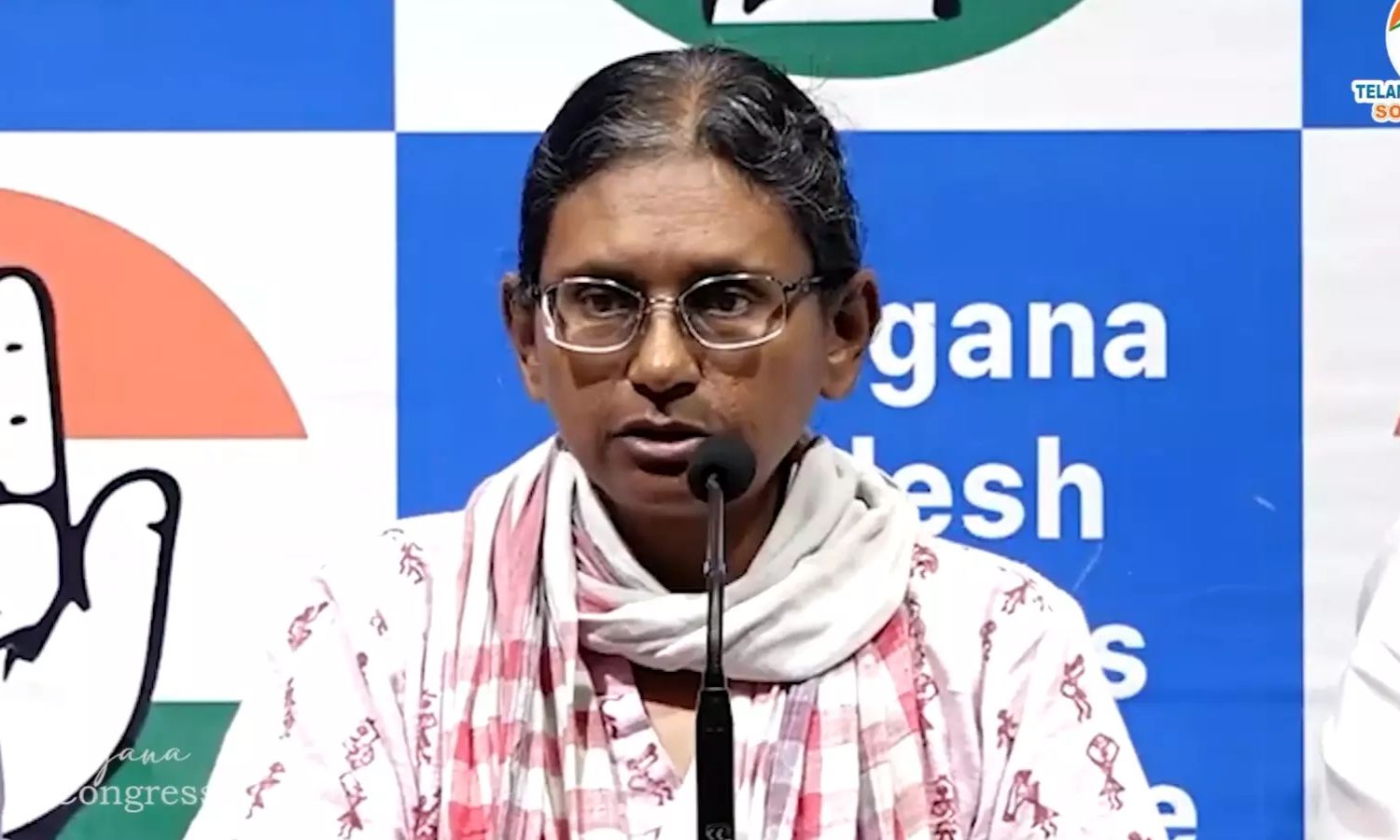
Hyderabad: AICC Telangana affairs in-charge Meenakshi Natarajan clarified that she would not accept a Rajya Sabha seat from Telangana under any circumstances and said such a nomination should come from her home state of Madhya Pradesh.
Addressing a press conference at Gandhi Bhavan on Sunday, Natarajan responded to questions following the rejection of her Rajya Sabha nomination. She was accompanied by TPCC president Mahesh Kumar Goud and AICC Secretary Sachin Sawant.
Natarajan said there was no need for any resignation or political adjustment to accommodate her in Telangana. She maintained that a Rajya Sabha berth, if considered, should be allotted from Madhya Pradesh, where she belongs politically.
The Congress leader also accused the Bharatiya Janata Party of influencing the circumstances surrounding her rejected nomination. She alleged that the BJP realised cross-voting was not possible in the Madhya Pradesh Rajya Sabha election and therefore acted to prevent her candidature.
Meenakshi Natarajan Rajya Sabha row sparks allegations
Natarajan questioned why she was not given an opportunity to rectify her nomination papers. She cited the case of independent candidate Parimal Nathwani in Jharkhand, claiming he was allowed 24 hours to make corrections under provisions of the 2023 rulebook.
According to Natarajan, her nomination was rejected over a case that had no connection to her. She said she had received a legal notice related to a complaint filed by a private individual and argued that a legal notice could not be treated as a criminal case.
She further alleged that the BJP and the Election Commission had acted in a manner that affected her nomination. Natarajan claimed that her rejection was not merely due to a pending case but was the result of what she described as a compromise between the BJP and election authorities.
The Congress leader also stated that winning a Rajya Sabha seat in Madhya Pradesh required only 58 votes and alleged that the BJP was aware of the Congress party’s electoral prospects. She said the developments surrounding her nomination reflected a broader political agenda and linked the issue to the BJP’s “One Nation, One Election” proposal.