
Kavitha’s Maoist remark sparks political debate during Singareni workers’ meeting

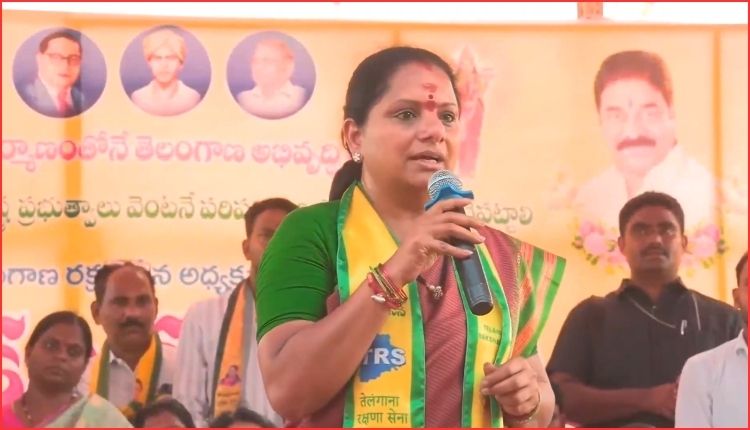
Hyderabad: A Kavitha Maoist remark during a workers’ meeting in Mancherial triggered political debate after Telangana Rakshana Sena chief Kalvakuntla Kavitha claimed that Maoists were also present within her party.
The controversy unfolded during the party’s ‘Boggu Baayi’ programme at the RK-7 underground mine in Srirampur. Police stopped Kavitha, party workers and trade union leaders from entering the mine premises. However, the group later moved past the gates and conducted a meeting near the mine.
During her address to workers, Kavitha criticised the Singareni management and alleged that employees were not receiving adequate facilities. She claimed workers faced difficulties, including the lack of drinking water and other basic amenities.
Kavitha Maoist remark draws attention
The Kavitha Maoist remark came while she responded to discussions about Maoist influence in the region. Kavitha rejected suggestions that Maoist influence had completely disappeared. She then remarked that Maoists were present in her party as well.
The statement quickly attracted political attention and sparked discussions across political circles. She also warned that her party would not remain silent if workers faced injustice. Kavitha said the party would pursue legal remedies whenever necessary to protect workers’ rights and welfare.
Kavitha Maoist remark gains significance after recent developments
The Kavitha Maoist remark gained added significance because it followed her recent meeting with former senior Maoist leader Thippiri Thirupathi, also known as Devji. Devji recently surrendered and entered public life after spending nearly four decades underground.
Another former Maoist leader, Malla Raji Reddy alias Sangram, also surfaced in recent weeks. These developments have led to speculation about the future political roles of former Maoist leaders in Telangana.
Meanwhile, Kavitha continued her criticism of Singareni management and reiterated her support for workers’ issues during the programme. The remarks and the circumstances surrounding the meeting have added a fresh political dimension to ongoing debates over labour issues and regional politics.