

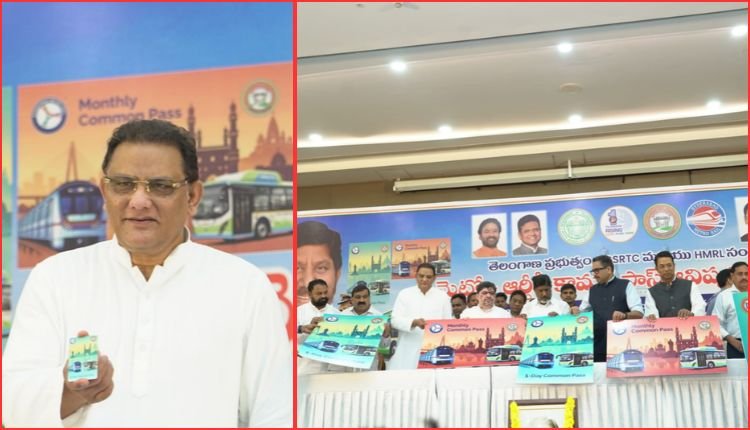
Hyderabad: Minorities Welfare Minister Mohammed Azharuddin welcomed the Metro RTC Common Pass launched by the Telangana Government, TGSRTC and HMRL on Friday. He called it a major step towards easier and better public transport. He also said it would help link different travel modes.
Deputy Chief Minister Bhatti Vikramarka attended the launch programme. Ministers Ponnam Prabhakar and Dr. Vivek Venkatswamy also took part. MLC Addanki Dayakar and other leaders were present.
Bhatti bought one-day common passes for Chief Minister A. Revanth Reddy, himself and 14 other ministers. Meanwhile, Ponnam said the ministers would travel by Metro from Begumpet at 10 am on Saturday. They were scheduled to use the new pass.
Azharuddin said better roads and other infrastructure also needed good public transport. He stressed the need for comfort and easy access. He said Telangana’s public transport system had improved greatly. He also praised the Transport Department for its work.
Metro RTC Common Pass marks shift from earlier bus travel
Azharuddin recalled relying mainly on buses during his school days. He said footboard travel was common at that time. He recalled travelling on the footboard near Begumpet Circle two or three times.
On one occasion, someone pushed him from behind and he fell. He said he was about 15 or 16 then. Azharuddin said his financial position often left bus travel as the only choice. He added that journeys were less comfortable then.
However, he said the situation had changed greatly. Telangana now had a better and more accessible public transport network, he said. He also referred to his travel across India, including Delhi. He said he was pleased with Telangana’s progress.
Azharuddin praised the Transport Department under Chief Minister Revanth Reddy. He also cited support from Bhatti and guidance from Ponnam. In addition, he congratulated TGSRTC and Metro teams for their work.
Azharuddin said the Metro RTC Common Pass would let passengers use Metro and RTC buses during one journey. He said the pass would save both time and money. It would also make daily travel easier, he added.
Further, he said the system supported the government’s plan to link different forms of public transport. Azharuddin credited the Chief Minister and Deputy Chief Minister for supporting the plan. He also praised Ponnam and his team. He congratulated TGSRTC MD Nagireddy and Metro team member Satyanaarayana. He also thanked other officials and staff involved.
RTC, Metro and autos planned as one network
Ponnam said the government was working to link RTC, Metro and auto-rickshaw services. He said the plan focused on first-mile and last-mile travel. Meanwhile, the government was also addressing the welfare of auto drivers.
Ponnam said work would begin on setting up an Auto Workers Welfare Board. He said auto fares had remained unchanged for nearly 12 years. Therefore, the government had revised fares after considering commuters and drivers.
Ponnam also asked Bhatti to raise monthly financial support to RTC. He sought an increase from ₹300 crore to ₹350 crore. The request involved an extra ₹50 crore each month. In addition, he sought action on pending issues of retired RTC staff.
Ponnam said the Mahalakshmi free bus travel scheme for women had increased the workload on RTC employees. However, he praised drivers, conductors and other staff for handling the higher passenger load.
Metro RTC Common Pass supports digital transport plan
The government also planned to use technology to link RTC, Metro, autos and other travel modes. It aimed to bring more services onto one digital platform in the future.
The Metro RTC Common Pass was expected to make travel easier. Commuters could use both Metro and RTC services with one pass. Azharuddin said stronger public transport would help commuters. He added that better links could reduce dependence on private vehicles.
Further, he said such integration could help ease traffic congestion and pollution. The government had given public transport a key place under Vision-2047. It was working towards a safe, affordable and technology-based transport system. The plan also aimed to meet the needs of future generations.