

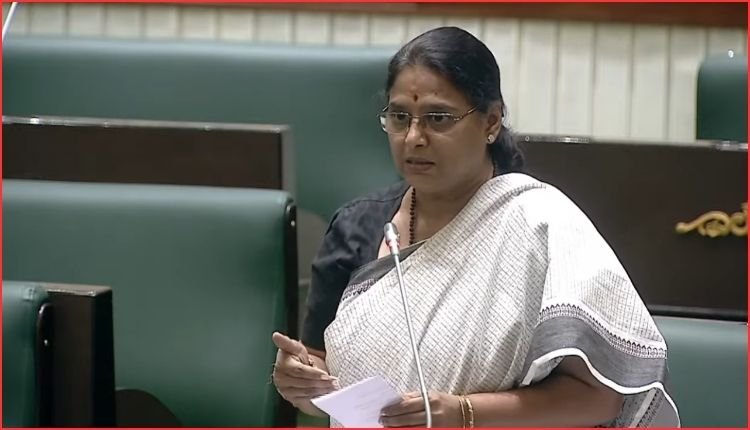
Hyderabad: Kodad MLA N. Padmavathi Reddy called for women-friendly urban planning to become a priority in Hyderabad’s future growth, including mandatory public toilets for women at commercial establishments.
She also sought strict enforcement of sanitation and solid-waste management standards across the city. The requirements should form part of building permissions, master plans and future development projects, she said. Padmavathi made the proposals while participating in the Telangana Legislative Assembly debate on the Core Urban Region (Integrated Governance) Bill, 2026.
She supported the legislation and said it could help develop Hyderabad into a cleaner, safer and more sustainable metropolis. Moreover, she said the city should remain globally competitive while becoming more responsive to residents’ needs.
The MLA highlighted the Bill’s emphasis on environmental sustainability, climate action and gender inclusion. She also cited its focus on universal accessibility, inclusive design, traffic management and solid-waste management. According to Padmavathi, these provisions offered an opportunity to adopt a more people-centric approach to Hyderabad’s urban development.
Women-friendly urban planning needs public toilets
Padmavathi highlighted the difficulties women faced when trying to access toilets in public places. Therefore, she proposed mandatory public toilet facilities for women in new commercial developments.
Every new shopping complex and commercial building, including private establishments, should provide a toilet for women that remained accessible to the public, she said.
The MLA suggested that establishments could earmark even a small area of about six feet by six feet for the facility. The respective establishment should take responsibility for maintaining the toilet, she added.
She urged the government to adopt zero tolerance towards poor sanitation and the absence of women’s toilets. Similarly, she called for strict action against improper solid-waste management.
Padmavathi said these requirements should be incorporated into building permission rules. They should also become integral components of master plans and future urban development projects. Padmavathi also called for greater participation by professional architects and urban planners in development and redevelopment planning.
She particularly stressed the need for professional planning in newly incorporated villages and developing areas. Such involvement would help prevent unplanned urban growth as Hyderabad continued to expand, she said. The MLA argued that Hyderabad’s development into a global metropolis should not focus solely on expanding physical infrastructure.
Instead, she said, urban growth should give equal importance to sustainability, cleanliness and accessibility. It should also prioritise inclusiveness and address the specific requirements of women. Padmavathi said women-friendly urban planning could help ensure that the city’s expansion remained responsive to everyday public needs.
Her proposals linked sanitation, public toilets and waste management with the broader urban planning framework envisaged under the Bill. She also sought to embed these requirements in regulatory and planning processes rather than treat them as separate facilities.
The MLA maintained that Hyderabad’s future development should combine infrastructure expansion with inclusive design and professional planning. She said the approach would help create a cleaner, safer, accessible and sustainable urban environment.