

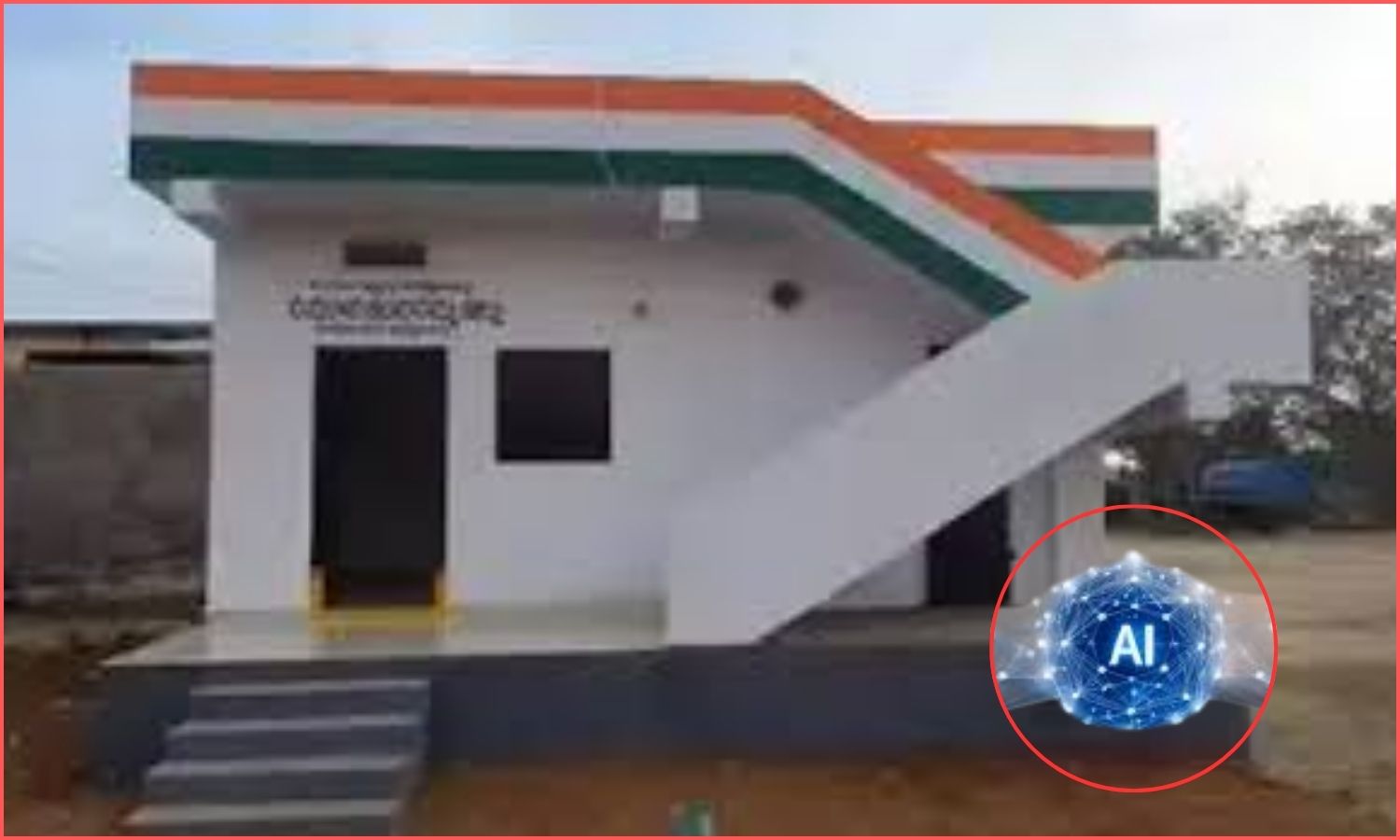
Hyderabad: The Telangana government has set a target to complete at least one lakh Indiramma houses within the current financial year, while deploying AI-driven verification to ensure transparency and strict eligibility.
To curb irregularities, the government introduced artificial intelligence into the scrutiny process. Officials are linking each applicant’s Aadhaar number with multiple government databases before clearing construction bills. As a result, only eligible poor families receive benefits under the scheme.
Chief Minister Revanth Reddy and Housing Minister Ponguleti Srinivas Reddy are closely monitoring the programme. Meanwhile, officials are releasing bills on time to maintain confidence among beneficiaries.
After the Congress came to power, the government sanctioned 4.5 lakh houses across the state. It allotted 3,500 houses to each Assembly constituency and committed ₹22,500 crore for construction.
So far, construction has begun on 2,48,770 houses. Officials said departments intensified field-level monitoring to meet the target of completing one lakh houses by the end of March.
AI verification, payments and the Centre’s funding
According to official data, 77,334 houses have reached the basement stage. Another 41,555 houses have completed wall construction. In addition, 74,561 houses have reached the slab stage. So far, builders have fully completed 2,504 houses.
Under the Indiramma housing scheme, the government has released ₹3,853.66 crore. Of this, ₹1,821.76 crore went to houses that completed the basement stage. The government paid ₹1,038.08 crore for roof-level houses and ₹993.82 crore for slab-level houses.
Housing Minister Ponguleti Srinivas Reddy recently announced that the second phase of Indiramma house allocations would begin in April. The government plans to continue allocations in two phases every year.
Using AI-driven checks, officials are verifying whether applicants already own houses, land, or luxury vehicles. Based on this process, authorities have cancelled thousands of ineligible applications across the state. Officials have also stopped further payments to beneficiaries who turned ineligible during AI screening, even if they had received earlier instalments.
The government has grouped applications into three categories. The L-1 list includes families with land but no house. The L-2 list includes families without land or a house. The L-3 list includes applications pending due to technical issues or requiring further verification.
To prevent duplication and fraud, panchayat secretaries are conducting iris scans at the field level. Officials said this step blocks multiple claims and misuse.
Each Indiramma house costs ₹5 lakh. The Centre contributes ₹1.11 lakh, while the state bears ₹3.89 lakh. In rural areas, the Centre provides additional support through PM Awas Yojana, MGNREGA wages, and Swachh Bharat funds.
Although the state is following all central guidelines, officials said the Centre has not yet released its share. A key meeting with central authorities is scheduled in Delhi on the 16th of this month. Officials expect clarity on central funding after the talks.