

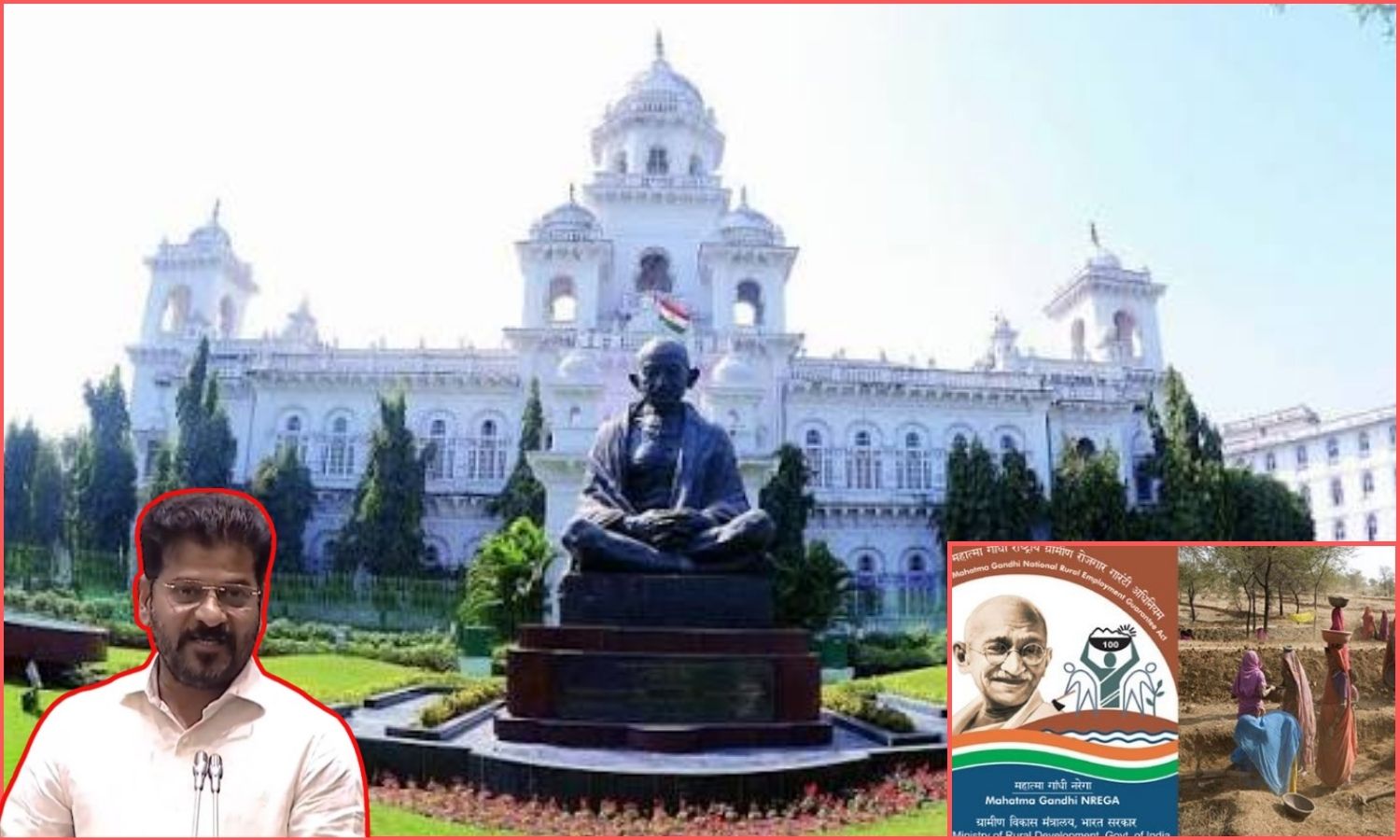
Hyderabad: The Telangana Assembly on Friday unanimously passed a resolution calling for the continuation of the Mahatma Gandhi National Rural Employment Guarantee Scheme in its
present form.
Chief Minister A. Revanth Reddy tabled the resolution in the House. Subsequently, members approved it through a voice vote. At the same time, the Assembly opposed the Viksit Bharat Guarantee for Rozgar and Aajeevika Mission (Gramin) Act, stating that it harmed the rights of the rural poor.
According to the resolution, the new law worked against poor families and women labourers. Moreover, it violated the spirit of federalism by altering the funding structure of the employment guarantee scheme.
The House recalled that the rural employment scheme was introduced in 2005 by the UPA government led by Manmohan Singh. Subsequently, the Act came into force on February 2, 2006. Its objective was to reduce poverty, unemployment and distress migration while preventing exploitation of unskilled labour.
The scheme guarantees at least 100 days of employment each year to every rural household. In addition, it ensures minimum wages. Further, it aims to reduce wage disparities between men and women and promote inclusive development.
Telangana Assembly flags impact on poor, women
Revanth Reddy told the House that nearly 90 per cent of beneficiaries in Telangana over the past two decades belonged to Scheduled Castes, Scheduled Tribes and Backward Classes. Importantly, 62 per cent of the beneficiaries were women. As a result, Dalits, tribals, persons with disabilities, Adivasis, Chenchus and other vulnerable communities depended heavily on the scheme.
The Chief Minister said the new law jeopardised employment security for rural women and marginalised sections. Therefore, he warned that provisions weakening the original framework would severely hurt the poor.
The Telangana Assembly said the new legislation weakened the demand-driven nature of the scheme. Specifically, it ended work planning based on demand. Consequently, the House said the limited allocation system would reduce workdays, especially for women labourers.
The resolution opposed the shift in funding from full Central support to a 60:40 Centre-State ratio. As a result, it said the change imposed an additional financial burden on states and violated federal principles. Hence, the Assembly demanded restoration of the earlier funding model.
The House also objected to the removal of Mahatma Gandhi’s name from the scheme. According to the resolution, the move diluted the spirit of Gandhi. In addition, it criticised the mandatory 60-day break during the agricultural season, calling it unjust to landless rural labourers who depended on year-round employment.
Finally, the Telangana Assembly noted that the existing scheme permitted 266 types of work. However, it warned that removing labour-intensive activities such as land development would harm small and marginal farmers. Consequently, Dalits and tribal communities would also suffer.