

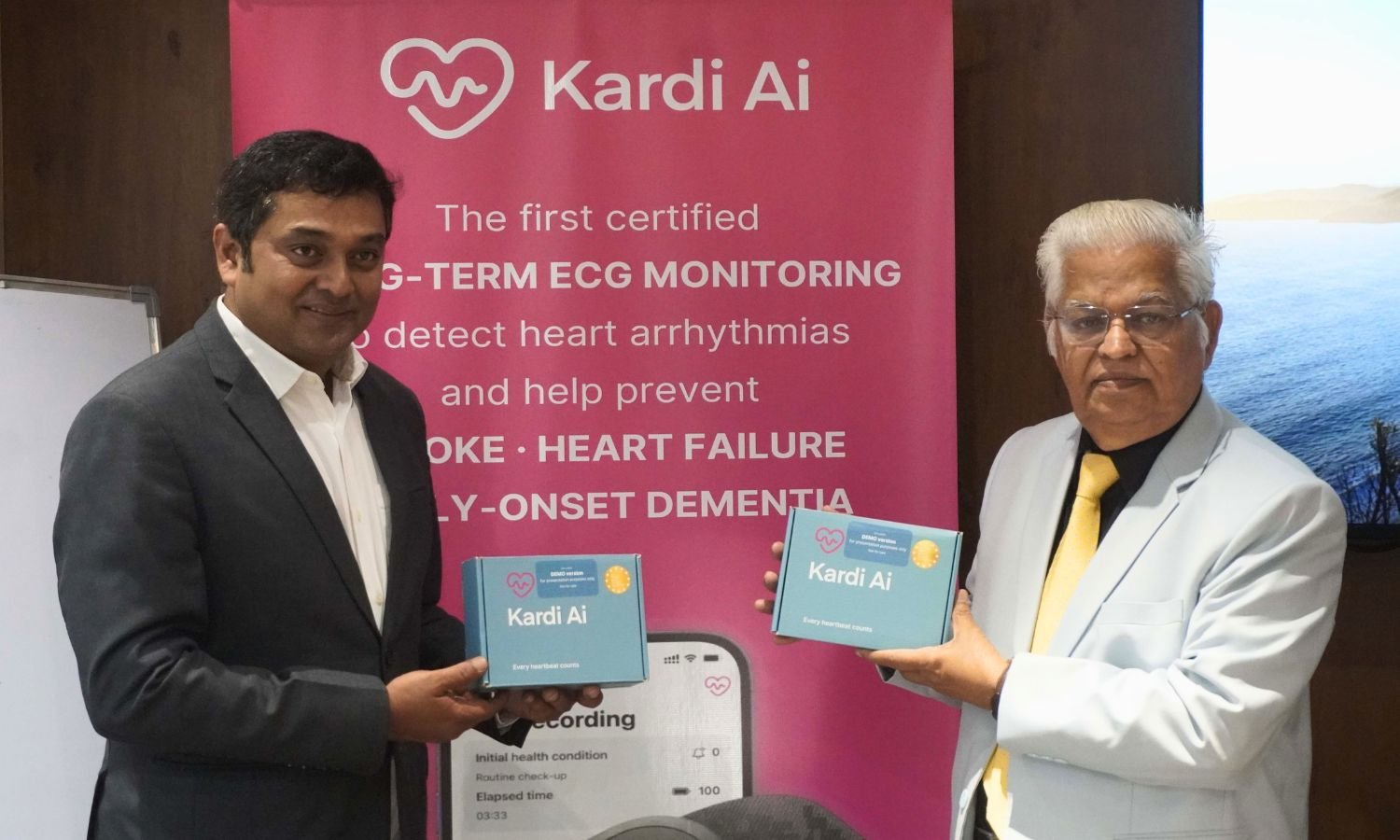
Hyderabad: Czech HealthTech company Kardi Ai will officially launch its AI-powered long-term ECG monitoring technology in India on September 26 in Hyderabad. The system aims to help doctors detect intermittent heart-rhythm abnormalities that short-duration tests may miss.
Dr. Ramana Jagarlamudi, Director – International Operations and Authorized Representative – India, Kardi Ai, announced the launch at a press conference on Friday at FTCCI. Dr. Raghavendra Rao, Scientific Adviser and Co-Founder of Eurasia Medical Technologies LLP, also addressed the media.
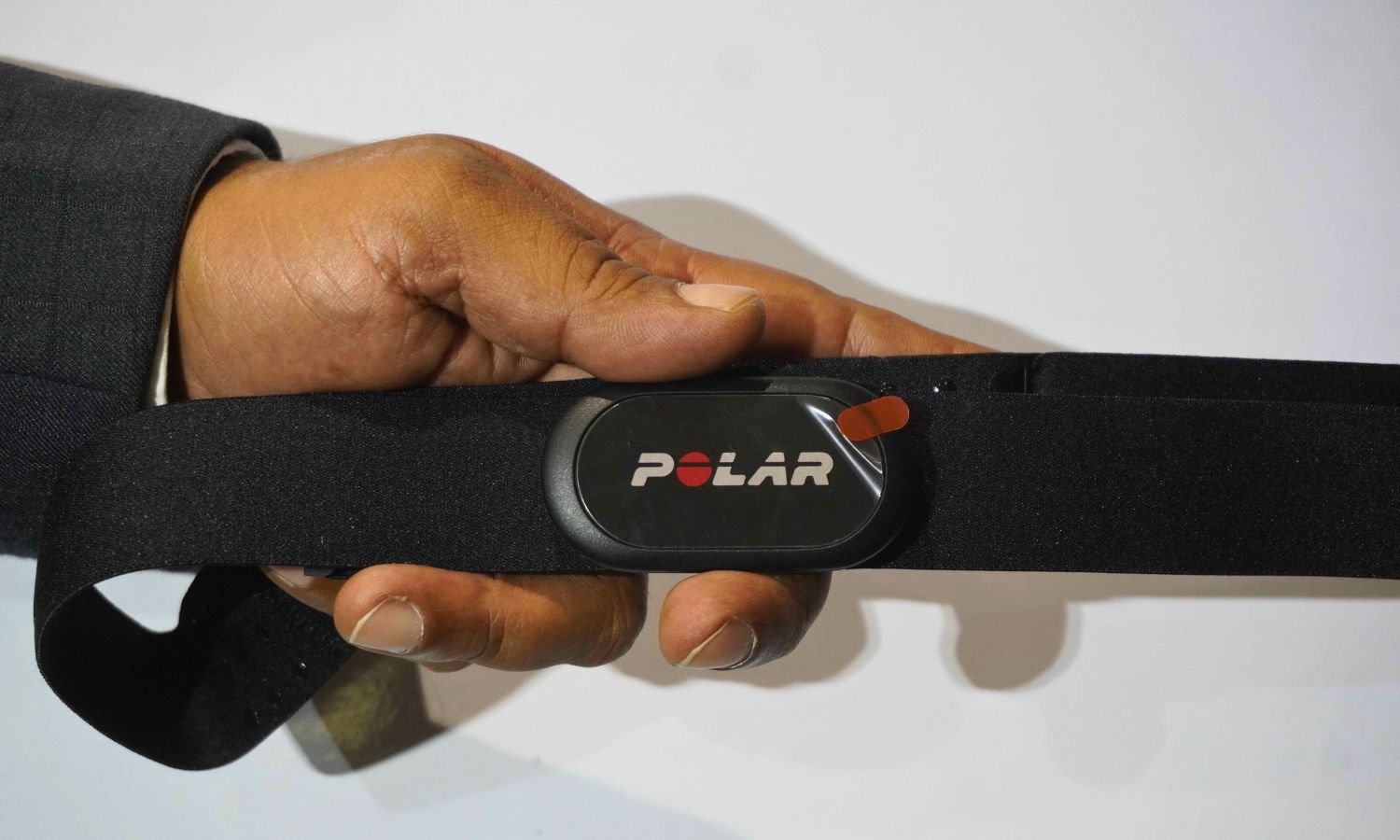
The Hyderabad-based Eurasia Medical Technologies LLP, the Indian arm of Kardi Ai, is facilitating the India launch. The technology combines a wearable ECG chest strap, mobile connectivity and AI-supported ECG analysis.
It allows patients to undergo extended heart-rhythm monitoring while continuing their normal daily activities. The approach is designed to move cardiac monitoring beyond the short observation periods offered by conventional tests.
A conventional ECG provides a brief snapshot of heart activity. Meanwhile, a Holter monitor generally records cardiac activity for a defined period, often 24 hours.
Kardi Ai extends this monitoring window and provides doctors with ECG data collected over a longer period. As a result, physicians may have more information to identify intermittent rhythm abnormalities that do not appear during shorter tests.
Patients wear a lightweight ECG chest strap during their everyday activities. The recorded ECG data is transmitted through a mobile platform, while AI-supported analysis assists physicians in reviewing possible rhythm abnormalities.
The company stressed that the technology supports physicians rather than replacing clinical diagnosis or medical decision-making. It is being introduced in India as a prescription-grade medical technology, not as a consumer fitness device.
According to the company, the device has secured an MD-15 licence from the Government of India for import and sale. It is also CE marked under the European Union’s medical-device regulatory framework and classified as an EU MDR Class IIa product.
The manufacturing and quality processes are aligned with ISO 13485, the international quality-management standard for medical devices.
Long-term ECG monitoring moves beyond short tests
The official launch will bring together cardiologists, electrophysiologists, physicians and hospital leaders. Healthcare technology professionals and other stakeholders are also expected to participate.
Clinical sessions will cover cardiac arrhythmias, their detection and diagnosis, and the clinical value of extended ECG monitoring. The programme will also discuss Kardi Ai’s application in clinical practice.
A panel discussion will focus on long-term rhythm monitoring, remote cardiac care and AI-supported ECG analysis. The official product launch will follow the clinical discussions.
The event is scheduled for Saturday, September 26, 2026, from 6:30 PM onwards. It will take place at Daspalla Hotel in Jubilee Hills, Hyderabad.
The launch comes as healthcare increasingly uses remote monitoring, digital health and AI-assisted clinical decision support. Kardi Ai’s central proposition is that intermittent abnormal rhythms require a longer observation window.
The company describes the difference in simple terms: an ECG is a snapshot of the heart, while a Holter provides a 24-hour recording. Kardi Ai, by contrast, is designed for long-term observation of heart rhythm.
“From signal to insight for healthier lives” is the theme of the India launch. The event will explore how extended ECG monitoring, remote cardiac care and artificial intelligence could contribute to cardiovascular healthcare in India.
The company said cardiovascular disease remains India’s leading cause of death, making early detection and continuous monitoring an important healthcare priority. It cited a WHO estimate that around 220 million Indians live with hypertension, while about 12% have their blood pressure under control.
Against this backdrop, Kardi Ai said its system gives physicians a longer window into a patient’s heart rhythm. This could provide additional information when intermittent abnormalities are not captured during a short ECG or conventional 24-hour Holter examination.