

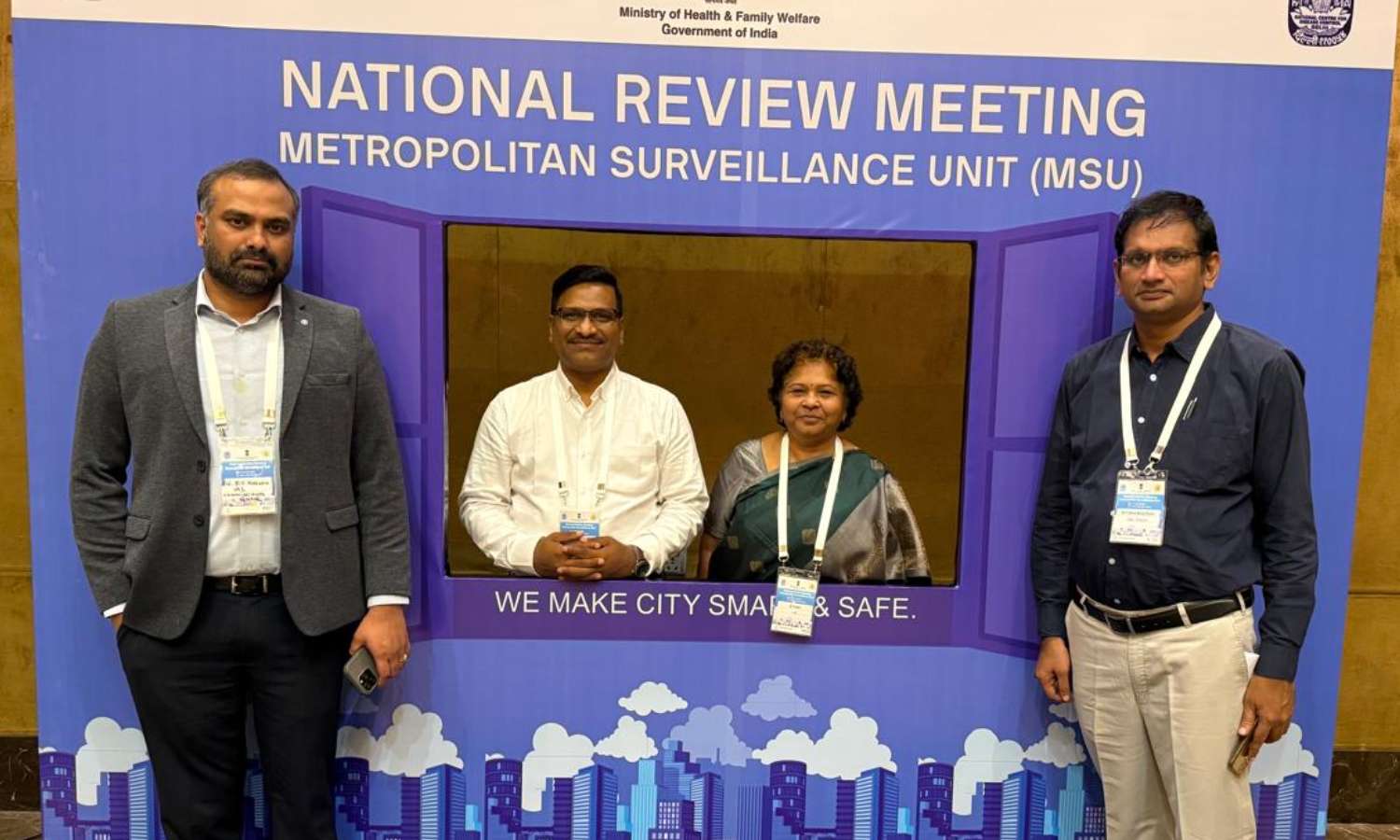
Hyderabad: The Union government has praised the Hyderabad dengue control model as an urban success story during the National Review Meeting of Metropolitan Surveillance Units held in Nagpur. Officials highlighted Hyderabad’s effective use of real-time data and rapid response to control vector-borne diseases in 2025.
GHMC Commissioner R. V. Karnan presented the strategy. He explained how the Greater Hyderabad Municipal Corporation reduced dengue cases through strong coordination, technology-led surveillance, and quick field action.
Technology-backed response drives dengue prevention
According to Karnan, GHMC used the Vector Borne Diseases (VBD) App to track disease spread. The app combines GIS-based dashboards with live data updates. As a result, officials identified hotspots faster and deployed field teams without delay.
Moreover, this real-time tracking system proved effective even in high-density areas. It helped prevent outbreaks before they escalated.
National recognition for Hyderabad’s urban health model
Union officials said Hyderabad’s model demonstrated how timely data and inter-departmental coordination can improve health outcomes. They noted strong collaboration between public health, sanitation, and civic bodies.
The Centre especially appreciated how surveillance data was turned into action. This approach, they said, improved early detection, reduced delays, and ensured long-term prevention.
Health authorities urged other metro cities to adopt similar strategies. They called the Hyderabad dengue control model a replicable template for smart urban disease management.
Hyderabad’s efforts in controlling vector-borne diseases received appreciation from the Government of India at the National Review Meeting of Metropolitan Surveillance Units (MSUs) held in Nagpur.
GHMC Commissioner Sri. R V Karnan presented how Hyderabad successfully reduced… pic.twitter.com/zOX4NAz5xo
— Commissioner GHMC (@CommissionrGHMC) January 6, 2026