

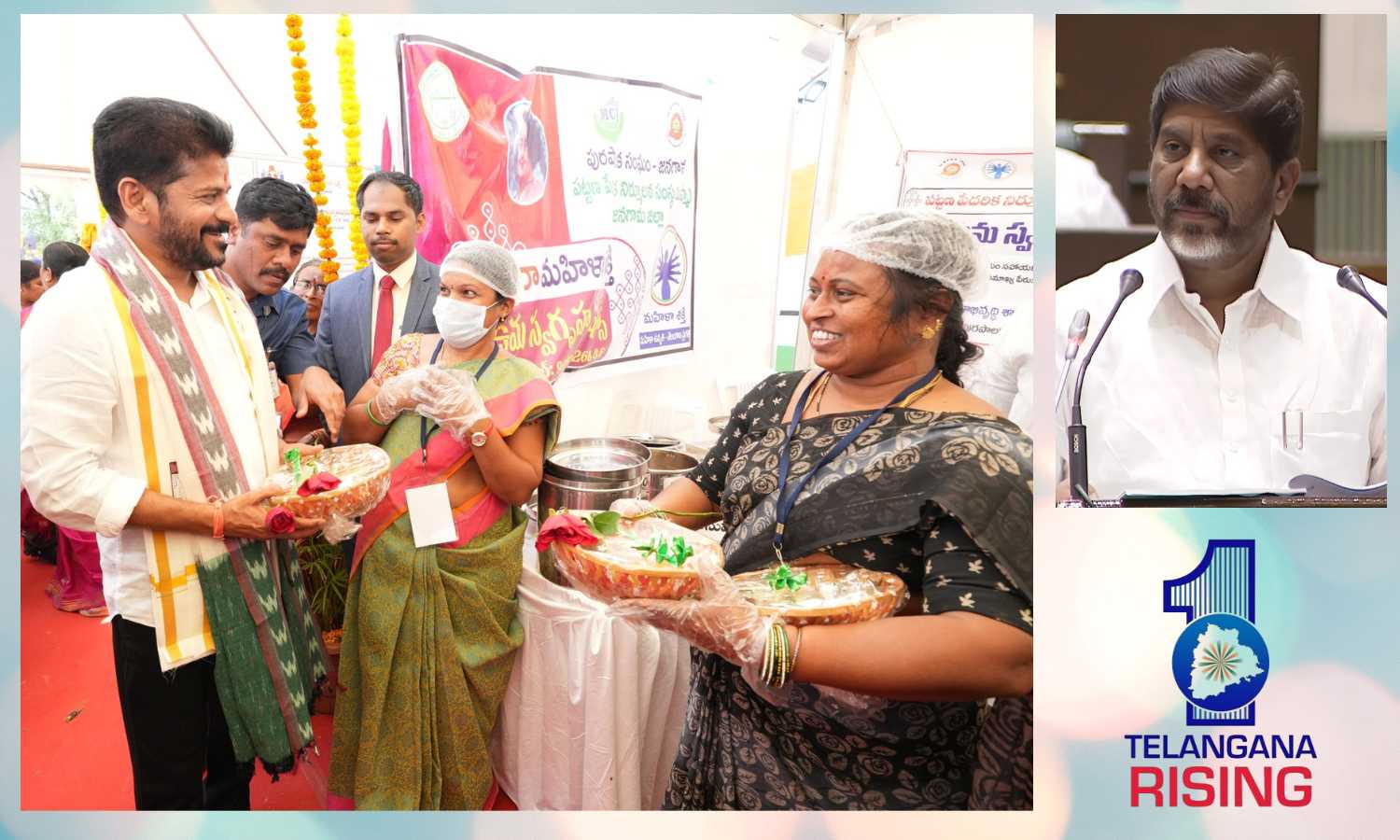
HYDERABAD: Women’s welfare and empowerment have emerged as a major focus in Telangana’s budget for 2025-26, with the government announcing a range of schemes aimed at improving economic independence, mobility, housing, and financial security for women. Presenting the budget in the Assembly, Deputy Chief Minister and Finance Minister Bhatti Vikramarka stated that the government is committed to empowering women through targeted welfare initiatives that provide free travel, financial assistance, employment opportunities, and social security benefits.
Key Schemes for Women’s Empowerment
The government has introduced and expanded multiple welfare programs designed to uplift women across various socio-economic backgrounds. These include:
1. Mahalakshmi Scheme – Free Bus Travel and LPG Subsidy
• The Mahalakshmi Scheme, launched in December 2023, provides free bus travel for all women across the state, ensuring unrestricted mobility for work, education, and daily needs.
• Since its launch, women have availed over 149.63 crore free trips, resulting in a financial saving of ₹5,005.95 crore.
• The scheme has also boosted the financial stability of the Telangana State Road Transport Corporation (TGSRTC), increasing its occupancy rates from 69% to 94% and creating 6,400 new jobs in RTC.
• Additionally, under the Mahalakshmi Scheme, the government is providing LPG cylinders at ₹500 to 43 lakh families, with an allocation of ₹433.20 crore to ensure affordable cooking fuel for women.
2. Gruha Jyothi – Free Electricity for Households
• The Gruha Jyothi Scheme offers free electricity to families consuming up to 200 units per month, benefiting 50 lakh households across Telangana.
• To support the scheme’s implementation, the government has allocated ₹1,775.15 crore, ensuring that women-headed households benefit from lower utility expenses.
3. Indiramma Housing Scheme – Secure Homes for Women
• The government has launched the Indiramma Housing Scheme, prioritizing women as property owners to ensure financial security and social stability.
• Under this initiative, 4.5 lakh houses have been sanctioned, with a minimum of 3,500 houses per constituency.
• The total investment in the scheme stands at ₹22,500 crore, making it one of the largest affordable housing programs for women in the country.
• The government has also allocated ₹305.03 crore to complete 34,545 pending double-bedroom houses, a project left incomplete by the previous administration.
4. Indira Mahila Shakti – Economic Empowerment Through Self-Help Groups
• The Indira Mahila Shakti Mission is a flagship scheme aimed at boosting women’s entrepreneurship and self-employment.
• Under this initiative, ₹21,632 crore in interest-free loans have been provided to Self-Help Groups (SHGs), leading to the establishment of 2.25 lakh micro-enterprises.
• The government has also introduced Indira Mahila Shakti Canteens, providing employment opportunities for women, along with 22 dedicated business centers for SHGs.
5. Expanding Women’s Role in Business and Industry
To increase women’s participation in business, the government has:
• Launched 32 mobile fish retail outlets managed by women.
• Established the first women-run petrol station in Narayanpet with an investment of ₹1.23 crore.
• Approved a plan to lease 600 buses to TGSRTC through Mandal Women’s Federations, with 150 buses already operational.
• Provided school uniform stitching contracts to SHGs, generating ₹28 crore in income for women tailors.
• Assigned SHGs the task of setting up and maintaining solar power plants, aiming to generate 1,000 MW of renewable energy while providing sustainable employment.
6. Financial Security Through Insurance Schemes
The government has introduced special insurance schemes for SHG members, covering:
• ₹2 lakh for natural death.
• ₹10 lakh for accidental death.
This initiative aims to provide social security to thousands of women entrepreneurs and SHG members.
Challenges and Future Prospects
While the budget has allocated massive funding for women’s welfare, challenges remain in effective implementation and ensuring accessibility for all beneficiaries. Experts point out that:
• Awareness campaigns are needed to ensure rural women fully benefit from these schemes.
• The government must ensure transparency in the distribution of loans and subsidies.
• Employment opportunities for women need further expansion in the industrial and tech sectors.
Despite these challenges, the Telangana government’s commitment to women’s empowerment is evident in its budget priorities. If effectively implemented, these schemes could transform the economic and social status of women in the state, making Telangana a leader in gender-inclusive development.