

Hyderabad: The Telangana government has approved a ₹4,051 crore infrastructure project to convert overhead electricity lines into an underground cabling system across key zones of Hyderabad. The approval came through G.O. Ms. No. 43 on November 29, 2025, following a proposal submitted by the Chairman and Managing Director of the Telangana State Southern Power Distribution Company Limited (TSSPDCL).
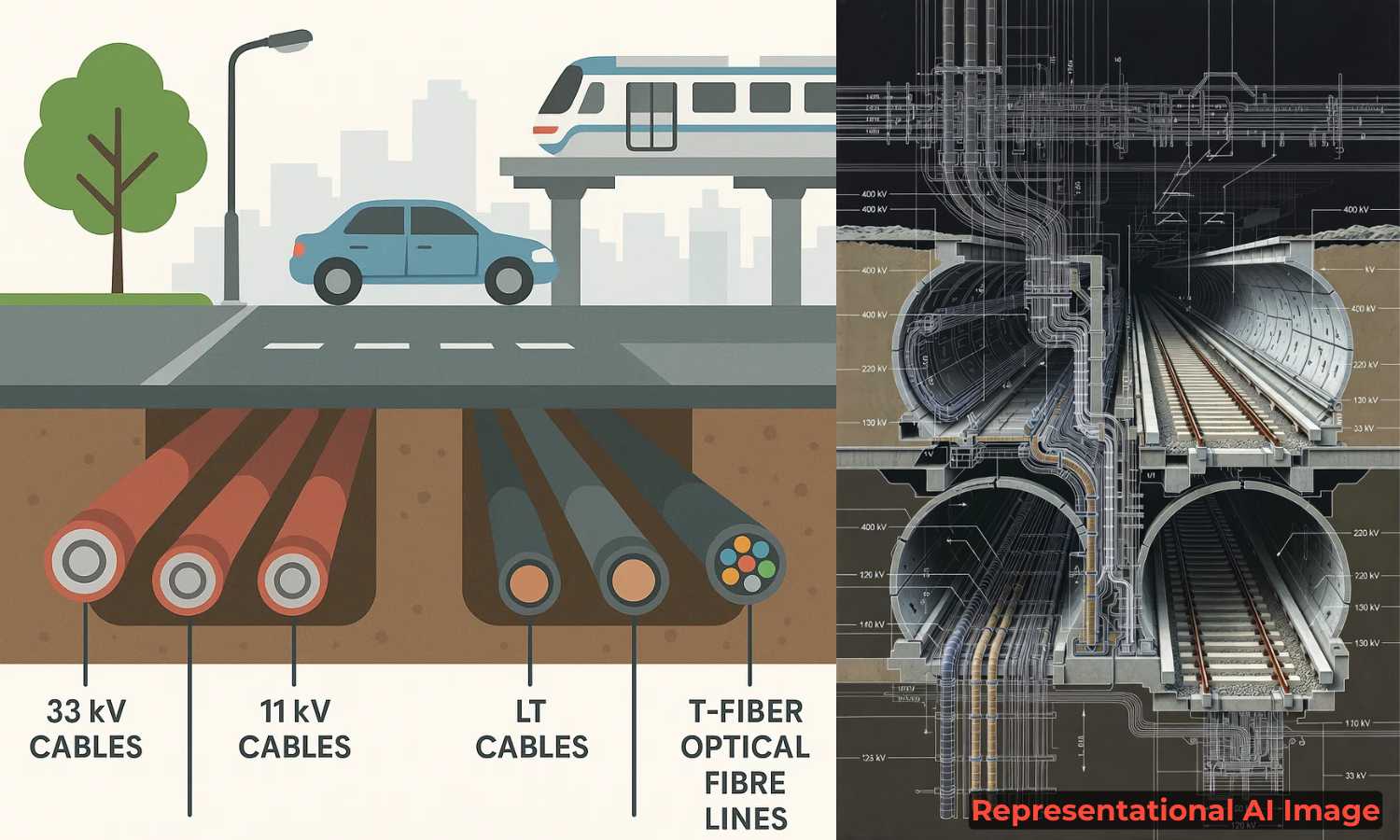
The proposal covers four major urban circles – Banjara Hills, Secunderabad, Hyderabad Central, and Hyderabad South – where high-density development and frequent outages have increased demand for a more reliable electricity supply. By undergrounding the existing 33 kV, 11 kV and LT networks, the government aims to improve power quality, minimise disruptions, and cut long-term maintenance costs.
TSSPDCL prepared a Detailed Project Report (DPR) and presented the plan to the state government. After reviewing technical and financial aspects, the Energy Department granted full approval. The project includes trenching along major roads to lay 33 kV, 11 kV and LT cables in a shared duct wherever possible. This integrated approach will ensure both cost-efficiency and ease of maintenance.
Officials said that in narrow lanes and congested neighbourhoods, the company will replace overhead LT lines with Aerial Bundled (AB) cable instead of underground systems. This hybrid method allows for continued improvements even where trenching is unfeasible due to space or access limitations.
Telecom and fibre networks to join underground cabling effort
As part of the implementation strategy, the government has instructed TSSPDCL to coordinate with telecom and internet service providers. The T-Fiber network, a state-run digital connectivity initiative, must also be integrated into the cabling works through a cost-sharing mechanism. This coordination is expected to avoid redundant digging and ensure optimal use of space.
The ₹4,051 crore estimate includes various components, such as exclusive and combined undergrounding of 33 kV and 11 kV cables, conversion of overhead LT lines, laying of LT AB cable, installation of Ring Main Units (RMUs), and deployment of optical fibre cable. Engineers will also use Horizontal Directional Drilling (HDD) in areas where open trenching could disrupt daily life or traffic.
TSSPDCL based its cost calculations on the existing Standard Schedule of Rates (SSR), which reflects current market conditions. However, the utility acknowledged that actual expenses might change depending on local site conditions and rate fluctuations during execution. Therefore, the Energy Department has directed TSSPDCL to finance the project either through internal reserves or external borrowings.
By moving forward with this metro-zone underground cabling project, the Telangana government hopes to enhance the city’s energy infrastructure while preparing for future urban growth. Officials believe this initiative will not only improve service quality but also make Hyderabad more attractive to industries and investors.