

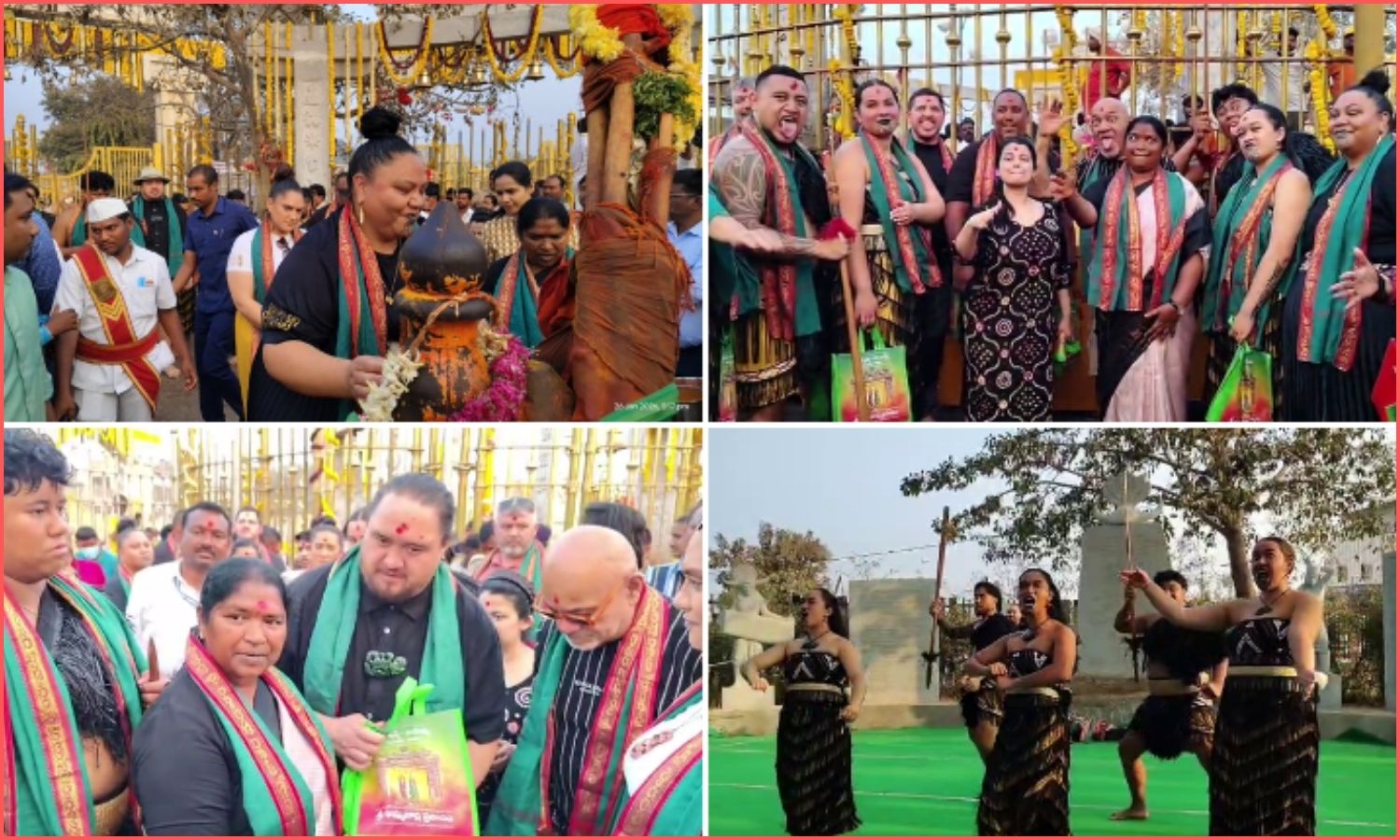
Hyderabad: Maori tribal representatives from New Zealand visited the historic Sammakka Saralamma Jathara on Monday and took part in the celebrations. This marked a rare moment of international tribal cultural exchange. The Sammakka Saralamma Jathara is renowned for drawing attendees from across the world.
During the visit, members of the Maori delegation performed the traditional Haka dance. The powerful ceremonial dance, historically used to motivate warriors before battle, drew wide attention from devotees and visitors. As a result, the performance added a distinct global cultural dimension to the jathara. For many, it was their first experience participating at this unique Sammakka Saralamma Jathara festival.
The visit formed part of the Indo–New Zealand cultural exchange programme initiated by Panchayat Raj Minister Seethakka. The Minister joined the Maori artists during the dance and extended a warm welcome to the delegation. She also highlighted the importance of the Sammakka Saralamma Jathara as a space for international cultural interaction.
Seethakka highlights shared roots of global tribal cultures
Speaking on the occasion, Seethakka said tribal culture was universal in nature. She noted that indigenous communities across the world shared a deep bond with nature and forests, much like those gathering for the Saralamma Sammakka Jathara every time it is celebrated. Therefore, she said such exchanges strengthened mutual respect and understanding among tribal societies globally.
Later, the delegation had darshan of the tribal deities at Medaram. The Minister explained the significance of Sammakka and Saralamma in tribal history and traditions. She underscored why so many people travel to be part of the Sammakka Saralamma Jathara gathering each year. Subsequently, she felicitated the visiting representatives as a gesture of goodwill and cultural respect.
Officials said the visit symbolised cultural unity and highlighted the enduring strength of tribal heritage across continents. Events like this continue to represent this heritage.