

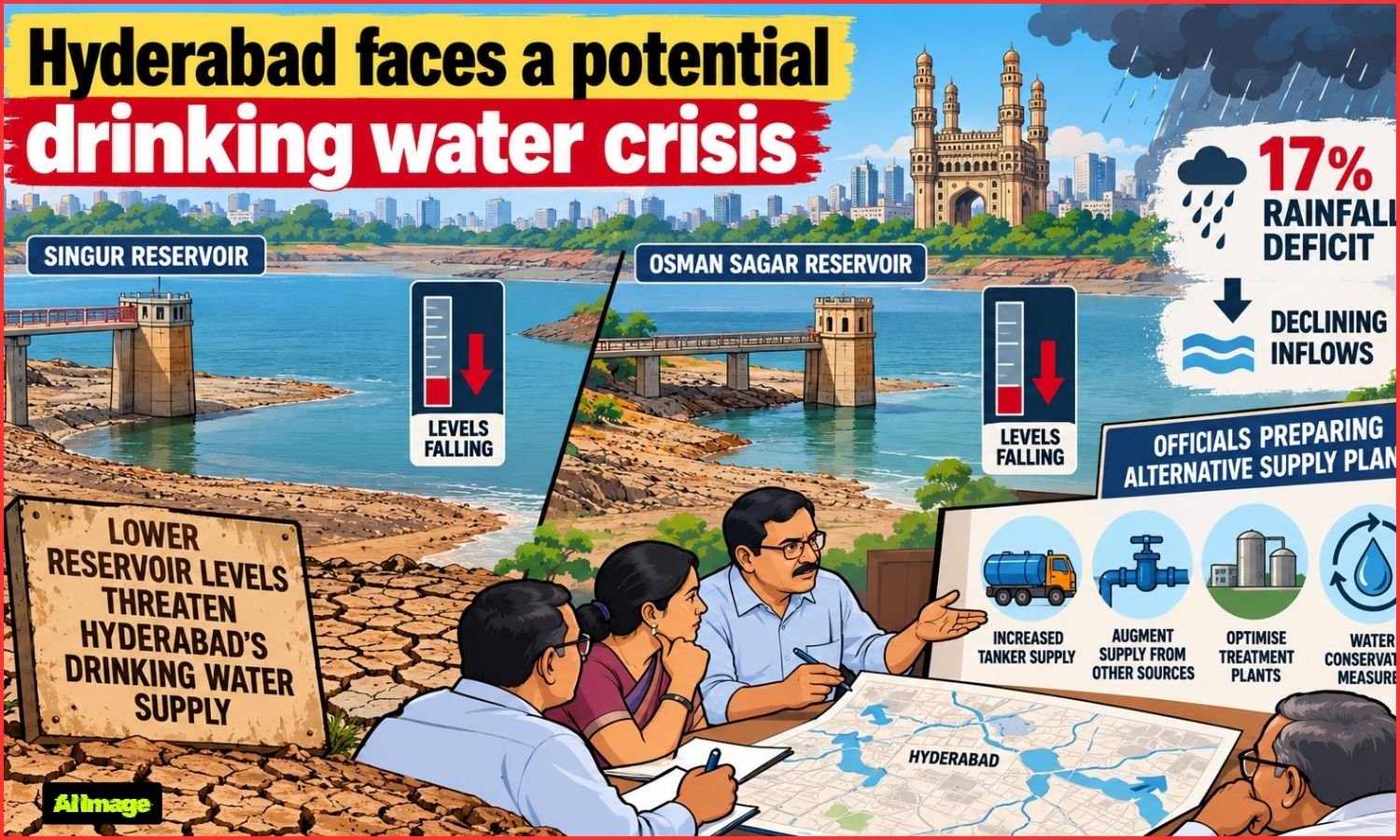
Hyderabad: The Hyderabad water crisis threat is growing as water levels in the city’s key reservoirs continue to fall. Dry conditions and the impact of El Nino have reduced water availability in major sources.
Officials have issued early warnings and started planning alternative arrangements. They fear the city could face a severe drinking water shortage by the end of this year.
Hyderabad water crisis puts Singur under pressure
Singur reservoir, a key source for Hyderabad’s IT corridor and western areas, has recorded a sharp decline in storage. The reservoir can hold 29.9 TMC of water at full capacity. However, its current storage stands at only 3.9 TMC.
That figure represents just 13 per cent of the reservoir’s total capacity. The present storage has also fallen to nearly half the level recorded during summer.
Officials fear Singur could dry up within another 60 days if the current situation continues. That could take the reservoir to critically low levels by mid-December.
Osman Sagar, another important source for the Old City and surrounding areas, has also recorded a decline. Its storage has fallen from around 3.5 TMC to 2.2 TMC.
In addition, inflows into other major reservoirs have dropped sharply. These include reservoirs connected to the Nagarjuna Sagar system. As a result, concerns over the city’s water supply have increased.
Officials prepare alternative water supply plans
The Hyderabad Metropolitan Water Supply and Sewerage Board (HMWS&SB) has responded to the situation. Officials have directed staff to identify alternative sources and supply routes for areas dependent on Singur and Manjeera water.
They have also been asked to prepare emergency action plans. Meanwhile, an irrigation department chief engineer said the water shortage could begin earlier than usual this year.
Normally, Hyderabad faces drinking water shortages during summer. However, officials expect supply pressures to emerge as early as December or January this time.
The State government has already announced a 17 per cent rainfall deficit. Therefore, authorities have decided to give drinking water priority over agricultural requirements.
The falling reservoir levels have prompted officials to prepare for possible supply constraints in the coming months.