
Uttam Kumar Reddy warns of Super El Niño impact on Telangana water resources

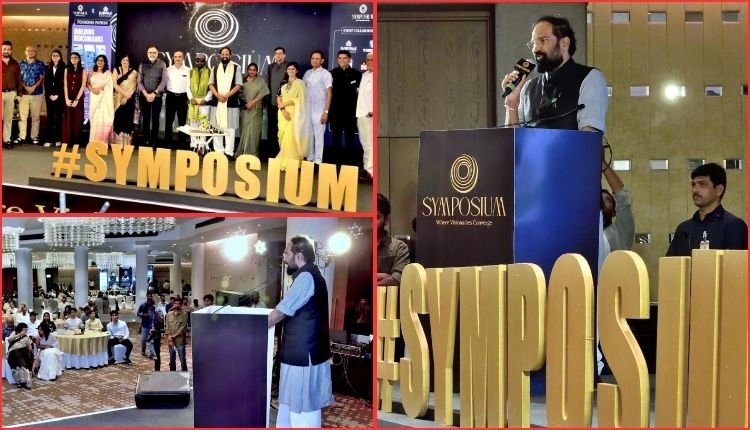
Hyderabad: Irrigation and Civil Supplies Minister Capt. N. Uttam Kumar Reddy said the Telangana Government was preparing contingency measures to address the possible impact of a Super El Niño Telangana scenario, warning that climate variability was replacing historical rainfall patterns and creating uncertainty over the state’s water resources.
Delivering the keynote address at a climate change symposium organised by the non-profit platform Symposium at Hotel Avasa in Hyderabad on Saturday, the minister said Telangana was already experiencing the effects of changing climatic conditions and could no longer depend on past monsoon patterns while planning irrigation and water management.
He said the government was coordinating efforts across the irrigation, agriculture, drinking water and civil supplies departments to minimise the impact of deficient rainfall on farmers and the public.
Super El Niño Telangana preparations focus on water management
Uttam Kumar Reddy said Telangana had witnessed nearly two-and-a-half years of favourable monsoons since the Congress government assumed office in December 2023. However, he said the current season marked a significant shift, with rainfall remaining below expectations and reservoir levels lower than normal.
The minister said he believed climate change was contributing to the rainfall deficit while acknowledging that meteorological experts were better placed to explain the scientific causes behind changing weather systems.
Referring to reports of an emerging Super El Niño, he said he had been closely monitoring scientific assessments indicating that the global climate phenomenon could influence rainfall patterns across India.
“I keep reading that a Super El Niño is upon us now. We in the Government are preparing ourselves to deal with the challenges and problems that may arise from deficient rainfall and an El Niño situation,” he said.
He stressed that the government was adopting an anticipatory approach instead of waiting for a crisis to develop. Departments were coordinating contingency plans to protect irrigation supplies, agriculture, drinking water availability and food security.
Super El Niño Telangana concerns reshape irrigation planning
The minister said climate change had altered Telangana’s water reality by making rainfall increasingly unpredictable. As a result, he said irrigation planning could no longer rely on historical rainfall averages.
He pointed to fluctuating reservoir levels, changing irrigation cycles, unstable water availability and shifting cropping patterns as evidence of the changing climate. He called for irrigation systems to be redesigned around climate variability and supported by real-time reservoir operations, scientific decision-making and closer coordination between irrigation and agriculture departments.
Uttam Kumar Reddy said the success of governance would depend on protecting farmers from climate-related uncertainties rather than merely announcing new projects.
He said governments must prepare well in advance for delayed monsoons and rainfall deficits so that people could trust public institutions to respond effectively during adverse weather conditions.
Super El Niño Telangana highlights water security priorities
The minister said water remained the foundation of food security, rural stability and the state’s economic resilience. He warned that ineffective water management under climate stress could affect agriculture, industrial development, urban water supply, investments and long-term economic growth.
He said Hyderabad’s long-term drinking water security had been strengthened through planned investments that brought water from the Godavari and Krishna rivers. However, he acknowledged that groundwater depletion had become a major concern.
According to the minister, groundwater that was once available at depths of 50 to 100 feet had fallen to nearly 1,000 feet in several parts of Hyderabad. He said the government was promoting large-scale rainwater harvesting to improve groundwater recharge and ensure sustainable water availability.
Uttam Kumar Reddy also highlighted the role of HYDRAA in protecting lakes, water bodies and natural drainage channels. He said the government was reclaiming and restoring lakes while preserving natural drainage systems to improve Hyderabad’s resilience against floods, droughts and the long-term effects of climate change.