

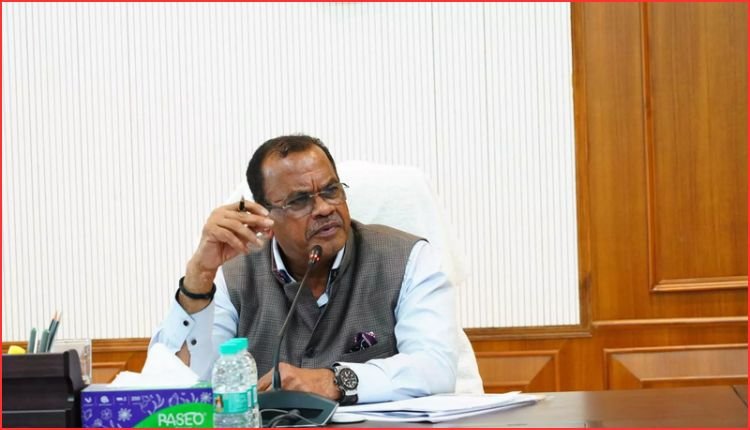
Hyderabad: Roads and Buildings Minister Komatireddy Venkat Reddy called for stronger road safety execution to reduce fatalities across India. He said guidelines would serve little purpose unless authorities implemented them effectively on the ground.
The minister sought a shift from passive compliance with safety standards to active measures aimed at reducing risks. He also urged road authorities to adapt proven international safety models to Indian conditions.
Komatireddy chaired a session titled “Designing Safe Highways: From Standards to Implementation” on Tuesday. The session was held during the second day of the national Chintan Shivir–2026 at Ektanagar in Gujarat.
He referred to Sweden’s “Vision Zero,” which treats every traffic fatality as preventable. He also cited Australia’s “Safe System” approach and guidelines of the US Federal Highway Administration.
According to the minister, India should recognise road safety as an independent professional discipline alongside conventional engineering. He said this approach would strengthen road safety execution throughout the life cycle of highway projects.
Continuous audits central to road safety execution
“Road safety audits must not remain a one-time formality,” Komatireddy said. He called for continuous audits during the design and construction stages. The process should also cover pre-commissioning and operational phases, he said.
Furthermore, the minister proposed an independent body comprising road safety experts to oversee safety measures. He also suggested creating a dedicated “Road Safety Ombudsman” or a specialised Safety Authority to supervise execution.
Komatireddy raised concerns over structural deficiencies that contributed to road risks. He said merely identifying accident blackspots would not address the problem. Instead, authorities needed permanent engineering solutions at such locations.
He also stressed uncompromised construction quality and clear Right of Way protocols. These measures, he said, should form part of a stronger framework for highway safety.
The minister called for data-driven decision-making and wider adoption of modern technology. In particular, he highlighted Intelligent Transport Systems, drone surveillance, speed monitoring and GIS-based safety mapping.
He cited 2023 national road fatality figures to underline the scale of the challenge. According to the figures he presented, 1,72,890 people lost their lives in road accidents across India that year.
Telangana accounted for 7,660 deaths, representing 4.4% of the national total. Uttar Pradesh recorded 23,652 fatalities, while Tamil Nadu reported 18,347 deaths.
Nearly 74% of the country’s road fatalities occurred in just 10 states, the minister said. Therefore, he urged state governments to strengthen road safety execution and coordinate their efforts to reduce deaths.
Komatireddy also called on states to align their measures with Union Minister Nitin Gadkari’s target. The target sought a 50% reduction in road accident deaths by 2030.