
Fiscal Consolidation as a Cornerstone of the Budget 2026–27
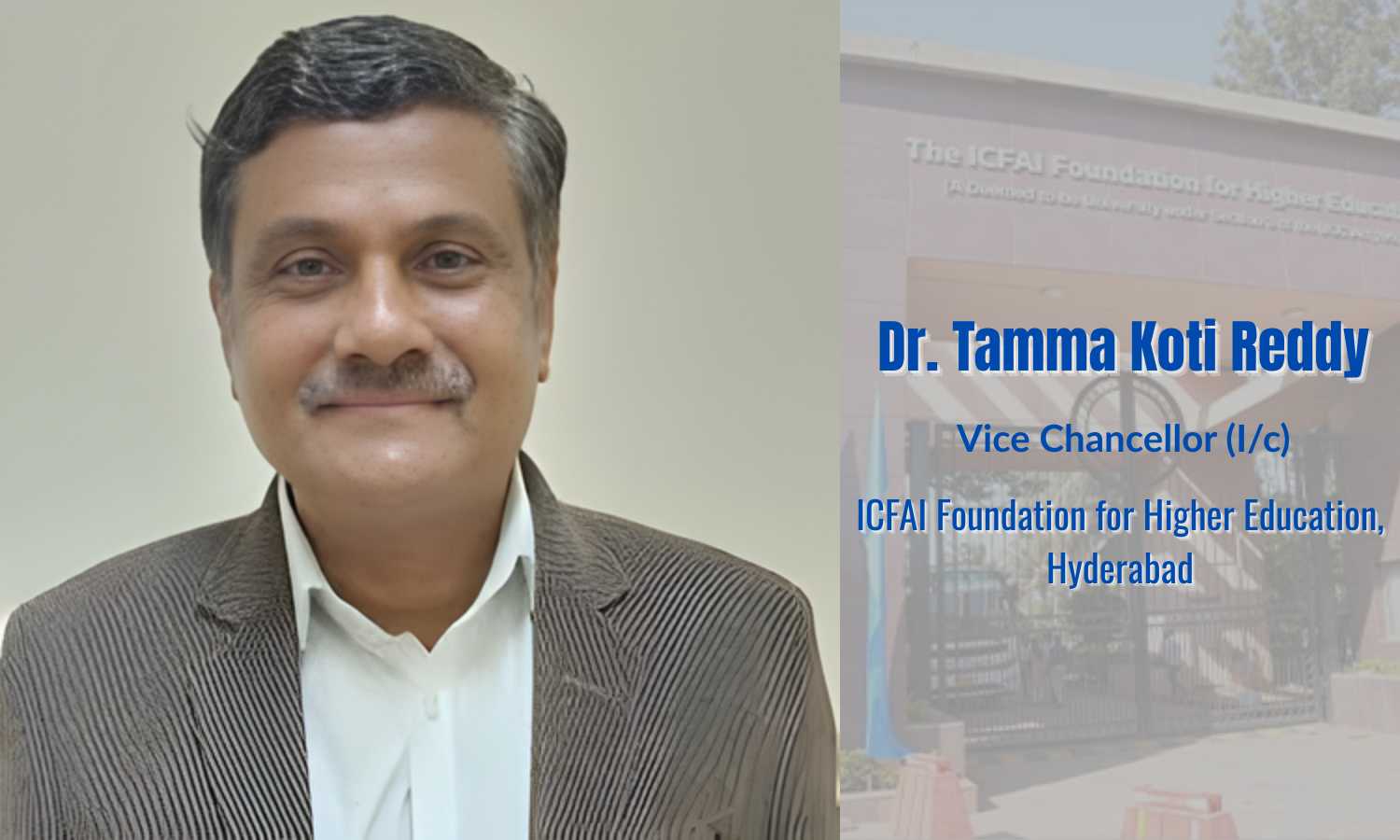
Dr. Tamma Koti Reddy

Against the backdrop of challenges such as the depreciation of the rupee, the imposition of import tariffs of up to 50 per cent by the United States (a major trade partner for Indian exports),and the domestic demands including the rationalisation of domestic import duties and GST, and the rationalisation of taxation on long-term capital gains, the Union Finance Minister is set to present the Central Budget for 2026–27 on February 1, 2026.
The various phases of India’s development help us understand the priorities likely to be reflected in the forthcoming Union Budget. The period from 2003 to 2008 witnessed growth driven by investment-led expansion; 2014–19 was marked by major institutional reforms; and 2020–22 saw close coordination between fiscal and monetary policy, supported by strong rural demand. From 2023 onwards, the adoption of modern technology has contributed significantly to higher economic growth. The International Monetary Fund (IMF) has projected India’s growth at 7.3 per cent for the year 2025–26.
To achieve India becoming a developed economy by the year 2047, it is necessary to continue the high growth rate. In order to stabilise growth in future years, there should be enough investment. Although the mean investment was estimated at about 31-32 per cent of the GDP, in the past ten years, it has gone down to 30.4 per cent in the second quarter of 2025. This highlights the significance of a strong privatized investment in the Indian development process.
The Central Government expenditure is estimated to increase to ₹50 lakh crore by the 2025-26 Budget, and was 27.4 lakh crore during the 2014-15 Budget. Due to the lack of balance between the revenue checks and the total expenditure, the Central Government has turned to borrowing more and more. In 2020-21, Central Government debt was 61.4 per cent of GDP, and in 2023-24, it is 58.2 per cent, and is projected to be 56.1 per cent in the 2025-26 Budget. Economic experts argue that the Central Government debt must be brought to less than 55 per cent of GDP in the next Budget. The high growth in the government spending due to the adoption of socio-economic programmes after 2020 requires a sound fiscal management approach. With that said, the fiscal deficit in the future Budget must be held between the values of 4.1 and 4.2 per cent of GDP. The government should aim at increasing fiscal discipline to curb the fiscal deficit.
Fiscal Consolidation: Budget 2026–27
Fiscal consolidation is used to refer to the creation of a balance between the government receipts and government spending, through decreasing fiscal deficit. It is very instrumental in reducing the debt to GDP ratio, increasing investor confidence, macroeconomic stability, and improvement in sovereign credit ratings. Although the government should emphasis on fiscal consolidation it should at the same time emphasize on growth oriented expenditure. To become a developed nation by 2047, there must be a high growth curve that will need high investment in productive areas. The major efforts to curb the fiscal deficit without undermining growth are increasing capital expenditure, limiting unproductive spending and increasing non tax revenues.
An increased debt-to-GDP ratio also raises the interest payment by the government, causes it to borrow to pay off current debt, crowds out the investment of the private sector, leads to inflation and is a contributor to the rupee depreciation. It also increases trade deficit thus impacting negatively on the general economic growth. The government is required to work on improving the tax revenues in order to decrease the fiscal deficit in 2026-27 without disrupting the growth. In this regard, artificial intelligence and data analytics should be used to prevent the evasion of income tax and Goods and Services Tax (GST). The simplification of the tax slabs must be done step by step, and the exemptions in corporate tax and personal income tax must be slowly phased away. The increase of non-tax revenues may be made by the increase of dividends by the Public Sector Undertakings (PSUs) and the Reserve Bank of India and with the help of proper user charges over the public services. Direct Benefit Transfer (DBT) and compulsory seeding of Aadhaar cards should be tightened down to minimize the leakage in fuel and food subsidies, energy subsidies, and fertiliser subsidies.
The government can save money through restraining revenue spending to generate fiscal room to invest in projects that would boost revenues and reduction of the fiscal deficit. The infrastructure capital spending must focus on power grids, renewable energy, digital infrastructure, railways, and roads. Inclusive growth based fiscal consolidation is the order of the day therefore.
(Dr Tamma Koti Reddy is the Vice Chancellor (I/c), ICFAI Foundation for Higher Education, Hyderabad)