
Bhatti Vikramarka highlights Telangana waste management reforms at national meet

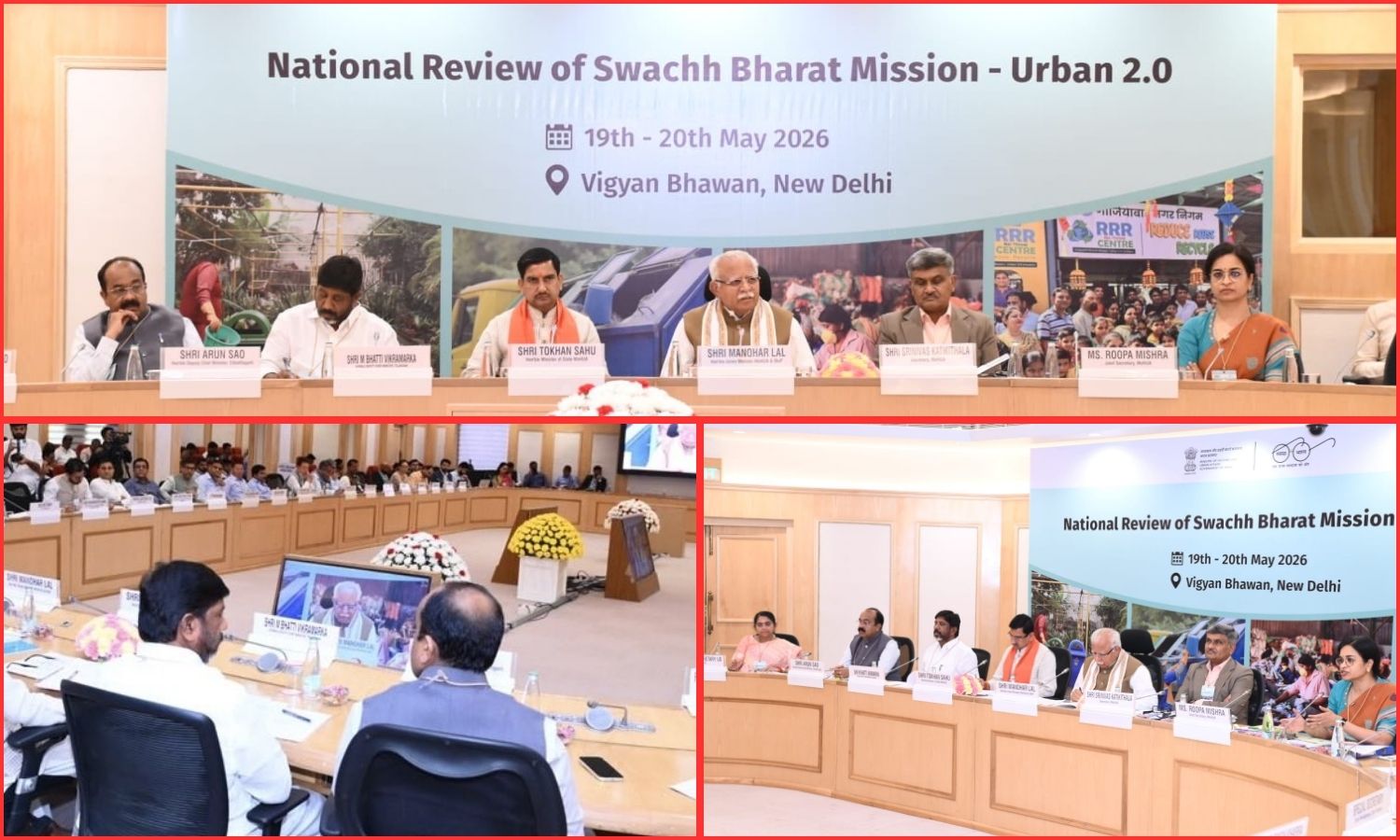
Hyderabad: Telangana Deputy Chief Minister Bhatti Vikramarka Mallu presented the State’s Telangana waste management reforms during the National Review Meeting on Swachh Bharat Mission–Urban 2.0 held at Vigyan Bhavan in New Delhi on Tuesday.
Union Minister for Housing and Urban Affairs Manohar Lal Khattar inaugurated the two-day review meeting. Meanwhile, ministers and senior officials from several states attended the programme.
Officials discussed sanitation, scientific waste processing, waste-to-energy projects and urban cleanliness systems during the first day of the meeting. In addition, states shared best practices in urban waste management.
Bhatti Vikramarka said Telangana was implementing sustainable urban development policies under Telangana Vision-2047. He stated that the State was following the CURE, PURE and RARE development framework. Consequently, the policy focuses on balanced development in urban, peri-urban and rural regions.
Telangana waste management reforms focus on segregation
The Deputy Chief Minister said solid waste management was directly linked to climate response, environmental sustainability and economic productivity. Moreover, he added that Telangana had already introduced several reforms proposed under the new Solid Waste Management Rules-2026.
Bhatti Vikramarka said the new rules focused on four-way source segregation, decentralised waste processing and scientific remediation of dump yards. He also highlighted technology-based monitoring, waste-to-energy generation and public participation systems.
The Deputy Chief Minister informed the meeting that Telangana would introduce around 9,596 electric Swachh Auto Tippers in urban regions. Furthermore, he said the vehicles would support QR-code monitoring and efficient waste collection.
Bhatti Vikramarka stated that Telangana was prioritising decentralised waste processing systems. Meanwhile, wet waste was being processed near the source, while dry waste was being diverted into recycling systems.
Telangana waste management targets dump yard remediation
The Deputy Chief Minister said scientific remediation of legacy dump yards remained a key priority for the State government. Accordingly, he informed that authorities were taking technical support from Indian Institute of Technology Bombay for work at the Jawaharnagar dump yard.
Bhatti Vikramarka stated that authorities were processing nearly 22 lakh metric tonnes of waste at the Autonagar dump site through biomining. Besides, he added that officials had already processed around 30 percent of the waste.
The Deputy Chief Minister said authorities would convert reclaimed land into parks, sports facilities and public infrastructure. He asserted that the government aimed to transform dump yards into development centres.
Under the 99-Day Praja Palana–Pragathi Action Plan, urban local bodies conducted sanitation drives across the State. Meanwhile, officials removed garbage vulnerable points and cleared 1,000.72 metric tonnes of construction waste. Authorities also launched e-waste collection drives and QR-based monitoring pilots for Swachh Autos.
Telangana waste management linked to circular economy
Bhatti Vikramarka referred to the proposed Eco-Town project at Bandaraviryala and Siddapur inspired by Japan’s Kitakyushu model. He said the project would strengthen Telangana’s circular economy initiatives.
The Deputy Chief Minister stated that Telangana aimed to contribute to India’s target of becoming a 30-35 trillion dollar economy by 2047. At the same time, he added that Telangana was pursuing its own goal of becoming a 3 trillion dollar economy.
Bhatti Vikramarka noted that Telangana improved its Swachh Survekshan and urban sanitation rankings in recent years. Therefore, he credited citizens, sanitation workers and urban local bodies for the progress.
Calling for a “War on Waste – Waste to Wealth” approach, the Deputy Chief Minister said waste management should evolve into an economic value generation system. He also suggested practical education on cleanliness and waste segregation from Class 1 onwards.
Bhatti Vikramarka appealed to the Central Government for financial support for recycling and waste-to-energy projects. In particular, he requested viability gap funding for scientific waste processing infrastructure.
Union Minister of State Tokhan Sahu, Municipal Administration and Urban Development Special Chief Secretary Jayesh Ranjan, Chief Minister’s Secretary Manik Raj and GHMC Commissioner R.V. Karnan also attended the meeting.
✅Deputy Chief Minister @Bhatti_Mallu attends National Review Meeting on Swachh Bharat Mission–Urban 2.0
✅Deputy CM explains Telangana’s initiatives towards scientific waste management, sustainable urban development and circular economy
✅Deputy Chief Minister of Telangana,… pic.twitter.com/uRftBXiWHc
— IPRDepartment (@IPRTelangana) May 19, 2026