

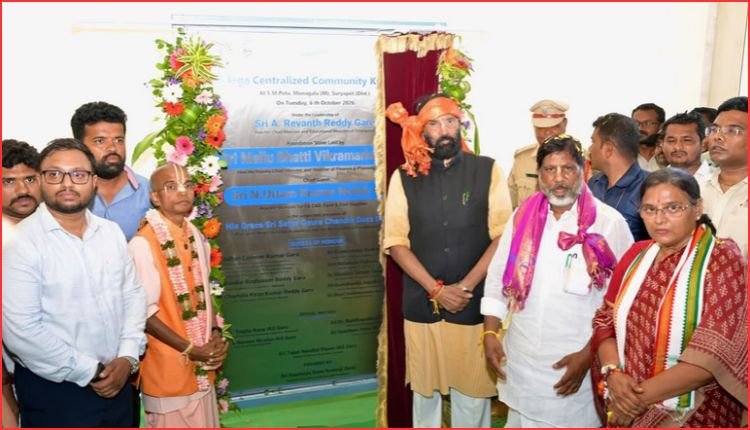
Hyderabad: Deputy Chief Minister Bhatti Vikramarka on Tuesday described Telangana’s hot breakfast scheme for 27 lakh students as an investment in human resources. He said the programme should not be viewed as a welfare freebie.
Bhatti said Telangana had become the first state in the world to launch an initiative providing hot breakfast daily to 27 lakh students. He said nutritious food for students represented an investment in developing a healthy and productive future workforce. Therefore, such expenditure should not be treated merely as welfare spending.
According to Bhatti, healthy children who received quality education would contribute significantly to Telangana’s future production and economic growth. He said their contribution would ultimately strengthen the state’s Gross State Domestic Product.
The Deputy Chief Minister made the remarks after laying the foundation stone for a centralised community kitchen at Munagala village. The village falls under the Kodad Assembly constituency in Suryapet district.
Irrigation Minister Uttam Kumar Reddy also participated in the foundation-stone programme. The government planned to construct the kitchen at a cost of ₹9.6 crore to serve school students.
Hot breakfast scheme to serve 60,000 students from kitchen
Addressing a public meeting on the occasion, Bhatti said the greenfield kitchen would use modern technology. He also said the facility would maintain hygienic standards while preparing meals for students.
The centralised kitchen would prepare and distribute hot breakfast to nearly 60,000 students. These students attended 1,020 schools that would receive meals from the single facility.
Bhatti linked the project to the government’s wider approach towards welfare spending. He said programmes for the poor, farmers, women and students should not be considered freebies.
Instead, the Deputy Chief Minister described such expenditure as an investment in Telangana’s economic development. He said investments in people would contribute to the state’s productive capacity in the future.
Bhatti said the hot breakfast scheme reflected the same approach towards spending on students. He maintained that better nutrition and quality education would help create healthier and more productive human resources.