

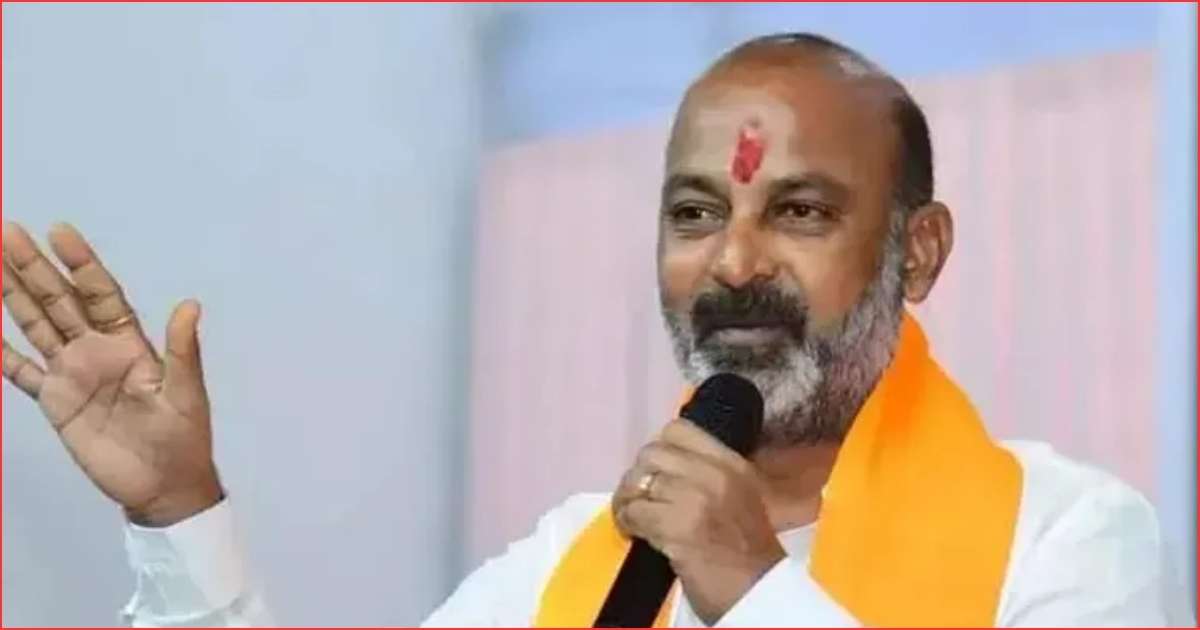
Hyderabad: Union Minister of State for Home Affairs Bandi Sanjay Kumar on Tuesday called for political unity on the Women’s Reservation Bill and urged all parties to support its passage in Parliament.
Speaking on the occasion of Ambedkar Jayanti, he described B. R. Ambedkar as a visionary who worked for women’s rights and equality. He said the proposed Women’s Reservation Bill drew inspiration from Ambedkar’s principles.
Bandi Sanjay said the Narendra Modi-led Union government was committed to introducing the Women’s Reservation Bill in Parliament. He appealed to all Members of Parliament to rise above political differences and extend support to the legislation.
Earlier in the day, he paid floral tributes to Ambedkar’s portrait as part of the birth anniversary observance. He later issued a statement outlining the government’s position and the need for consensus on the Bill.
Women’s Reservation Bill gains push from Bandi Sanjay
Referring to policy direction, Bandi Sanjay said the government had taken a historic decision to ensure representation for women in legislative bodies. Sanjay added that the Women’s Reservation Bill aimed to strengthen political participation among women and improve representation in governance.
Bandi Sanjay described Ambedkar as a central figure in advancing social justice and equality. Bandi Sanjay said Ambedkar’s work addressed entrenched discrimination and sought to dismantle caste-based exclusion. According to him, Ambedkar’s contributions continue to guide present-day policy initiatives.
Bandi Sanjay said the BJP was working to carry forward Ambedkar’s vision through governance and welfare measures. Sanjay also referred to remarks made by the Prime Minister in Parliament, stating that Narendra Modi had acknowledged Ambedkar’s role in shaping democratic institutions.
He reiterated that broad-based political support was essential for the passage of the Women’s Reservation Bill. He said consensus across parties would ensure effective implementation and reflect collective commitment to gender equality in legislative institutions.