

Hyderabad: TGSRTC strike began across Telangana after talks between the government and employees’ unions failed, leading to disruption of bus services from Tuesday midnight.
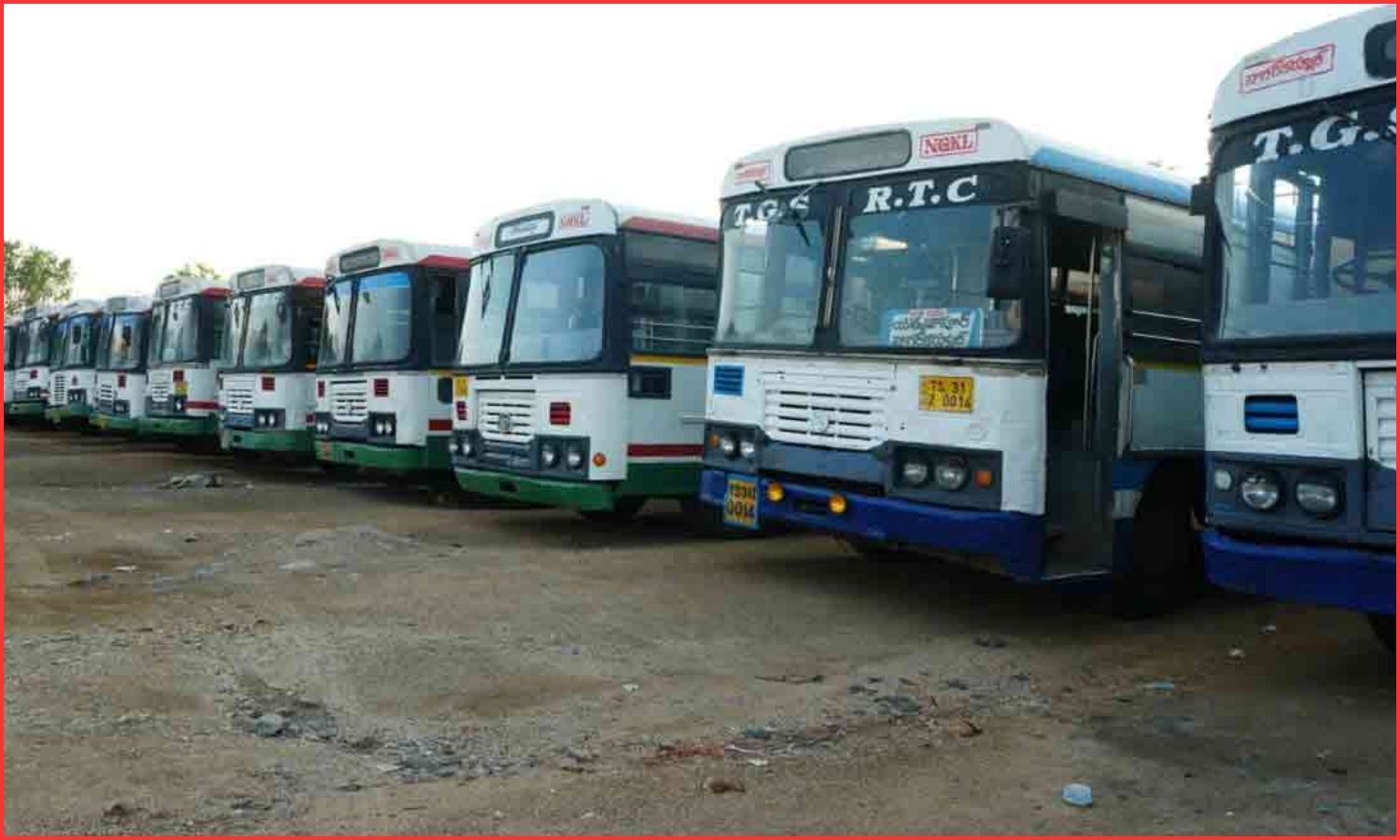
RTC workers launched the strike after negotiations with the government did not yield results. As a result, buses remained parked in depots, and services stopped from the first shift. Police deployed security at bus depots across the state.
The disruption affected lakhs of commuters in cities including Hyderabad and Warangal. Passengers depended on private transport due to the absence of RTC buses.
TGSRTC strike continues over 32 key demands
The Joint Action Committee (JAC) of RTC unions accused the government of delaying decisions. It said authorities failed to provide clear assurances on 32 demands, including merger of RTC with the government, restoration of unions, and employee welfare measures.
The JAC rejected the government’s proposal to allow a committee four weeks to study the issues. Instead, union leaders termed the move an attempt to weaken the agitation.
Meanwhile, the government formed a high-level committee headed by the Transport Department’s Special Chief Secretary. It urged workers to call off the strike and assured a positive approach to resolving issues.
Transport Minister Ponnam Prabhakar asked employees to reconsider their decision. RTC Managing Director Nagi Reddy also appealed to staff to resume duties, stating that some demands involve financial complexities and require time.
However, JAC leaders Eeduru Venkanna and Thomas Reddy said the strike would continue until all demands are met. They alleged government negligence and accused it of attempting to dilute the protest.
The government explored contingency measures, including deploying rental and school buses. However, rental bus operators said they would continue services independently and not join the strike.
Heavy police deployment was seen at RTC depots to maintain order. The ongoing strike is likely to cause hardship to daily commuters, especially workers, students, and low-income groups who rely on RTC services.