

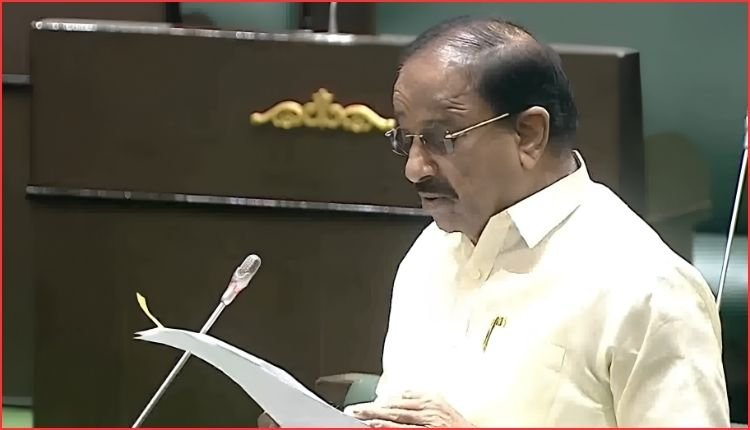
Hyderabad: The Telangana government planned to bring an additional two lakh acres under horticulture cultivation during 2026-27, Agriculture Minister Tummala Nageswara Rao told the Assembly on Wednesday. The Telangana horticulture expansion formed part of the government’s efforts to diversify crops and improve farmers’ incomes.
Replying to legislators’ questions on horticulture and oil palm cultivation, Tummala said farmers were being encouraged to grow fruits and vegetables. The government was also promoting oil palm through awareness programmes, training and subsidised inputs.
Subsidies ranging from 40 per cent to 90 per cent were being provided for several horticulture inputs and facilities. These covered saplings, fertilisers, mulching, shade nets, farm ponds, cold storage and permanent pandals. In addition, subsidies covered drip and sprinkler irrigation systems.
Telangana horticulture expansion gets budget support
For 2026-27, the government allocated ₹150 crore for horticulture-related inputs and infrastructure, Tummala said. Another ₹243 crore was allocated for drip and sprinkler irrigation. Meanwhile, the government earmarked ₹261 crore for oil palm development.
Tummala said 88,282 farmers currently cultivated oil palm across 3.20 lakh acres in Telangana. The state had taken up oil palm cultivation on 2.74 lakh acres under the NMEO-OP scheme since 2021-22, he said. Moreover, the area under the crop had increased by 1.37 lakh acres since December 2023.
The government fixed an oil palm cultivation target of 85,000 acres for 2026-27. Against this target, farmers had already planted saplings across 29,053 acres, according to the Minister.
Farmers were also receiving incentives of up to ₹46,250 per acre. The assistance covered saplings, drip irrigation and fertilisers for the first four years, besides intercropping expenses.
Telangana horticulture expansion drives oil palm processing
Tummala also outlined the state’s existing and planned oil palm processing infrastructure. Four oil palm mills were operational in Telangana, while six additional mills were under construction. Furthermore, Oilfed was establishing a refinery and modern packaging centre at Narmetta in Siddipet district.
The government was prioritising processing facilities in areas where oil palm cultivation was expanding rapidly, the Minister said. According to Tummala, an oil palm factory needed at least 10,000 acres of plantations to reach the harvesting stage for continuous operations.
He assured legislators that the government would facilitate processing mills in their constituencies if farmers collectively cultivated oil palm across 10,000 to 15,000 acres. Measures had already begun to establish processing mills in Mulugu and Bhupalpally. In addition, the government planned more facilities in Jangaon and Mahabubabad districts.
The Telangana horticulture expansion programme would combine increased cultivation with subsidies, irrigation support and processing infrastructure as the state pursued its two-lakh-acre target.