
Telangana gig workers can refuse app orders without rating penalties


Hyderabad: Telangana gig workers rights now include protection for riders and drivers who refuse app-based assignments. Platforms cannot penalise them merely for doing so. The protection appears in the state’s final platform-based gig workers rules, issued on November 14 through G.O.Ms.No.18. The rules also place safeguards around automated decisions, contract changes and account termination.
The provisions cover platform workers within the scope of the Telangana Platform Based Gig Workers Act, 2026. The rules address a recurring problem in app-based work. Platforms often use ratings and automated systems to allocate future jobs. The rules require greater transparency and establish ways to challenge decisions affecting income.
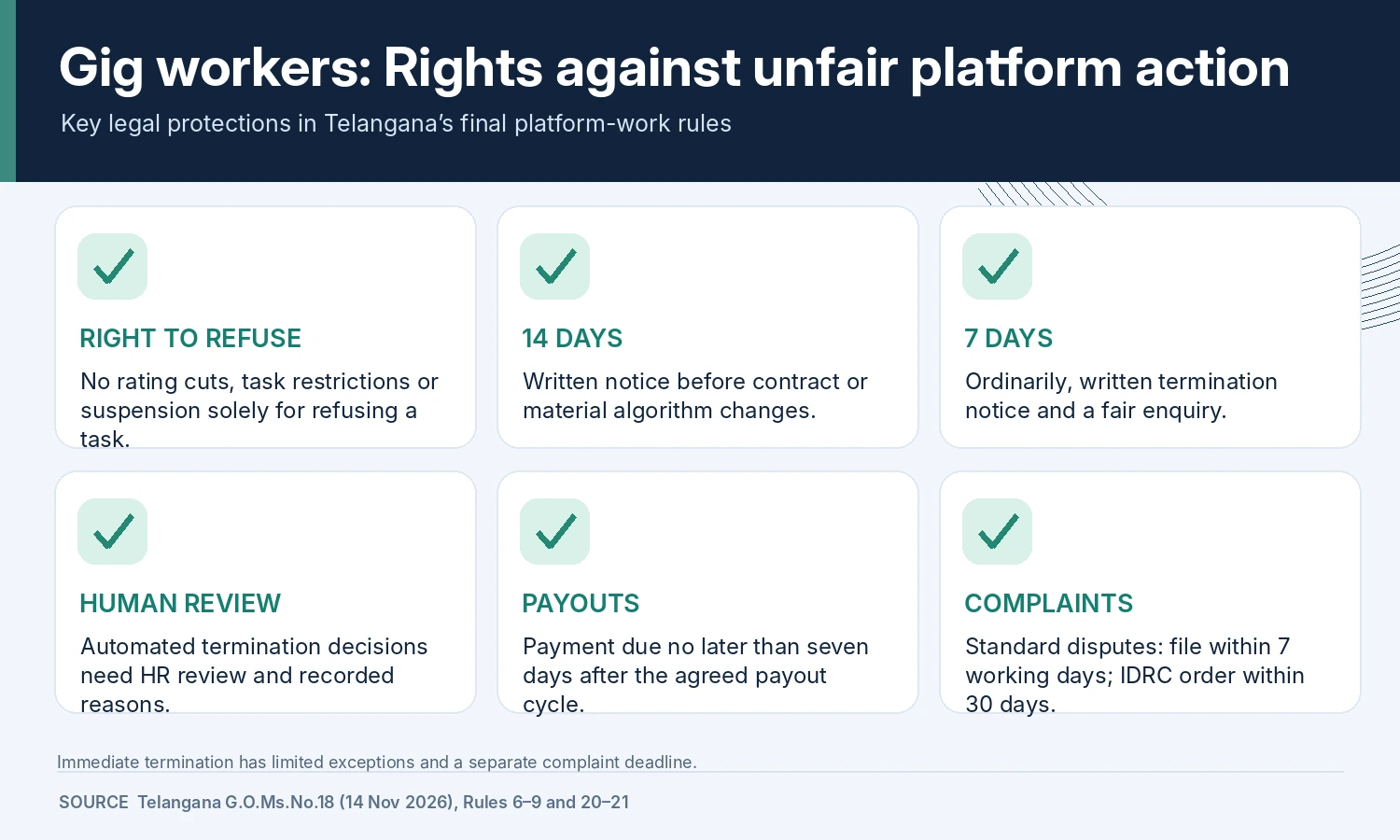
Under Rule 7, contracts must state clearly that a worker may decline an assignment without adverse consequences. A platform cannot punish a refusal by reducing ratings, limiting future allocations, suspending access or using another indirect penalty. The rule also requires companies to explain how they calculate fares, incentives, deductions and other payments.
Telangana gig workers rights cover algorithms and deactivation
Rule 6 requires platforms to provide a mechanism for asking about automated monitoring and decision-making systems. Workers may seek information concerning fares, earnings, customer feedback and task allocation. Once a worker files a dispute, platforms must respond to relevant queries within five working days.
Platforms must guard against algorithmic discrimination based on religion, race, caste, gender, birthplace or disability. The welfare board may seek algorithmic audit reports to examine compliance. Workers must receive at least 14 days’ written notice before material contract or algorithmic changes take effect.
Terminations face additional conditions. A platform must normally give seven days’ written notice and explain the reason. It must also hold a fair enquiry. Workers must have an opportunity to respond. The company must communicate its final decision within seven days after the enquiry.
A human resources officer must review and approve automated termination recommendations before they take effect. The officer must record reasons. Immediate termination without the usual notice is reserved for specified cases involving a clear and imminent threat to consumers. Even then, the company must record its grounds and notify the worker within 24 hours.
The rules also prohibit blacklisting, de-rating or cutting payouts as a way to avoid the prescribed termination process. A termination that breaches Rule 8 is treated as void and can be challenged through the dispute mechanism. These protections do not prevent a platform from taking lawful action in cases that meet the rule’s requirements.
Complaint deadlines and payment safeguards
Platforms with at least 100 registered gig workers must constitute an Internal Dispute Resolution Committee. The notification also contains broader wording about committees for every platform, which may need an administrative clarification. Workers can raise disputes over automated decisions, termination, deductions and working conditions through the prescribed channels.
For ordinary disputes under Rule 21, workers generally have seven working days to file a written complaint. The committee must acknowledge a complaint within three working days. It must report action within 14 days and decide within 30 days. Rule 8 separately allows 30 days to challenge immediate termination. A worker dissatisfied with the committee’s final decision can appeal to the Grievance Redressal Officer within 30 days.
Platforms must follow contractual pay schedules. They cannot delay payment beyond seven days after a payout cycle. Workers must receive digital statements showing gross earnings, itemised deductions and net payments. Moreover, platforms cannot recover the welfare fee from workers through direct deductions or hidden reductions in rates or incentives.
These safeguards offer a legal route to contest decisions that once appeared final on a mobile screen. Their effectiveness will depend on accessible complaint systems, worker awareness and timely enforcement. For now, the November 14 notification sets out what platforms must do and how workers may challenge a breach.