
Telangana drought affects 365 mandals as paddy acreage declines

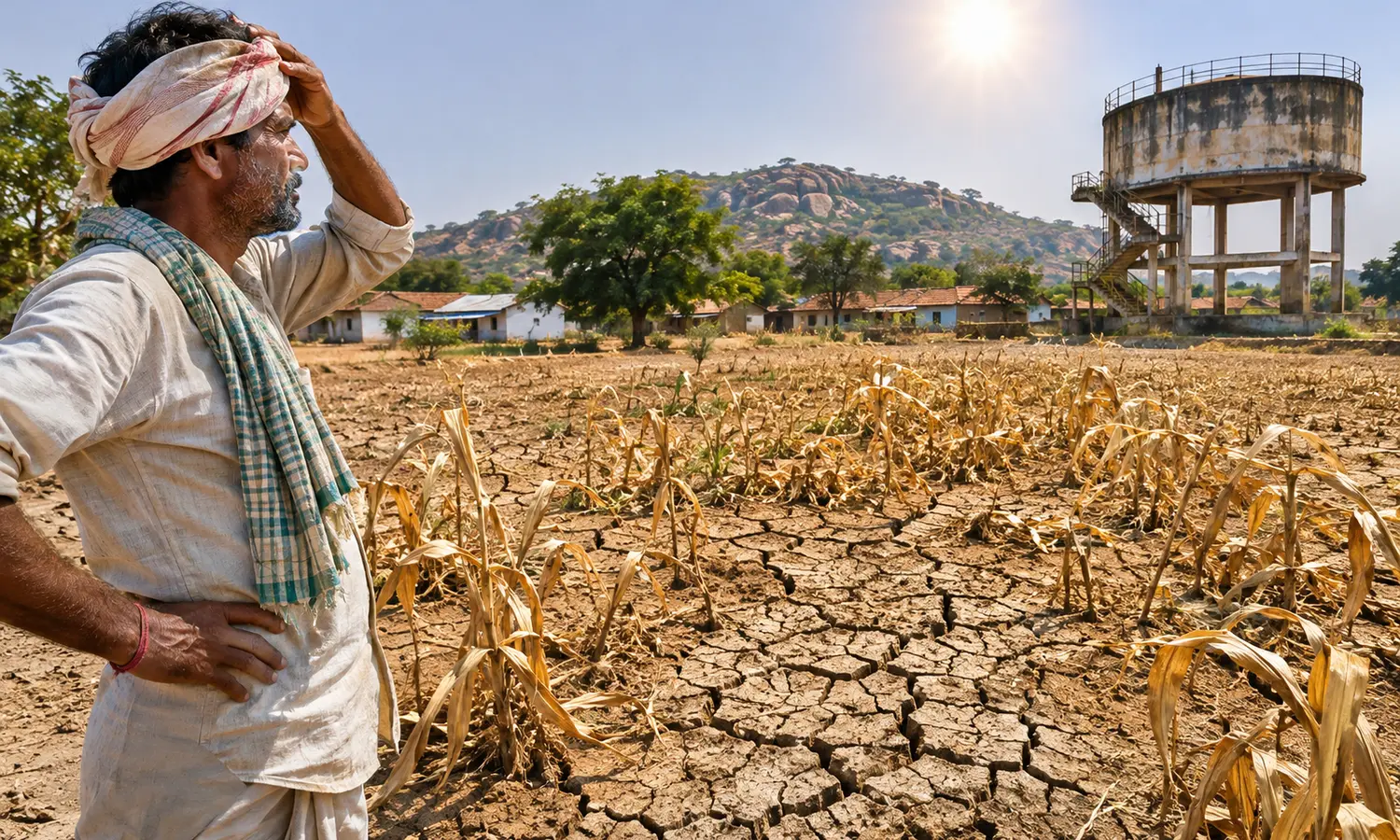
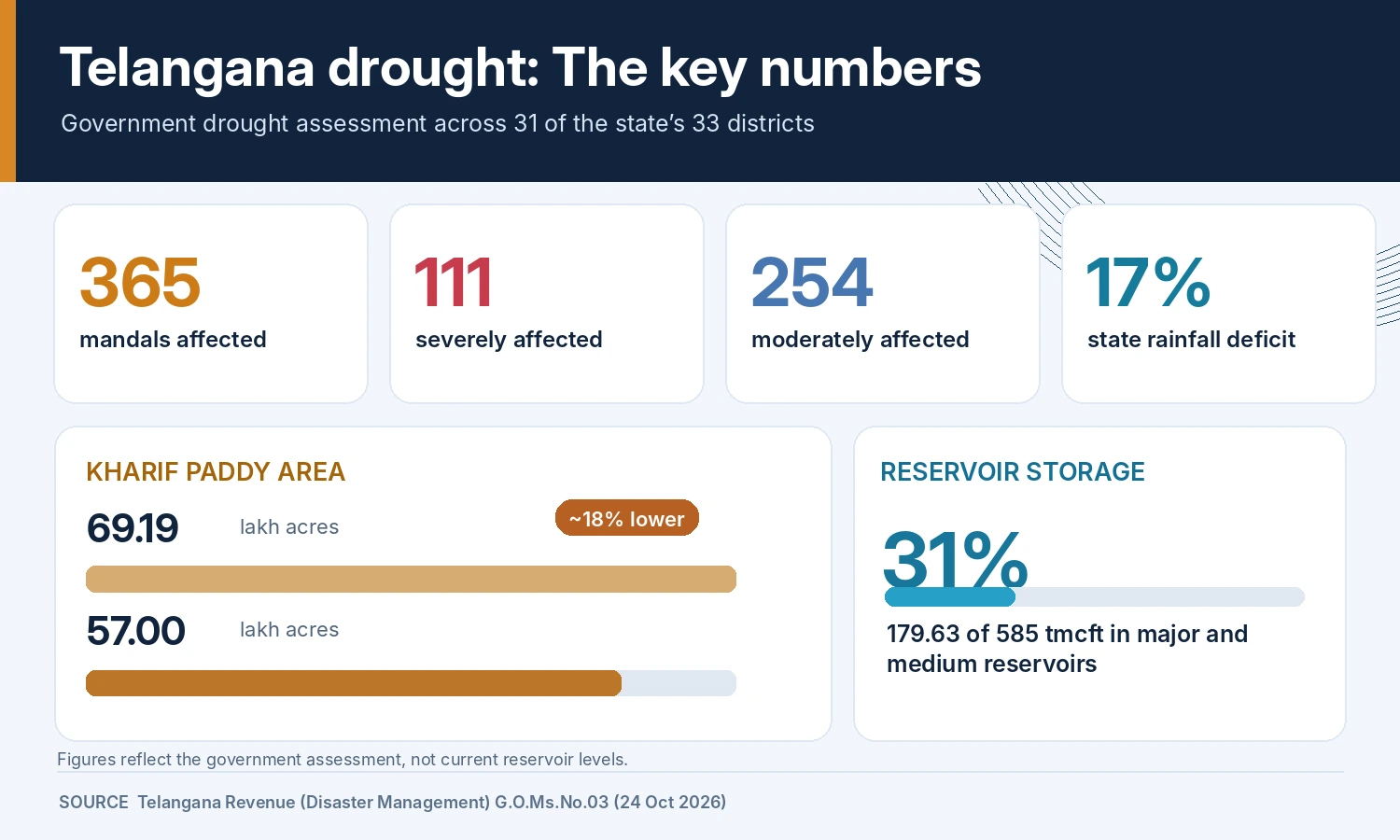
Hyderabad: The Telangana drought declaration covers 365 mandals across 31 districts after an uneven southwest monsoon. The government’s October 24 notification classifies 111 mandals as severely affected and another 254 as moderately affected. The drought declaration comes alongside a substantial fall in cultivated area, including an 18 per cent reduction in paddy acreage.
G.O.Ms.No.03 of the Revenue (Disaster Management-II) Department will remain in force for six months unless the state withdraws it earlier. The order allows the government to add mandals following fresh assessments. Officials considered rainfall, sowing patterns, soil moisture, groundwater conditions and district reports before issuing the notification.
Telangana received 615.5 mm of rain between June 1 and September 30, against a seasonal normal of 740.6 mm. That represents a statewide shortfall of about 17 per cent. Although this lies within the India Meteorological Department’s normal departure band for a state average, 18 districts recorded deficient rainfall. The government’s drought assessment therefore considered conditions beyond the statewide percentage.
Telangana drought reduces sowing and water storage
The drought order reports that total kharif acreage declined from 139.28 lakh acres to 126.06 lakh acres. Paddy acreage fell from 69.19 lakh acres to 57 lakh acres. The order does not clearly identify the reference year for these comparisons, so the figures should not be described as a year-on-year change without further clarification.
Reduced cultivation does not automatically mean an equivalent fall in harvest output. Final production will depend on yields, irrigation and the condition of crops that farmers managed to sow. Still, the contraction in sown area points to difficult decisions for growers facing uncertain water supplies and input costs.
Reservoir levels add to the concern. The order recorded 179.63 thousand million cubic feet of live storage in major and medium reservoirs, against a combined capacity of 585 tmcft. That was about 31 per cent of capacity when officials assessed the situation. Readers should not mistake that figure for a fresh reservoir reading on November 15.
Relief measures and request for central support
The Legislative Assembly passed a resolution on September 18 seeking a Rs 20,000 crore drought-relief package from the Centre. The state also sought disaster-response funding, support for crop input subsidies, drinking water and fodder, additional electricity and more rural employment opportunities. The government has requested assistance for groundwater and water-body restoration as well.
The October notification directs district collectors to plan drinking water arrangements and livestock support where needed. It also calls for coordination with banks over agricultural loan restructuring, subject to RBI norms. Eligible input subsidies will depend on beneficiary verification and the release of the required funds; the declaration alone does not automatically establish a payment for every farmer.
Chief Minister A. Revanth Reddy reviewed drought preparations in October and urged officials to plan for irrigation, drinking water and electricity needs. Officials scheduled a meeting with Prime Minister Narendra Modi for November 15 to seek central support.
For farmers, the central questions concern the timing of assistance, availability of water and protection of the next cropping season. The state will also need to monitor mandals that did not appear in the initial notification, particularly as the summer months approach.