

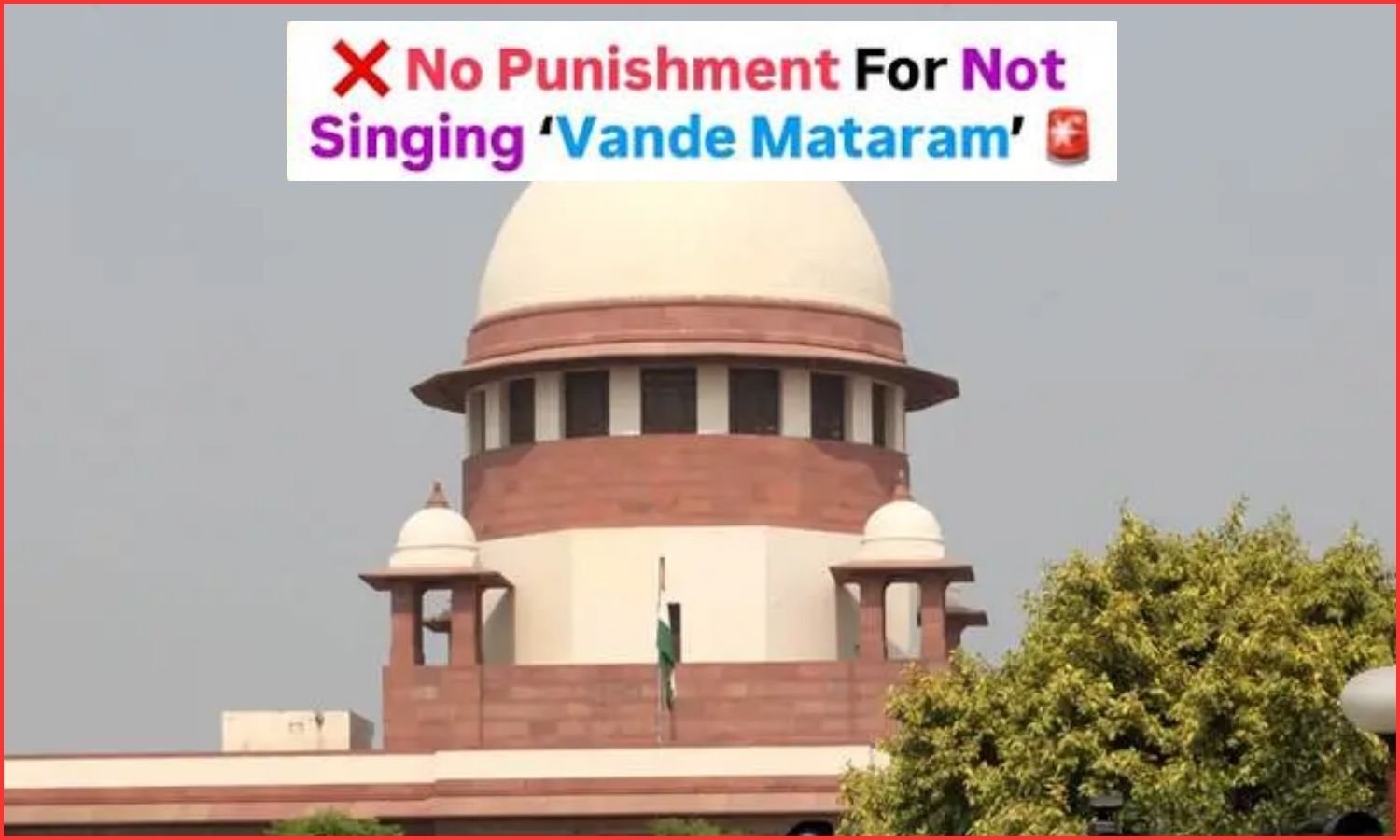
Hyderabad: Vande Mataram refusal on grounds of conscience should not attract penal action, the Supreme Court said. The court heard a plea challenging rules requiring all six stanzas at official events.
Chief Justice of India Surya Kant headed the three-judge bench. Justices Joymalya Bagchi and V Mohana also heard the matter.
Carnatic vocalist TM Krishna filed the petition. He challenged the 2026 amendment to the Prevention of Insults to National Honour Act, 1971.
He also challenged Union Home Ministry directions issued on January 28 and July 9, 2026.
During the hearing, the bench referred to the 1986 Bijoe Emmanuel case. The Supreme Court had protected schoolchildren who declined to sing the national anthem on religious grounds.
Those students had stood respectfully during the anthem. The bench said the principle from that judgment should guide the amended law.
Justice Bagchi said the government could decide the form and duration of the national song. However, he said conscientious objectors should not face criminal consequences.
Vande Mataram refusal raises questions over penal provisions
The amended Section 3 provides up to three years in prison for certain offences. It also allows a fine or both forms of punishment.
The provision covers intentional obstruction of the National Anthem or national song. It also covers disruption of an assembly engaged in such singing.
The bench said it would examine protections for conscientious objectors. In particular, it would consider people who decline to sing on religious grounds.
However, the court said it would not decide what should constitute the national song. That issue remained outside its consideration.
Senior advocate S Muralidhar appeared for Krishna. He argued that the amendment did not clearly define “national song”.
Muralidhar also questioned which version or stanzas the law covered. He challenged the Home Ministry directions as well.
He argued that the directions came through an office memorandum. The lawyer also said the memorandum had not been gazetted.
According to Krishna’s petition, the rules raise several constitutional questions. These include freedom of speech, conscience, equality and religious freedom.
The petition also raised concerns about secularism. It challenged the requirement that Vande Mataram precede the national anthem when both are sung or played.
Meanwhile, Solicitor General Tushar Mehta opposed the petition. He urged the bench not to issue notice.
An exchange later took place between Mehta and Muralidhar. The disagreement concerned remarks about the law-making process.
Muralidhar objected and sought withdrawal of the remarks. Mehta declined to retract them.
The bench did not intervene in the exchange. It said it would not take note of the comments.
Finally, the Supreme Court sought the Centre’s response to the petition. The Vande Mataram refusal case will focus on penal consequences for conscientious objectors.