
Supreme Court hears challenges to constitutional validity of Waqf Amendment Act 2025

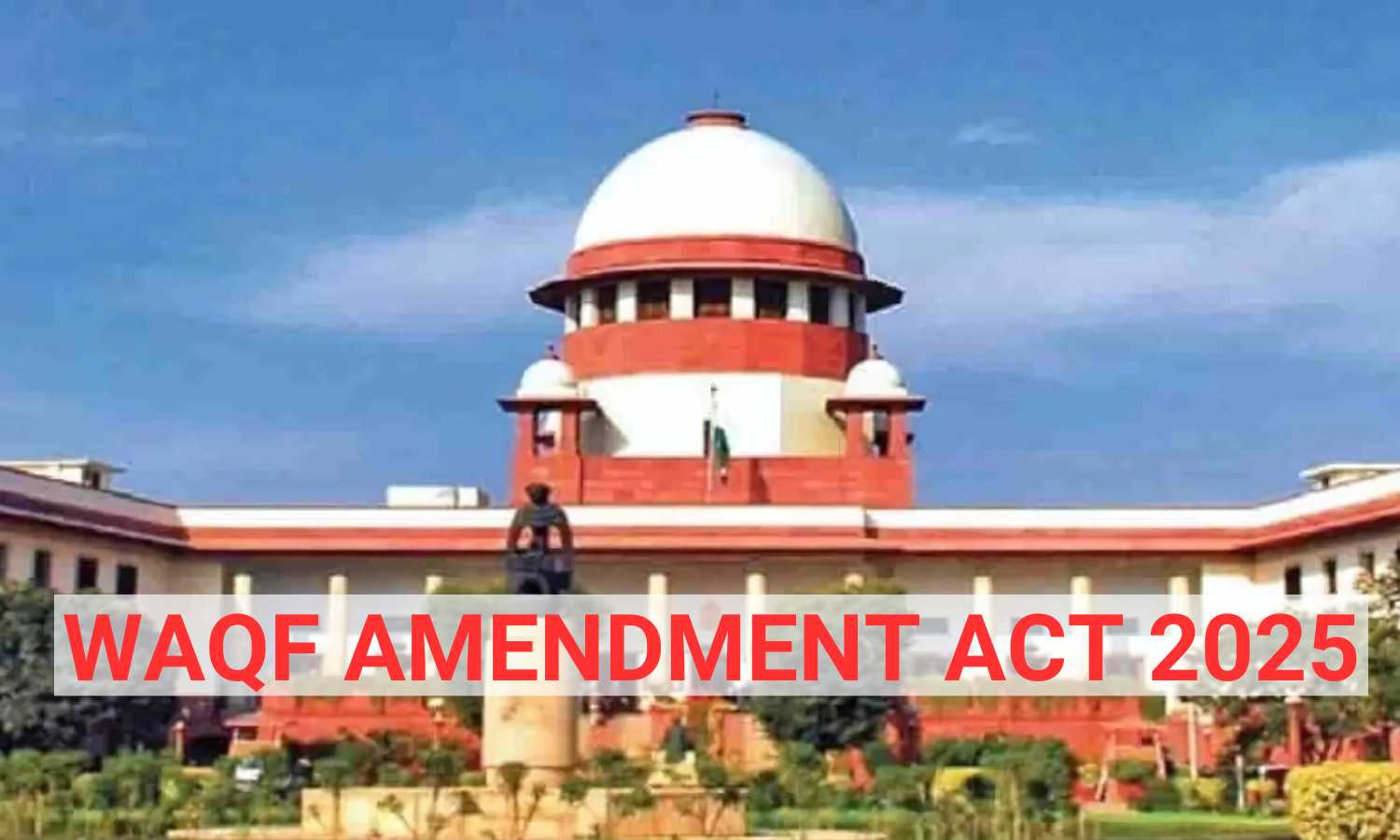
New Delhi: The Supreme Court on Tuesday took up a batch of petitions contesting the constitutional basis of the Waqf Amendment Act 2025. Arguments stretched through the day before a bench headed by Chief Justice BR Gavai, with Justice Augustine George Masih alongside.
Midway through, the Chief Justice cut in with a pointed reminder: laws passed by Parliament carry an inherent assumption of constitutionality. Unless someone lays down solid, specific grounds to doubt that, courts aren’t meant to interfere. That was his message to the petitioners challenging the Act.
Representing the Centre, Solicitor General Tushar Mehta requested the court to restrict the interim hearings to three specific points. These include the authority of Waqf Boards to de-notify properties declared as waqf by courts, user, or deed. Mehta argued that while the petitioners are pushing for a broader review, the government’s affidavit addresses only the three designated areas.
Senior advocates Kapil Sibal and Abhishek Manu Singhvi, appearing for the petitioners, strongly opposed the Centre’s request. Sibal argued that hearings on major laws cannot be fragmented. “This is about the takeover of all waqf properties,” he said. He also urged the court to issue an interim order, calling the law unconstitutional and designed to seize and control waqf properties.
Sibal pointed to a clause in the amended law allowing investigations into properties facing disputes, with collectors authorised to conduct inquiries without any time limit. Until a report is submitted, the property will not be treated as waqf. “Once a property is dedicated to Allah, it becomes waqf forever,” he said, stressing that the state cannot fund such properties. “There are no offerings in mosques. Waqf institutions run on donations,” he added, when the bench noted offerings do occur at dargahs. Sibal clarified he was referring to mosques, not dargahs.
He cited Babri Masjid as an example of waqf by user and said the amended law creates mechanisms to bring such properties under state control merely on the grounds of dispute or ownership issues.
Sibal further criticised the clause disqualifying properties protected by the Archaeological Survey of India from being waqf. Chief Justice Gavai questioned whether this limits religious practice. Sibal replied that rejecting waqf status nullifies religious use. Gavai responded by noting that worship continues at ASI-protected temples like Khajuraho. Sibal insisted that declaring a property non-waqf under the law effectively bars religious access, thus violating Article 25.
The court took note of the petitioners’ argument that the new law violates Article 25 of the Constitution, stripping citizens of their right to practice religion freely.
Earlier, during preliminary hearings, the Centre had opposed interim relief and urged that the scope remain limited to issues around user-based waqf declarations, appointments of non-Muslims to waqf bodies, and recognition of waqf over government land. On April 25, the Ministry of Minority Affairs had filed a 1,332-page affidavit defending the amended legislation.
The matter remains pending with broader constitutional questions yet to be settled.