

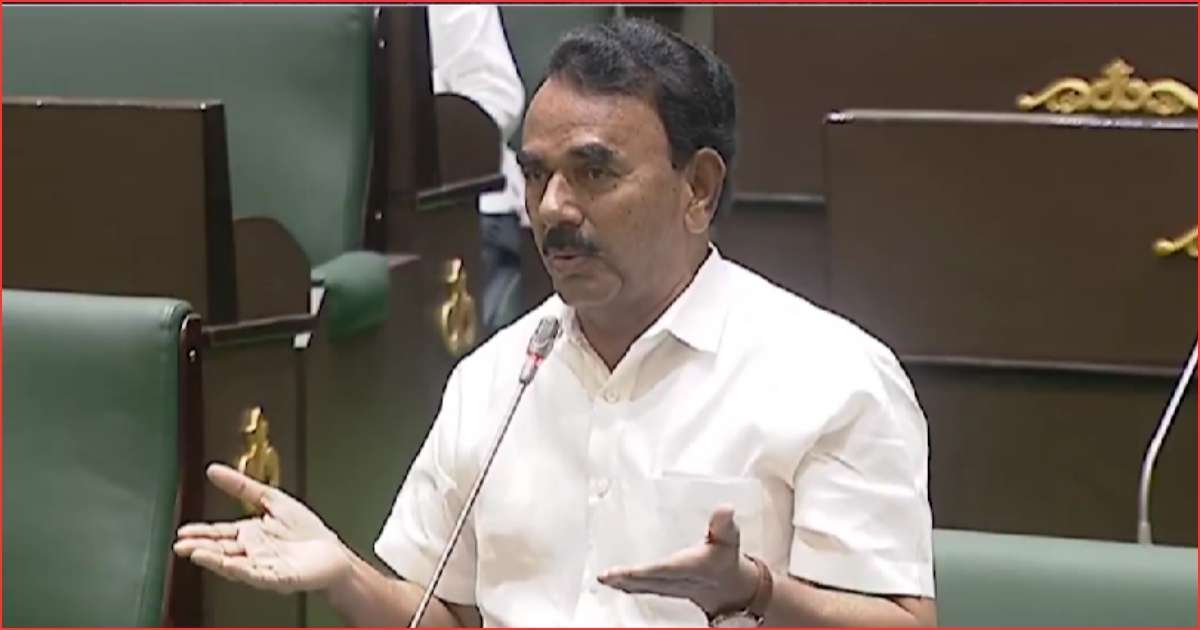
Hyderabad: Excise Minister Jupally Krishna Rao blamed the previous BRS government for rising liquor consumption, citing a sharp increase in excise revenue during its tenure.
Jupally Krishna Rao made the remarks during a budget discussion in the Legislative Assembly. He responded to arguments raised by BRS MLA T. Harish Rao.
The minister said rising liquor consumption could be traced to policy decisions taken during the previous regime. He argued that the BRS government expanded liquor sales and normalised higher consumption across the state.
Rising liquor consumption linked to excise revenue growth
Krishna Rao presented comparative figures to support his claim. He said excise revenue stood below Rs. 10,000 crore at the time of Telangana’s formation. However, it rose to Rs. 35,000 crore by the time the BRS left office.
He said this sharp rise reflected policies that encouraged liquor sales. “The statistics offer an indictment of who truly incentivised liquor sales,” he stated.
Moreover, he said the previous regime fostered a culture of addiction through its approach. As a result, rising liquor consumption became a structural issue.
Rising liquor consumption debate highlights policy differences
The minister said the current government avoided increasing taxes despite fiscal pressures. Instead, it introduced a new liquor policy for 2025–27.
He said the policy generated about Rs. 2,800 crore through non-refundable application fees. According to him, this showed strong response without imposing additional tax burdens.
In contrast, he criticised the BRS government’s fiscal management. He said state debt rose sharply during its tenure. The debt increased from about Rs. 65,000 crore before bifurcation to several lakh crores later.
He said the present government now faced the challenge of stabilising finances. At the same time, it had to address issues linked to rising liquor consumption.
Krishna Rao maintained that responsibility for the current situation lay with the previous regime. He said policy corrections were now underway to manage both revenue and public health concerns.