

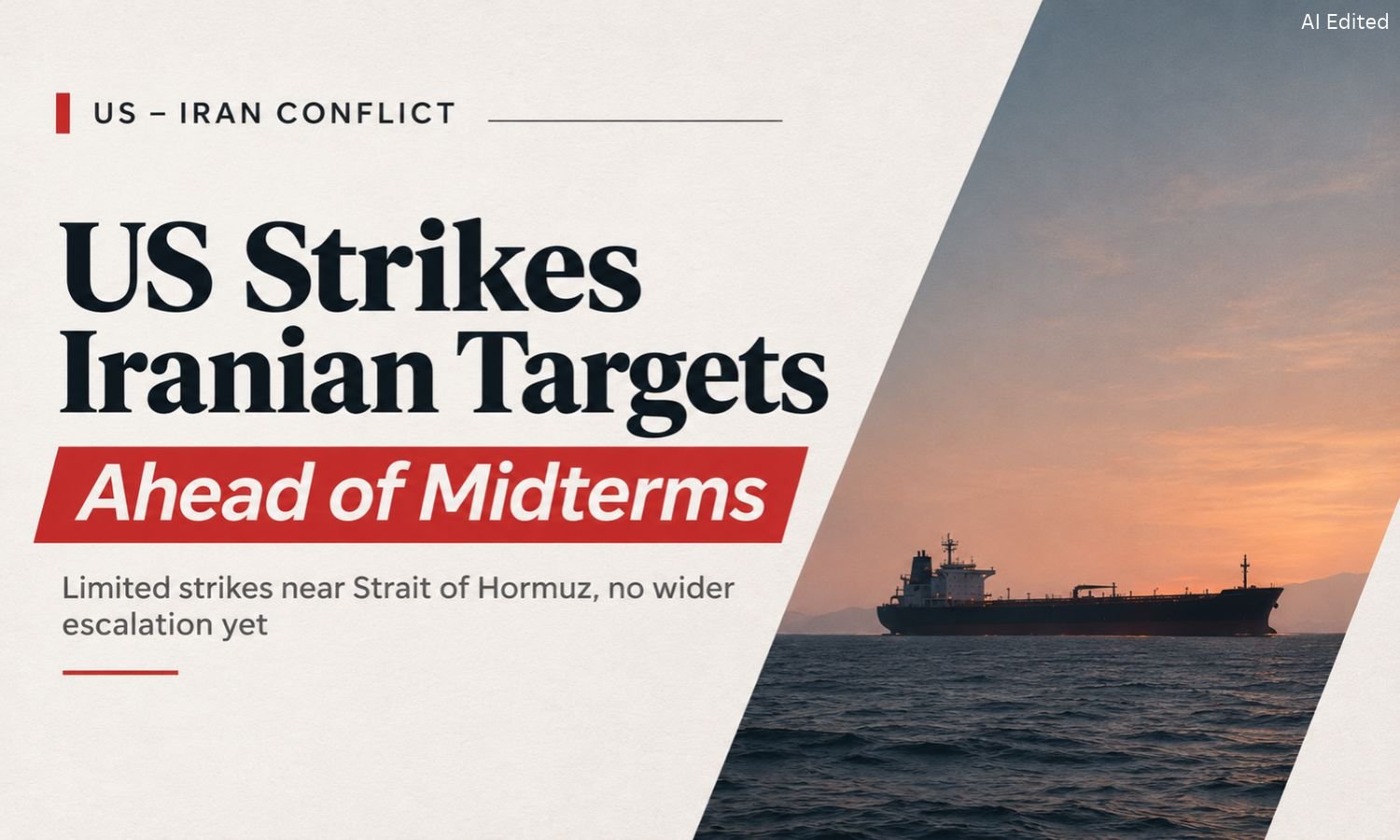
Washington and Tehran: The United States carried out limited strikes on Iranian targets near the Strait of Hormuz on the eve of the midterm elections. The strikes have not escalated into broader combat, and diplomatic efforts through mediators continue without a breakthrough. The conflict, which has run since early 2026, has constrained Iranian oil exports and raised global energy prices. It also added to the economic pressures that helped Democrats regain full control of Congress.
US officials described the strikes on Qeshm Island as “defensive” and limited in scope. They followed Iranian forces firing surface-to-air missiles at US assets, including an incident involving an American aircraft, and a reported missile launch that threatened shipping. Iranian state media reported explosions on Qeshm and nearby areas. President Donald Trump confirmed the action and framed it as a response to threats against US forces.
Officials stressed that the operation did not signal a return to major combat operations. Iran’s Deputy Foreign Minister Kazem Gharibabadi said Tehran retains the right to self-defence until military aggression ends completely. No significant new large-scale strikes have surfaced in the hours since the midterms concluded.
The Strait of Hormuz remains the primary flashpoint. Iran has tied any reopening of the waterway and broader de-escalation to several demands. These include an end to the US naval blockade of Iranian ports, the lifting of oil sanctions, the release of frozen Iranian assets and assurances against further military action. Senior officials, including Mohsen Rezaei of the Supreme National Security Council, have called the latest US response to these conditions unconvincing. Tehran has warned of a forceful response if major strikes resume.
Iranian oil exports remain heavily restricted, while shipments from other Gulf producers and Iraq continue under US naval protection. Brent crude has stayed elevated. That has pushed up US gasoline prices, which factored into Tuesday’s voting.
Diplomatic channels remain active. Qatar has facilitated exchanges of proposals, and Vice President JD Vance has publicly expressed optimism about a negotiated settlement. Trump has said discussions continue and that there is “no rush” for major new operations, though he has left the option open. Before the election, reports indicated that US Central Command had prepared options for intensified action if talks stalled.
With Democrats now holding both chambers of Congress, any further escalation or agreement will face greater legislative scrutiny, potential investigations and constraints on funding or authorisation. The administration has also announced a separate arrangement with Israel. Under it, annual US funding ends after the current year while arms sales continue.
Iran’s economy remains under severe strain
The blockade and sanctions continue to squeeze Iran’s economy. Officials have called the period one of the most difficult since the 1979 revolution. Tehran also maintains that nuclear discussions can begin only after its core conditions are addressed and that it retains response options. The limited strikes have not shifted the fundamental negotiating positions.
As of early November 5, the situation remains one of contained military exchanges alongside ongoing mediation. Mediators describe the remaining gaps as significant, even as both sides leave open a framework that reopens the strait and reduces hostilities. The post-midterm political landscape in Washington makes it likelier that Congress will weigh in on any decision to escalate or settle.
Risks to global energy markets, Gulf infrastructure and regional stability persist if talks fail. A workable deal would require compromises on the blockade, sanctions and security guarantees, which have so far proved elusive.