

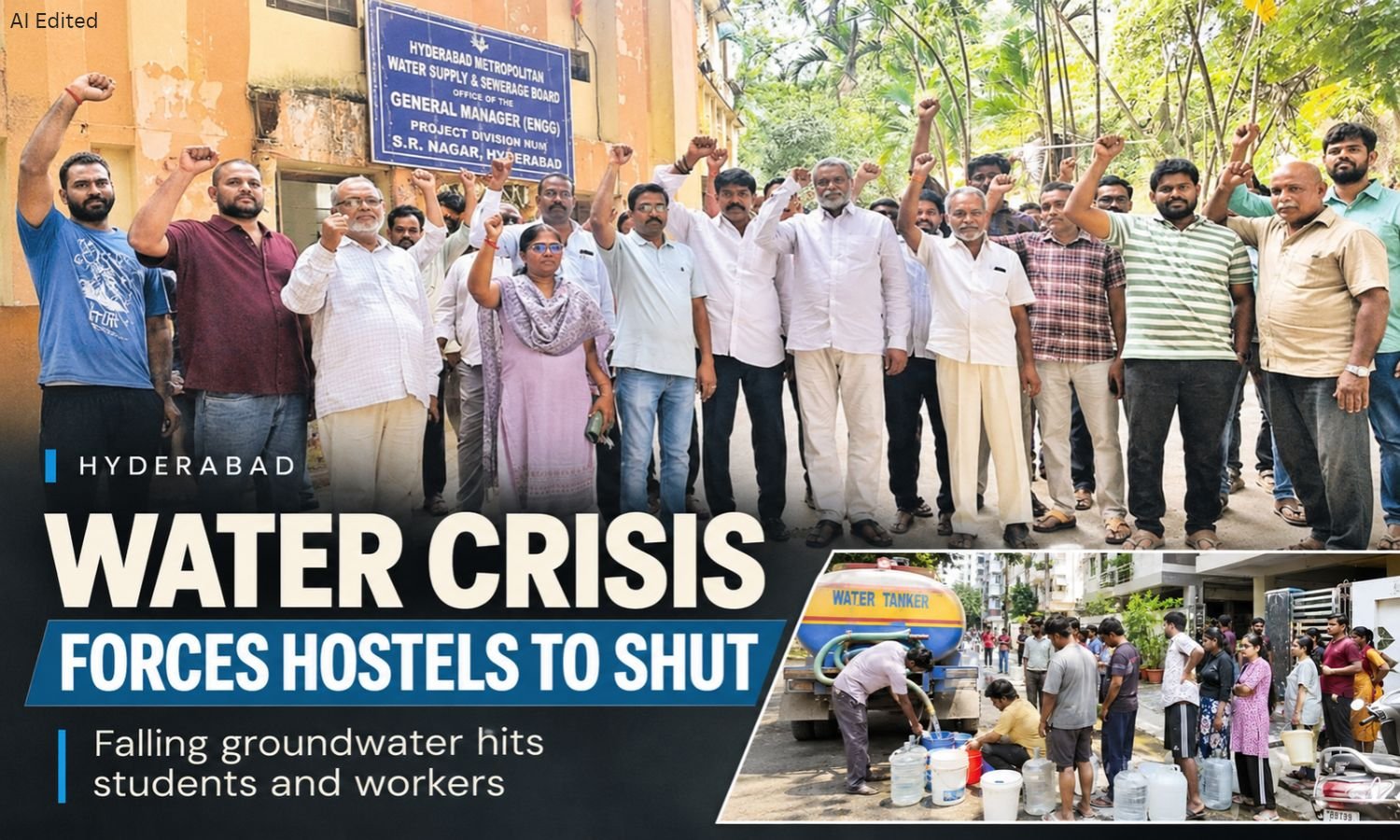
Hyderabad: The water crisis in Hyderabad has reached its peak, and hostels and PG rooms are closing in several parts of the city. Groundwater levels are falling, and boreholes are yielding no water. Private hostels and PG rooms that house thousands of employees and students are the worst hit.
Hostel administrators are preparing for a mandatory water lockdown because supply cannot meet rising demand. The shortage is severe in IT corridor areas such as Madhapur, Gachibowli, Rayadurgam and parts of Hitech City, where lakhs of IT employees live. It is also acute in Ameerpet, Ashok Nagar, Dilsukh Nagar and Kukatpally, which have thousands of educational and training institutions.
Water is not coming from boreholes dug hundreds of feet deep. Efforts to explore alternative boreholes are being controlled. As a result, private tanker operators cannot supply water in full.
Cyberabad alone has more than 2,500 private PG hostels, co-living spaces and hostels. Some large multi-storey hostels in Madhapur, Manikonda and Narsingi house 500 to 1,000 people each. Each needs at least three to four tankers of water every day. With supply stopped, the managements say they cannot cope.
Daily tanker booking demand to the Water Board has reached a record level, with more than 8,000 bookings a day across the city. Some areas have had no water supply for four to five days. Hostel managers say they have no water for drinking, cooking, bathing and other essentials. Candidates preparing for competitive exams in Ashok Nagar and Ameerpet face severe shortages.
Many residential colleges, educational institutions and private hostels have declared early holidays and advised residents to go home. Some institutions say they will consider online classes. Private colleges such as Narayana and Chaitanya have said they will hold online classes, but they have already sent thousands of students home. Some other private hostels in the city have been unable to operate and have closed down.
The government has already ordered work from home in areas such as the IT corridor, which has indirectly triggered a water lockdown in the city. IT companies, educational institutions and training centres are turning to online methods similar to those used during the Covid lockdown.
According to the report, the Water Board has failed to meet the rising demand. It says the board is concentrating on saving measures rather than alternatives, and is acting only to control private tankers. The report says this will cut supply further and harm residents. It adds that the board has not found ways to increase storage capacity and has not focused on rainwater harvesting for years.
In Ameerpet, private tankers are the key to meeting the water needs of hostels in SR Nagar, Ameerpet, Srinagar Colony, Panjagutta, Madhuranagar, Vengalraonagar and Begumpet. The zone has more than 1,200 hostels housing thousands of people. The latest ban on private tankers by Hydra has left managers confused.
Hostel managers, led by M. Raja Rao, president of the Ameerpet Hostel Managers’ Welfare Association, gathered at the SR Nagar Water Board office on Wednesday morning. They put their grievances to the General Manager. GM Satish said the board could send tankers as per the rules and that hostel managers could book them. He said he could do nothing about additional tankers and advised them to take the matter up with Water Board officials and Hydra. The managers left in disgust.
Tanker owners call off two-day strike
The water supply stopped as private tanker owners went on strike, and the situation worsened over two days. The government then held a special meeting with the tanker owners. It said its action aimed not only to control tankers but also to protect the city’s groundwater. The owners said Hydra’s action had caused them serious damage.
Under the arrangement, tankers cannot pump groundwater inside the Outer Ring Road (ORR). They must bring the necessary fresh water to the city from outside the ORR. The tanker owners agreed to this and called off their two-day strike.
The report says private tankers could make large profits in the name of transporting water from outside. Tanker bills are likely to rise further, it says. If that happens, city residents could face another water shock.