
Medaram Sammakka Saralamma Jatara works to stand as historic milestone: Seethakka

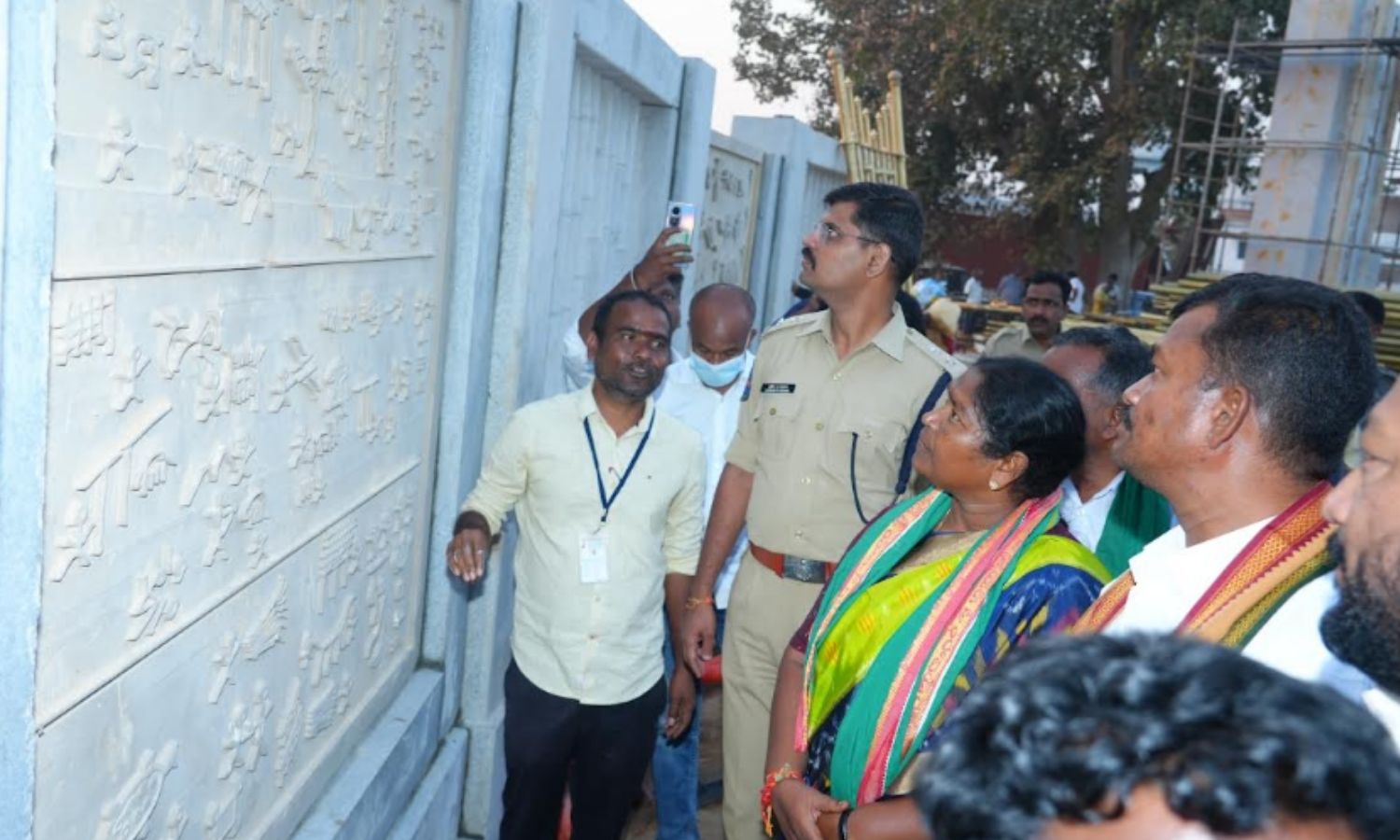
Hyderabad: The redevelopment works for Medaram Sammakka Saralamma Jatara will stand as a historic milestone, with permanent structures designed to last at least 200 years, said Dhanasari Anasuya Seethakka, State Minister for Women and Child Welfare and Panchayat Raj.
According to the minister, the Telangana government took up the reconstruction of the Sammakka and Saralamma gaddelu with a clear focus on preserving Adivasi culture and traditions. At the same time, officials followed strict quality standards while executing every phase of the work.
Importantly, authorities moved ahead with the construction only after receiving formal approval from the Sammakka Saralamma Priests’ Association. As a result, traditional practices guided both planning and execution.
She said the state government gave special attention to Medaram’s overall development. Moreover, every structure reflected tribal culture and customs. Designers drew inspiration from 930-year-old Koya palm-leaf manuscripts.
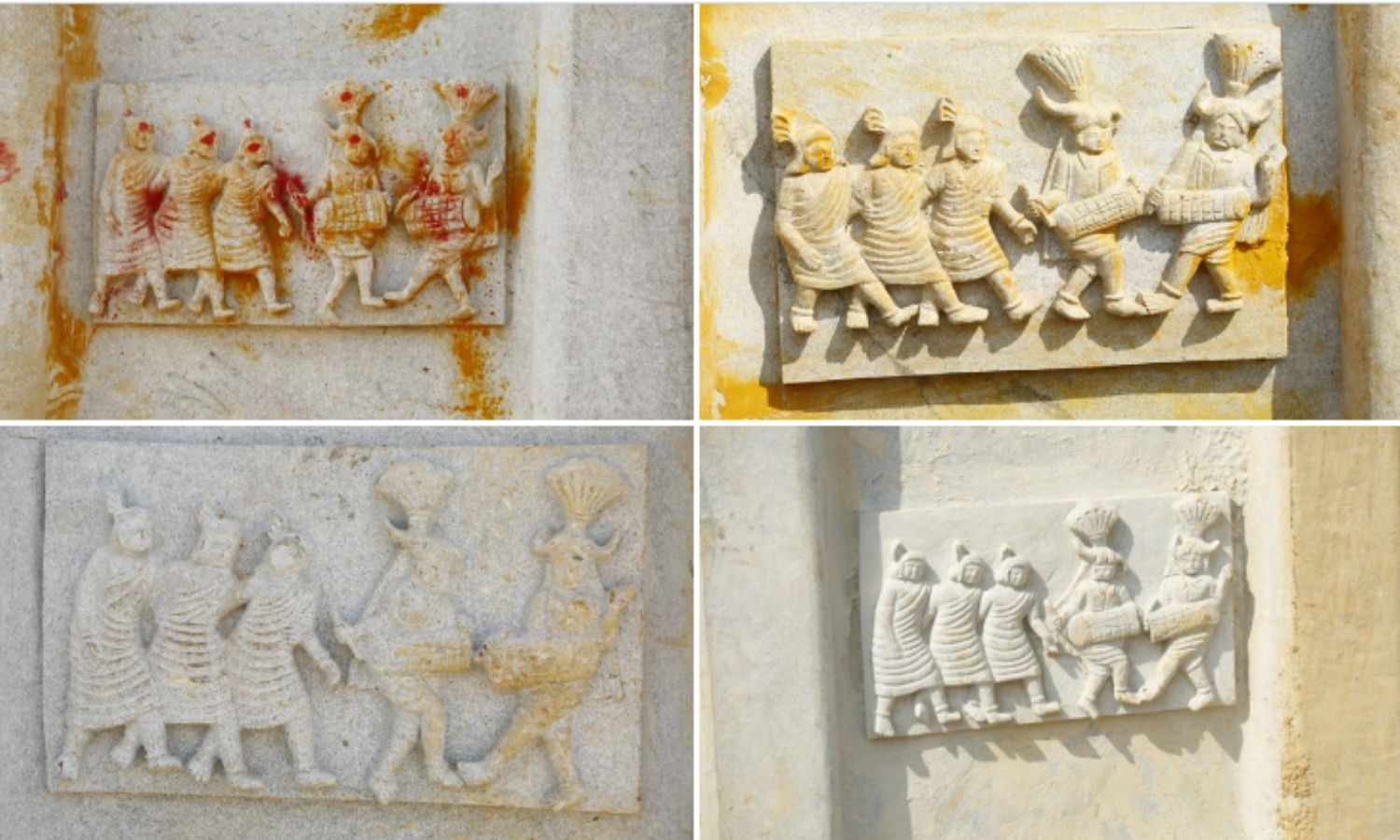
The minister stated that the project utilised nearly 4,000 tonnes of granite. In addition, artisans carved about 7,000 sculptures that depicted tribal history and cultural practices.
Media review of Medaram Sammakka Saralamma Jatara works
Meanwhile, a media team from Hyderabad visited Medaram in Mulugu district on Friday to review the redevelopment works. During the visit, officials explained the history of the Sammakka Saralamma Jatara and the origins of Adivasi traditions.
At the site, Seethakka said the government began preparations to conduct the Medaram Sammakka Saralamma Jatara in a new and grand manner. She stated that the Jatara would take place from January 28 to January 31 next year.
According to estimates, more than one crore devotees from Telangana and neighbouring states were expected to attend. Therefore, the government planned infrastructure to manage the large influx smoothly.
She said the administration shifted focus from temporary arrangements to permanent facilities. As part of this effort, the government allocated ₹251 crore for Medaram development. Of this amount, ₹101 crore was reserved exclusively for the expansion of the vanadevata gaddelu.
Before starting the reconstruction, officials held several meetings with tribal priests. Subsequently, priests agreed to a single-line arrangement of the vanadevatas. This layout, she said, would help devotees complete darshan with ease.
The minister also explained the cultural significance of turmeric in tribal life. She said earlier generations relied on turmeric for both rituals and health benefits, and those traditions continued even today.
Stone structures built for long-term durability
Seethakka said the Gaddelu complex was being rebuilt entirely with stone to resemble a historic monument. The structure would cover 271 square metres and stand on 46 pillars.
Additionally, the complex would include three entrance arches with a width of 40 feet and five arches measuring 30 feet each. A main entrance arch with a width of 50 feet would stand prominently at the front.
She said the circular gaddelu would feature eight surrounding pillars. At the centre, workers placed bamboo elements in line with traditional beliefs.
Artisans gave priority to tribal culture while carving the stone surfaces. As a result, the walls depicted Koya lineage history through symbols and sculptures inspired by palm-leaf manuscripts.
The minister said the main entrance arch featured 59 carvings that narrated the history of the Sammakka lineage. She added that around 7,000 sculptures represented nearly 750 Koya family names.
Around 250 sculptors worked under the guidance of Dr Hariprasad. Meanwhile, architects Emani Shivanagi Reddy and Dr Motilal supervised the project. Students from the Sammakka-Saralamma Archaeology Research Institute also supported the artwork.
Daily monitoring of Medaram development works
According to Seethakka, authorities preserved existing trees near the Gaddelu complex during development. Furthermore, officials planned to plant 12 species of sacred trees, including bandari, marri, bamboo, burugu, neem, ippa and kastu.
In addition, the project included the planting of 140 varieties of medicinal plants. These steps are aimed at protecting the ecological balance while expanding infrastructure.
She said a minister’s committee reviewed the progress of work every day. At the same time, officials received constant instructions to maintain quality and speed.
Chief Minister Revanth Reddy monitored the progress regularly from Hyderabad. Consequently, officials accelerated the pace wherever required.
Seethakka said the works had reached the final stage and would be completed soon. She recalled that during his padayatra, Revanth Reddy visited Medaram and promised temple expansion.
After coming to power, the government fulfilled that promise. Unlike previous regimes that focused on temporary works, the present government adopted a long-term strategy with permanent structures.
She appealed to devotees to cooperate and help make the Medaram Sammakka Saralamma Jatara a historic success.
District Collector Divakar T.S., SP Sudheer Ram Nath Kekan, EO Veeraswamy, Priests’ Association president Jaggarao, architect Shivanagi Reddy, Maipathi Arun Kumar, priests and officials attended the inspection.