

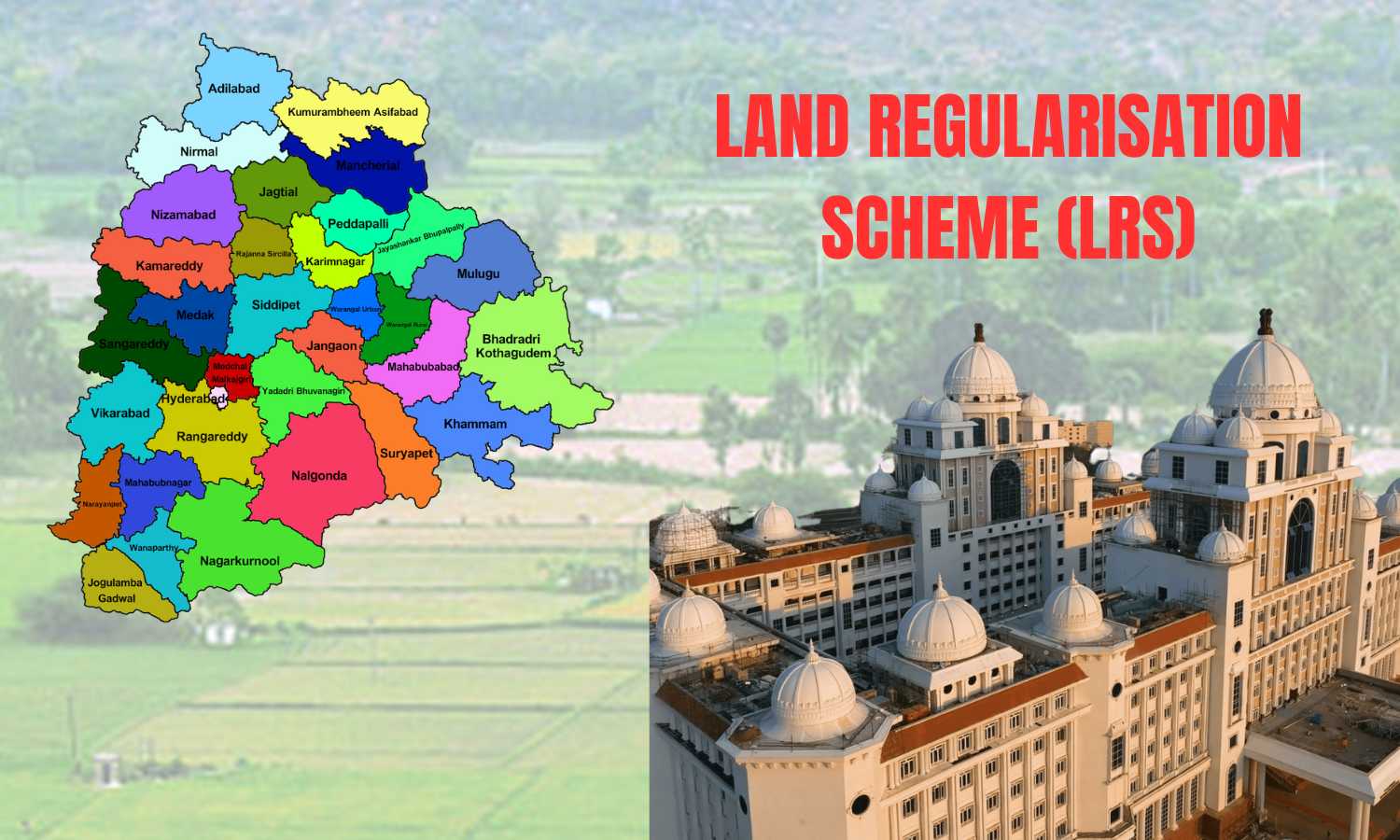
Hyderabad: The Land Regularisation Scheme (LRS) in Telangana continues to face serious delays, with only a small portion of LRS applications processed so far, despite repeated directives from the state government to expedite clearances.
In areas under the Kakatiya Urban Development Authority (KUDA), the Greater Warangal Municipal Corporation, and nine surrounding municipalities — Mahabubabad, Dornakal, Maripeda, Wardhannapet, Narsampet, Thorrur, Parkal, Bhupalpally, and Jangaon — over 1.6 lakh applications have been submitted. However, according to official sources, only around 30,000 have been reviewed. Of these, 7,000 were rejected and approximately 13,000 were approved.
The LRS approval process involves multiple layers of scrutiny. Applications first go through field inspections by L-1 teams comprising revenue inspectors, irrigation department engineers, and panchayat secretaries. L-2 teams of town planning officials then assess the documentation, while L-3 district-level teams handle administrative approvals.
The state government has deployed a mobile app developed by the Centre for Good Governance (CGG) for field inspection and data entry. Applications related to lands over water bodies, Wakf properties, temples, and tanks are automatically rejected.
If all criteria are met, the local tehsildar calculates the regularisation fee. After the applicant pays the required amount, the application moves through another level of scrutiny by local officials, district panchayat officers (DPOs), and the Additional Collector. Final approval or rejection is carried out by the District Collector.
Despite the system in place, implementation on the ground remains slow. Officials report that public participation is weak, especially in unauthorised layouts under village panchayats. Many landowners are either unresponsive to phone calls or unwilling to cooperate with inspections. A significant factor behind this indifference is the drop in land prices in these regions, leading to lower interest in pursuing regularisation.
In contrast, applicants within municipal limits have shown relatively more interest and are actively following up on their applications. The government has already extended the deadline for LRS fee payment three times, each with a 25% concession, but this has done little to accelerate the process.
Technical difficulties are also contributing to the backlog. Applicants have faced issues such as mismatches between their original data and what appears online, server downtime, and lack of support from help desks. A major concern is that data for those who applied before 2020 is no longer visible online, leaving applicants in confusion about the status of their requests.
With over a lakh applications still pending and public trust diminishing, the future of the LRS process remains uncertain unless there is a significant administrative push and better communication with applicants.