
Hyderabad Ramadan iftar shift moves from street food to home tables

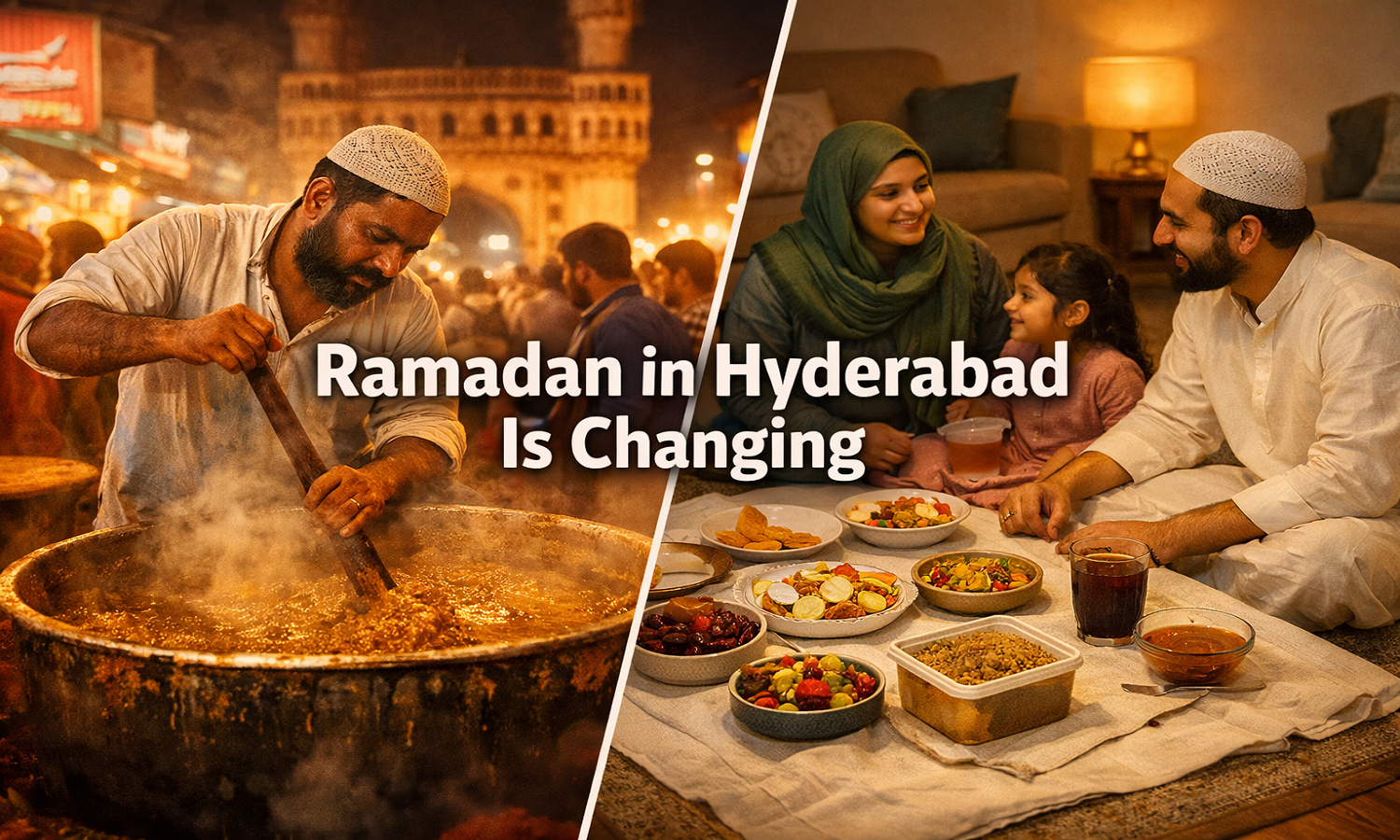
Hyderabad: The Hyderabad Ramadan iftar shift has moved many families away from crowded street food hubs toward home-cooked meals, reflecting changing health habits, rising prices and a renewed focus on family traditions.
For decades, Ramadan evenings in the historic city meant packed lanes in the Old City. The aroma of haleem simmering in large cauldrons filled the air. Street stalls lit the night with snacks and sweets. However, by the mid-2020s a quieter transformation emerged. Increasingly, families prepared iftar at home.
The Hyderabad Ramadan iftar shift reflected a broader social and economic transition. Younger urban residents preferred home food for hygiene, nutrition and cost control. Fresh ingredients, traditional cooking methods and balanced meals gained popularity. Meanwhile, lighter dishes such as fruits, salads and vegetables began replacing heavily fried or meat-rich plates. Rising inflation also pushed households to reduce frequent street purchases.
Hyderabad Ramadan iftar shift and the city’s culinary roots
Hyderabad’s cuisine developed through centuries of cultural exchange. Indian, Mughal, Turkish and Arab influences shaped the city’s distinctive food traditions. The Nizams’ royal patronage refined these culinary practices.
Haleem, now synonymous with Ramadan in the city, reflected this cultural blend. The dish evolved from the Arab preparation harees. Members of the Chaush community from Yemen’s Hadhramaut region introduced it to the Hyderabad State. Local cooks gradually added spices, clarified butter and long cooking techniques. The result became a rich, energy-dense meal suited for breaking the fast.
In 2010, Hyderabad haleem received Geographical Indication status. The recognition confirmed its role as a cultural symbol of the city. Historically served in royal kitchens or military barracks, the dish gradually spread into public markets during the late twentieth century. By the early 2000s it had become one of the city’s most recognizable Ramadan street foods.
Hyderabad Ramadan iftar shift inside home kitchens
Traditional home iftar in Hyderabad usually began with dates and water. Families then served dried fruits, fruit chaat or sweet drinks such as milk-based beverages. Fried snacks remained common. Vegetable pakoras, potato or minced-meat samosas and yoghurt dumplings frequently appeared on the table.
Haleem continued to hold a special place during Ramadan gatherings. Many families now purchased it from local restaurants rather than cooking it at home, because preparing the dish required long hours of slow cooking.
Despite the growing Hyderabad Ramadan iftar shift, street food retained strong economic importance. The Ramadan food economy generated massive seasonal revenue. Estimates suggested that billions of rupees circulated through the sector each season. Thousands of temporary jobs appeared, especially for skilled haleem cooks who worked for long hours beside wood-fired cauldrons.
Yet modern households increasingly treated street food as occasional indulgence rather than everyday iftar. Concerns about hygiene, heavy oil content and higher prices pushed many families back toward home kitchens.
Hyderabad Ramadan iftar shift and the meaning of the dastarkhwan
At the centre of home iftar stood the traditional dastarkhwan, the communal dining cloth. The practice symbolized equality, gratitude and shared prayer. Hyderabad households historically valued simplicity during iftar.
The meal usually began with dates, followed by light and easily digestible dishes. This approach helped maintain energy for evening prayers. Many homes included yoghurt dumplings, lentils, fruits and barley-based preparations.
In several Old City families, iftar remained intentionally modest. The restrained meal reflected the spiritual purpose of Ramadan: patience and self-discipline. The quiet domestic setting contrasted sharply with the busy commercial food streets.
Photojournalist Syed Iftikhar Ali Asif, a resident of Mallepally in Hyderabad, recalled that families once cooked haleem collectively at home. Today his household ordered the dish from outside vendors during Ramadan. He also noted that elders still preferred samosas, kebabs and chickpeas for iftar. Younger family members, however, showed interest in experimenting with new flavours and ingredients.
Hyderabad Ramadan iftar shift and the rise of organized iftar boxes
Another trend accelerated during 2024 and 2025. Restaurants began offering curated iftar boxes designed for home consumption. These packages combined convenience with portion control and hygienic packaging.
For busy professionals and small families, iftar boxes offered a practical alternative to crowded restaurant queues. Restaurants expanded menus beyond haleem and biryani. Many introduced balanced meal combinations suitable for home dining.
As a result, the Hyderabad Ramadan iftar shift blended commercial services with domestic traditions. Families reduced cooking effort yet still gathered around their own tables.
Hyderabad Ramadan iftar shift toward healthier meals
Health awareness also influenced food choices during Ramadan. Traditional Ramadan cuisine often relied on rich meat dishes and fried snacks. Increasingly, however, households prioritized fiber-rich, protein-balanced and hydrating foods.
Niloufer, a resident of Bazarghat in Red Hills, said meat remained an important part of her Ramadan meals. She explained that meat provided affordable and sustained energy after long fasting hours. Therefore, her family included it during both sehri and iftar.
Technology also shaped modern kitchens. Air fryers became popular appliances. They allowed families to prepare samosas, pakoras and spring rolls with significantly less oil. The “make and freeze” approach also gained popularity. Many households prepared snacks in advance before Ramadan and cooked them fresh each evening.
Hyderabad Ramadan iftar shift and the revival of prophetic foods
An unexpected outcome of modern health awareness has been the revival of foods linked to early Islamic traditions. Dishes mentioned in historical religious sources regained popularity among urban families.
Talbina, a barley-based preparation, returned to many home menus. Nabeez, a drink made from soaked dates, also gained attention. Another dish, thareed, consisted of bread soaked in meat broth.
Many families viewed these foods as both nutritious and spiritually meaningful. Unlike modern diet trends, these dishes carried religious and historical associations. As a result, they appealed to both health-conscious and tradition-oriented households.
Hyderabad Ramadan iftar shift and changing shopping habits
Shopping patterns for Ramadan meals also evolved. Traditional markets such as Charminar and Begum Bazaar still remained central for spices and dried fruits. However, households increasingly relied on quick-delivery platforms for everyday ingredients like milk, yoghurt and vegetables.
Even so, premium ingredients continued to carry social prestige. High-quality dates and saffron were often purchased from specialized shops rather than delivery apps.
Hyderabad Ramadan iftar shift and the rise of home chefs
Private catering and home chefs also gained popularity during Ramadan gatherings. Families hosting iftar parties often hired boutique caterers who prepared customized menus at home.
This approach allowed households to maintain dietary preferences and hospitality traditions without the burden of large-scale cooking. Consequently, the centre of Ramadan dining gradually shifted back toward domestic spaces.
Hyderabad Ramadan iftar shift shaped by digital culture
Social media strongly influenced Ramadan food trends in the city. Online platforms showcased extravagant street food displays. At the same time, they sparked criticism about excessive commercialization.
Many residents began viewing heavily decorated food stalls as tourist attractions rather than authentic community traditions. In contrast, home iftar gained renewed respect as the place where the true spirit of Ramadan survived.
Wellness campaigns on social media promoted balanced meals and reduced oil consumption. Economically, home cooking also remained cheaper than frequent street dining. More importantly, families valued the time spent together at the iftar table.
For many households, the Hyderabad Ramadan iftar shift strengthened family bonds. Elders shared traditional recipes while younger members experimented with modern cooking tools. Generations gathered around the same table.
Haleem still held a central place in Ramadan celebrations. However, families increasingly treated it as a special dish rather than a daily street snack.
Today, Ramadan meal planning in Hyderabad balanced street food heritage with domestic simplicity. Curated iftar boxes, air-fried snacks and traditional drinks such as nabeez often appeared on the same table.
The movement from street stalls to home kitchens did not reject the city’s culinary identity. Instead, it reinterpreted Hyderabad’s enduring values of hospitality, tradition and moderation in a changing urban society.