

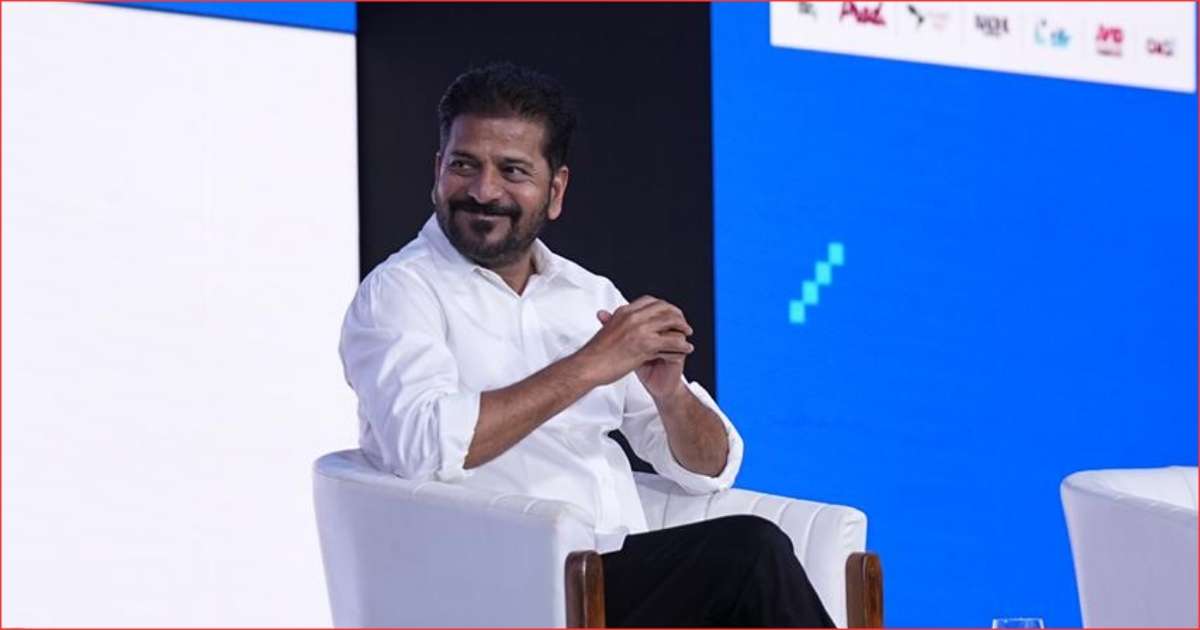
Hyderabad: Chief Minister A. Revanth Reddy on Wednesday unveiled a five-year roadmap to shift industries out of the city’s urban core under the Hyderabad Net Zero plan, fixing 2034 as the target year to achieve Net Zero emissions.
Speaking at Mumbai Climate Week 2026, he said the government would launch a comprehensive carbon footprint audit across the city. He added that authorities would progressively move factories and industrial units to designated peri-urban zones. As a result, the core urban area would retain minimal industrial activity within five years.
Sustainability measures under Hyderabad Net Zero plan
The Chief Minister linked the relocation drive directly to the Hyderabad Net Zero plan. He said the government had prioritised the rejuvenation of the Musi River and the restoration of major lakes. In addition, departments were strengthening water and energy infrastructure to reduce environmental stress.
He also referred to the creation of HYDRAA, which he described as India’s first dedicated environmental police force. According to him, this body would support enforcement of environmental regulations across the city.
“In Hyderabad, taxes on electric vehicles have been eliminated, leading to a significant rise in EV adoption, and discussions with electric vehicle manufacturers are ongoing regarding investment in local production. Additionally, more than 200,000 autorickshaws are being retrofitted to adopt greener alternatives. The fleet of RTC buses is being upgraded with the replacement of over 3,500 buses with electric models. Moreover, the Hyderabad Metro is set to expand from 71 kilometers to over 200 kilometers. Industries are progressively being relocated from the central urban area to peri-urban zones,” Revanth Reddy said.
Energy demand and economic projections
He asserted that energy formed the backbone of economic growth. Therefore, he said, power generation and consumption served as key development indicators.
Telangana currently consumes an average of 16,610 megawatts per day. Last year, peak demand reached 17,162 megawatts. This year, officials expect it to cross 19,000 megawatts. By 2034, the state projects demand to exceed 34,000 megawatts as it pursues higher economic output.
At present, nearly 24.8% to 25% of the state’s energy comes from green sources. However, the government plans to expand renewable capacity further to support both industrial demand and emission targets.
Revanth Reddy reiterated that Telangana aims to grow from a $200 billion economy to $1 trillion by 2034. Subsequently, he projected a $3 trillion economy by 2047. He said the Hyderabad Net Zero plan aligned environmental safeguards with these economic ambitions.
He identified seven pillars for long-term growth: economy, environment, education and skills, energy, employment, entrepreneurship, and wealth creation. Accordingly, policy measures would align with these sectors.
Zonal framework for industry relocation
The Chief Minister detailed a three-zone planning model comprising CURE, PURE, and RARE. Under this framework, Hyderabad falls within the Core Urban Region Economy inside the 160-kilometre Outer Ring Road. This zone will focus on services and urban innovation rather than manufacturing.
Beyond it, the government has designated the PURE Zone between the Outer Ring Road and the proposed 360-kilometre Regional Ring Road. Authorities will position this belt as a green-powered manufacturing hub. He said the state intends to attract global manufacturers seeking diversification under a “China +1” strategy.
By relocating industries to the PURE Zone, the government expects to ease pollution pressure within the city. At the same time, it plans to upgrade transport and energy networks to sustain industrial operations outside the core.
The Hyderabad Metro expansion from 71 kilometres to more than 200 kilometres forms a central mobility intervention. Similarly, large-scale electrification of public transport will reduce urban emissions. Together, these measures aim to support the Hyderabad Net Zero plan and its 2034 deadline.
The government will initiate the city-wide carbon audit in the coming months.
Hon’ble Chief Minister Shri A. Revanth Reddy stated that the Core Hyderabad Urban Region (#CURE) will be developed as a green, Net Zero services hub, positioning Hyderabad as a national benchmark for sustainable urban growth.
❇️ At Mumbai Climate Week with @NITIAayog… pic.twitter.com/J5nTyFcOSl
— Telangana CMO (@TelanganaCMO) February 18, 2026