

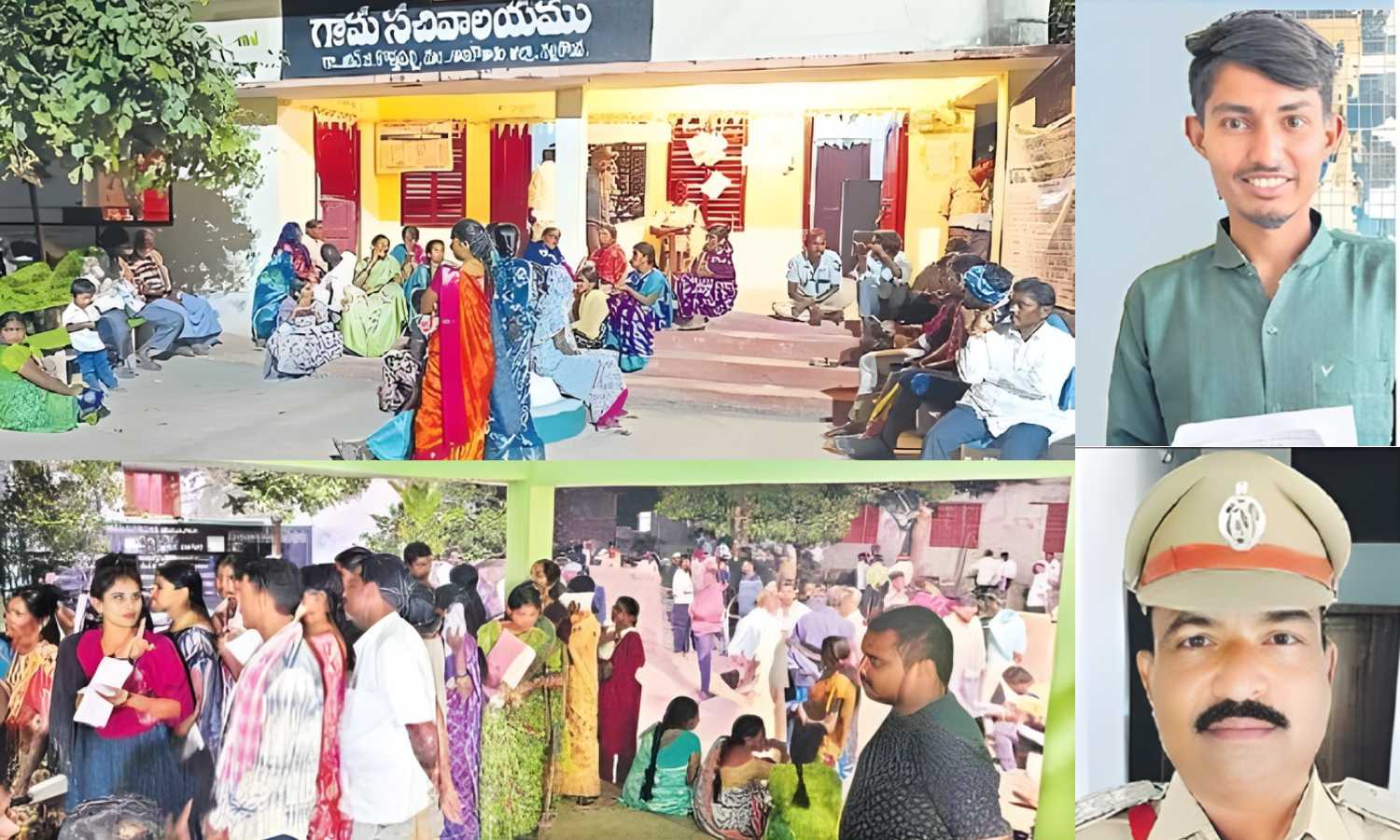
Hyderabad: The first phase of panchayat elections in Telangana recorded over 75,000 nominations by Saturday, marking the close of the filing process. According to election authorities, 4,236 candidates filed for sarpanch posts and 37,440 for ward member positions. The deadline for withdrawal is 3 PM on December 3, after which final candidate lists will be published.
On day one, 3,242 sarpanch and 9,643 ward nominations were received. Day two saw an increase to 4,901 and 11,502, respectively. On the final day, more than 20,000 sarpanch and over 50,000 ward nominations poured in. Candidates were still waiting in line beyond 5 PM, leading officials to anticipate a higher final count.
Polling is scheduled for December 11, from 7 AM to 1 PM, with counting at 2 PM. Results will be declared that evening.
Across several villages, communities unanimously agreed on candidates to avoid elections. With local elders mediating, villagers resolved to support one candidate per post. Consequently, many sarpanch and ward positions received only one nomination and will be declared uncontested.
Reservation quirks and family drama shape the panchayat battle
In Adilabad’s Talamadugu mandal, Ruyyadi village illustrates a long-standing issue with reservation policy. The village, with 2,470 residents and 1,514 voters, hasn’t had an elected sarpanch or upa-sarpanch for 19 years. Five out of ten wards haven’t seen polls either. Since 2000, the government has classified Ruyyadi as an ST-reserved panchayat. However, there are no ST voters in the village. Only one ST couple, who migrated from Sakinapur in 2000, held office until their deaths. Despite repeated requests from villagers to reclassify the panchayat as General, officials say it would require a constitutional amendment.
Another instance of family discord emerged in Hanumakonda district’s Elkathurthi mandal. A sarpanch candidate’s son posted in the village WhatsApp group distancing himself from his father’s financial decisions. The post read that although the family advised the father against contesting, he proceeded with his nomination. The son clarified that any loans taken for the campaign had nothing to do with the rest of the family, citing past financial setbacks due to political involvement. The candidate alleged that his rivals were behind the post and said he would contest with public support regardless.
Micro-communities dominate reserved seats in small villages
In Mahabubabad district’s Chinnaguduru constituency, Vissampalli village has 1,181 voters and will see elections for a sarpanch and 10 ward members. The sarpanch post and four ward positions have been reserved for ST categories. However, the village has only 26 voters from the ST (Erukala) community – all belonging to two extended families. This effectively means all ST-reserved seats will go to candidates from those families, underlining the unusual demographic effects of the reservation policy in small rural settlements.
Meanwhile, sibling rivalry unfolded in Nellikuduru, where Puli Venkanna (Congress) and Puli Ramachandru (BRS) are contesting for sarpanch. In Suryapet, SI Venkateshwarlu resigned five months ahead of retirement to contest from his native Gudibanda village.
Khammam’s Patalingala village continued its 30-year tradition by electing the sarpanch unanimously. Similar consensus-led outcomes were reported in multiple villages across Warangal, Jagtial, Nalgonda, Mahabubabad, and Karimnagar.
In Chinna Adisharlapalli, elders auctioned the sarpanch post for ₹51.3 lakh. The winning bidder pledged the amount for temple construction and local development.
Congress-backed candidate Mallepakula Venkataiah was elected unopposed in CM Revanth Reddy’s native Kondareddypalli. Until recently, he worked as a home guard.
Symbolic moments included a final-year BCom student in Karimnagar, Akhil, who filed his nomination after finishing a morning exam. In Bhadradri Kothagudem, BRS-backed sanitation worker Marri Sandhya submitted her nomination wearing her khaki uniform.
In Karepalli’s Regulagudem, five hamlets threatened to boycott elections unless the government fulfilled its 2004 promise of road construction. Despite the foundation being laid, the road remains incomplete, forcing villagers to travel 6 km on gravel tracks.